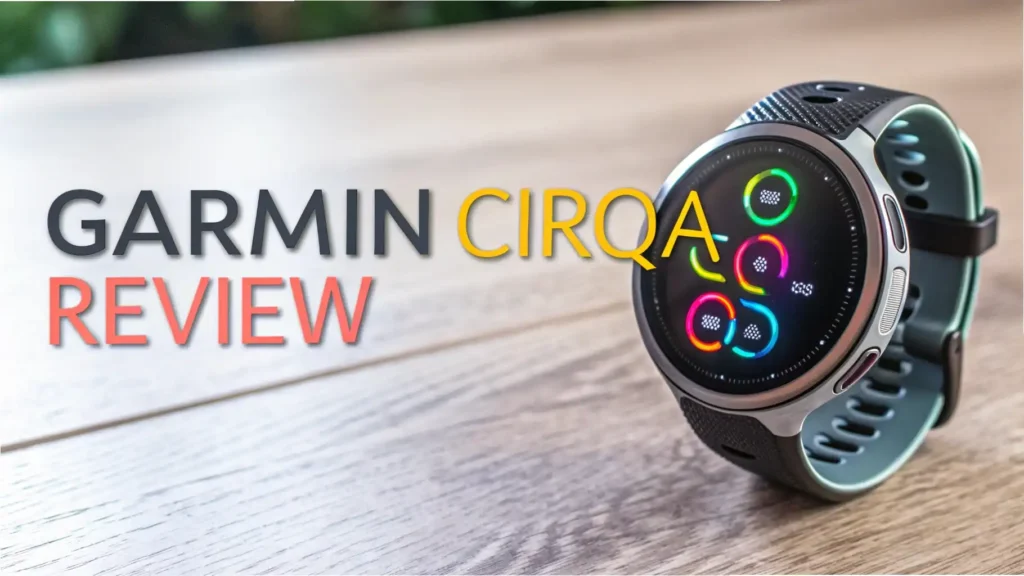
Garmin Cirqa Review 2026: Top Tier or Trash?
So, Garmin finally did it. After years of watching Whoop and Oura dominate the recovery band space, Garmin has entered the chat with the Garmin Cirqa Smart Band — and the fitness world is buzzing.
If you have ever wanted Garmin’s legendary health tracking engine packed into a sleek, screenless wristband you can wear 24/7 without looking like you strapped a tablet to your arm, this might just be the product you have been waiting for.
The Cirqa is not just another Garmin watch with the screen removed. It represents a completely new product category for one of the most trusted names in wearables.
In a Nutshell:
- Screenless design, maximum comfort. The Garmin Cirqa has no display. All metrics go straight to the Garmin Connect app. This makes it lighter, less intrusive, and far easier to wear around the clock — including during sleep.
- Two sizes, two colors. The Cirqa comes in S/M (for wrists between 120mm and 200mm) and L/XL (for wrists between 145mm and 240mm). Color options are Black and French Gray — clean and understated.
- Built to compete with Whoop. The Garmin Cirqa targets the same market segment as the Whoop 5.0. The key difference is that Garmin has historically sold hardware without a mandatory subscription, which could be a major selling point for buyers tired of monthly fees.
- Expected price range of $200 to $300. Based on community estimates and early retailer leaks, the Cirqa is expected to land somewhere between $200 and $300. Some speculative retailer pages have listed higher figures, but those are likely placeholder prices.
- Part of the Garmin Connect ecosystem. The Cirqa syncs seamlessly with Garmin Connect. For existing Garmin users, this means all your health data from your sports watch and the Cirqa band can live in one place — giving you a far more complete picture of your daily wellness.
- Launch expected mid-2026. Based on official leaks and FCC filing analysis, the Garmin Cirqa is expected to launch sometime between May and June 2026. The product briefly appeared on Garmin’s own website in January 2026 before being removed.


Last update on 2026-08-04 / Affiliate links / Images from Amazon Product Advertising API Some of the links on this website are affiliate links, which means that at no additional cost to you, I earn a commission if you click through and make a purchase. I only recommend products and services that I believe will add value to my readers. Thank you for your support!
What Is the Garmin Cirqa Smart Band?
The Garmin Cirqa is a screenless wrist-worn smart band designed for continuous health and recovery tracking. It leaked on Garmin’s official website in January 2026 across the US, Canada, Brazil, Chile, and Mexico before being quickly removed. The listing confirmed the product name, two size options, two color choices, and a part number: 010-04675-00.
This device is Garmin’s direct entry into the recovery band market. Think of it as a dedicated health sensor you wear all day and all night.
There is no screen to tap or swipe. Instead, the Cirqa works quietly in the background, collecting data on your body and pushing all of it into the Garmin Connect app on your smartphone.
This approach is very similar to what Whoop and Oura have been doing for years — and it clearly works for people who want deep health data without the bulk of a full smartwatch.
The Cirqa builds on Garmin’s recent ecosystem moves. The company added Lifestyle Logging and Food Tracking to Garmin Connect in late 2025, features that are directly in line with what a recovery band user would find useful. A screenless band is the natural next step in that story.
Garmin Cirqa Design and Build Quality
The Cirqa follows a minimalist band design that prioritizes wearability above all else. It is meant to be comfortable enough to sleep in and durable enough to wear during workouts, swims, and everyday life. The band comes in two sizes to fit a wide range of wrist circumferences, and the two color options — Black and French Gray — keep things clean and low-profile.
The design concept is clearly borrowed from the screenless fitness band playbook. A fabric or silicone band stretches over an optical sensor array on the underside that reads your biometrics continuously.
Because there is no screen, no buttons to accidentally press, and no display drawing power, the device stays light and simple. This is the kind of wearable you forget you are wearing, which is precisely the goal.
Garmin’s existing products are known for excellent build quality. The brand consistently uses durable materials that handle sweat, water, and impact well.
Based on Garmin’s track record with the Vivosmart 5 and Index Sleep Monitor, users can reasonably expect solid construction on the Cirqa as well. Water resistance is expected, though the exact rating has not been officially confirmed.
Garmin Cirqa Key Specs at a Glance
Here is a quick overview of everything officially confirmed and strongly expected for the Garmin Cirqa:
| Specification | Details |
|---|---|
| Product Name | CIRQA Smart Band |
| Part Number | 010-04675-00 |
| Size Options | S/M and L/XL |
| S/M Wrist Range | 120mm to 200mm |
| L/XL Wrist Range | 145mm to 240mm |
| Colors | Black, French Gray |
| Display | None (screenless) |
| Heart Rate Sensor | Expected (optical) |
| GPS | Unknown |
| Connectivity | Bluetooth |
| App | Garmin Connect |
| Expected Price | $200 to $300 |
| Expected Launch | May to June 2026 |
Top 3 Alternatives for Garmin Cirqa

Last update on 2026-08-04 / Affiliate links / Images from Amazon Product Advertising API Some of the links on this website are affiliate links, which means that at no additional cost to you, I earn a commission if you click through and make a purchase. I only recommend products and services that I believe will add value to my readers. Thank you for your support!

Last update on 2026-08-04 / Affiliate links / Images from Amazon Product Advertising API Some of the links on this website are affiliate links, which means that at no additional cost to you, I earn a commission if you click through and make a purchase. I only recommend products and services that I believe will add value to my readers. Thank you for your support!

Last update on 2026-08-04 / Affiliate links / Images from Amazon Product Advertising API Some of the links on this website are affiliate links, which means that at no additional cost to you, I earn a commission if you click through and make a purchase. I only recommend products and services that I believe will add value to my readers. Thank you for your support!
Garmin Cirqa Health and Fitness Tracking Features
The Garmin Cirqa is built around continuous biometric monitoring. The core idea is that the band stays on your body all day and all night, quietly collecting data that paints a detailed picture of your health, recovery, and readiness.
Based on everything confirmed and expected, here is what the Cirqa is likely to track:
Heart Rate: An optical heart rate sensor sits on the underside of the band and reads your heart rate in real time. This data feeds into calorie calculations, strain scoring, and recovery assessments.
Heart Rate Variability (HRV): HRV is one of the most useful tools for measuring how recovered your body is from training or stress. The Cirqa is expected to track HRV, which Garmin will then use to generate readiness or recovery scores inside the app.
Sleep Stages: The screenless format makes the Cirqa perfect for overnight wear. You will not bump a screen or feel a heavy watch on your wrist. The band is expected to track light sleep, deep sleep, REM sleep, and wakefulness — similar to what Garmin’s other devices already do.
Activity Tracking: Step counts, active minutes, calories burned, and general movement data will all be tracked passively throughout the day.
Stress Monitoring: Garmin uses heart rate variability data to estimate stress levels. This feature is already present across the Garmin lineup and is a logical inclusion for the Cirqa.
The combination of all these metrics inside Garmin Connect will give users a comprehensive daily health dashboard — without ever needing to glance at their wrist.
Garmin Cirqa Sleep Tracking
Sleep tracking is one of the strongest use cases for the Garmin Cirqa. Most people find wearing a bulky smartwatch to bed uncomfortable. The Cirqa solves that problem completely. Because it has no screen and no protrusions, it sits flat and comfortable on the wrist overnight.
Garmin already has strong sleep tracking technology in its watch lineup. The Index Sleep Monitor, an upper-arm band released in 2025, tracks HRV, sleep stages, breathing rate variations, and skin temperature. The Cirqa is expected to bring similar or expanded sleep tracking to a more practical wrist-based form factor.
Sleep stage breakdown — light, deep, REM, and awake time — gives you an honest look at sleep quality rather than just total time in bed. Combined with HRV data collected overnight, Garmin Connect can then calculate a morning readiness score that tells you whether your body is ready for hard training or needs an easier day.
Consistent sleep tracking is one of the best things you can do for long-term health and athletic performance, and the Cirqa looks built to make that easier than ever for Garmin users.
Garmin Cirqa HRV and Stress Monitoring
Heart rate variability is the metric at the center of modern recovery science. HRV measures the tiny variations in time between each heartbeat. A high HRV generally means your nervous system is well-recovered and ready for effort. A low HRV often signals fatigue, illness, or stress.
Garmin has been tracking HRV on its watches for several years. The Cirqa takes this further by being worn at all times — during sleep when HRV data is most reliable, during rest periods, and throughout the workday. This gives the app a much richer data set to work with compared to a watch you take off at night.
Stress monitoring works alongside HRV. Garmin uses elevated heart rate and suppressed HRV as signals of physical or mental stress. The app then shows you a daily stress graph, highlighting when you were calm, moderately stressed, or highly stressed. Over time, these patterns reveal a lot about how your lifestyle is affecting your body.
The Cirqa’s always-on design means stress data collection never stops. This is a real advantage over a watch that you set aside during workouts or sleep.
Garmin Cirqa Battery Life
Battery life is one of the biggest unknowns for the Cirqa. Garmin has not confirmed an official number yet. However, there are reasonable grounds for optimism.
Screenless bands have a significant battery advantage over full smartwatches. There is no display to power, no bright AMOLED screen eating through charge. Devices in this category — including Whoop and some sleep trackers — typically manage between four days and seven days on a single charge. Some go longer.
Garmin has a strong reputation for battery efficiency across its product line. The Vivosmart 5 managed around seven days. The Index Sleep Monitor lasted even longer per charge because of its targeted use case. The Cirqa should be capable of at least five days, and Garmin fans are hoping for a full week or more.
Garmin Cirqa App and Garmin Connect Integration
One of the biggest advantages the Garmin Cirqa has over competitors like Whoop is the Garmin Connect ecosystem. Garmin Connect is already one of the most feature-rich fitness apps available. It tracks workouts, sleep, stress, body battery, training load, recovery time, and much more.
For existing Garmin users, the Cirqa slots right in. Your sports watch handles GPS workouts and performance data. The Cirqa handles continuous daily monitoring and overnight sleep tracking. Everything flows into the same app and the same user profile.
This unified data view is genuinely powerful — it means Garmin Connect can see both your training output and your recovery input in one place.
Garmin recently launched Garmin Connect+, a subscription tier that adds premium analytics, food logging, lifestyle tagging, and AI-powered coaching. Some features of the Cirqa may sit behind this paywall, though core health tracking is expected to remain free.
Garmin Cirqa Price and Subscription Model
Price is one of the most hotly discussed topics in the Cirqa conversation. The community widely expects the device to land somewhere between $200 and $300. One Ukrainian retailer published a speculative listing at around $470, but that figure appears to be a placeholder and is not taken seriously by most observers.
The subscription model is the other big question. Whoop charges a monthly fee on top of hardware costs, and that model has frustrated many potential buyers.
Garmin has historically provided most health features for free with hardware purchase. The arrival of Connect+ has introduced some uncertainty, but the expectation is that core Cirqa features will be available without a recurring fee.
If Garmin prices the Cirqa at $250 with no mandatory subscription, it immediately becomes one of the most cost-effective recovery bands on the market. Compare that to a Whoop subscription, which costs around $200 per year on top of the device cost, and the value math starts to look very favorable for Garmin.
Garmin Cirqa vs Whoop 5.0: How Do They Compare?
| Feature | Garmin Cirqa | Whoop 5.0 |
|---|---|---|
| Screen | None | None |
| Subscription Required | No (expected) | Yes |
| Ecosystem | Garmin Connect | Whoop App |
| GPS | Unknown | No |
| Sleep Tracking | Yes (expected) | Yes |
| HRV Tracking | Yes (expected) | Yes |
| App Quality | Very strong | Very strong |
| Price Model | Hardware only | Hardware + Monthly Fee |
| Bicep Wear | Possible | Yes |
The Garmin Cirqa has a clear structural advantage over Whoop: no mandatory subscription. Whoop’s strength is its deeply developed strain and recovery algorithm, plus a strong community around athletic performance data. Garmin counters with a far more established ecosystem, GPS watch integration, and a broader range of health metrics already baked into Connect.
For athletes already using Garmin hardware, the Cirqa is a natural companion. For new buyers comparing subscriptions, it could be a decisive win.
Pros and Cons of Garmin Cirqa
Pros:
- No screen means no distractions and lighter wear, especially overnight
- Deep Garmin Connect integration for existing Garmin watch users
- No mandatory monthly subscription expected, unlike Whoop
- Two size options accommodate a wide range of wrist sizes
- Continuous 24/7 data collection for more complete health insights
- Strong brand track record for sensor accuracy and app quality
Cons:
- Not yet officially released — launch expected mid-2026
- Price not confirmed — could be higher than expected
- No GPS for standalone workout tracking
- App-only experience — no glanceable data on the band itself
- Some features may sit behind Connect+ paywall
Who Should Buy the Garmin Cirqa?
The Garmin Cirqa is a good fit for specific types of users. Here is a breakdown of who will get the most out of it:
Existing Garmin watch users are the primary audience. If you already use a Garmin Forerunner, Fenix, or Vivoactive, the Cirqa gives you data for the hours when your watch is off or resting on the charger.
Athletes focused on recovery will love the always-on HRV and sleep data. This includes runners, cyclists, triathletes, and anyone doing high-volume training who wants an objective daily readiness score.
People who dislike sleeping with a smartwatch will find the screenless band format far more comfortable at night. The Cirqa does not poke your wrist or light up while you sleep.
Whoop subscribers looking for an exit from monthly fees have a strong reason to consider the Cirqa, assuming Garmin keeps the core feature set free with hardware purchase.
Casual health trackers who want simple, clean data in an easy-to-read app will also find value here, as long as they do not need real-time on-device feedback.
Final Verdict: Is the Garmin Cirqa Worth It?
The Garmin Cirqa Smart Band is shaping up to be one of the most important wearable launches of 2026. It fills a genuine gap in Garmin’s product lineup, gives existing Garmin ecosystem users a new way to collect health data, and positions itself as a strong competitor to Whoop without the subscription baggage.
Is it perfect? We will know more when it officially launches. The price, the sensor accuracy, and the exact feature set behind any potential paywall will all be deciding factors. But based on everything we know, the Cirqa looks like a smart, practical, and well-timed product from a brand that has earned deep trust in the fitness tech space.
If you are already in the Garmin ecosystem and you want deeper recovery data, keep a close eye on the Cirqa launch. It could be exactly the product you have been waiting for.
FAQs
What is the Garmin Cirqa Smart Band?
The Garmin Cirqa is a screenless wrist-worn fitness and recovery tracking band made by Garmin. It has no display and syncs all health data to the Garmin Connect app via Bluetooth. It is designed to be worn 24/7 for continuous monitoring of heart rate, HRV, sleep, and activity.
When will the Garmin Cirqa be released?
Based on official leaks and FCC filings, the Garmin Cirqa is expected to launch sometime between May and June 2026. The device briefly appeared on Garmin’s official website in January 2026 before being removed.
How much does the Garmin Cirqa cost?
The official price has not been confirmed. Community estimates and analyst expectations place the Cirqa somewhere between $200 and $300. One speculative retailer listing showed a higher figure, but that is widely considered a placeholder.
Does the Garmin Cirqa require a subscription?
Garmin has not confirmed a subscription requirement. Based on Garmin’s historical pricing model, core health features are expected to be free with hardware purchase. Some premium analytics may sit behind the Garmin Connect+ subscription, which costs $6.99 per month.
How does the Garmin Cirqa compare to Whoop?
Both devices are screenless recovery bands. The main difference is the business model. Whoop requires a monthly subscription. The Garmin Cirqa is expected to offer core features without recurring fees. Garmin also benefits from a broader ecosystem and integration with GPS sports watches.
What sizes does the Garmin Cirqa come in?
The Cirqa comes in two sizes. The S/M size fits wrists between 120mm and 200mm. The L/XL size fits wrists between 145mm and 240mm.
Can you wear the Garmin Cirqa on your bicep?
Garmin has not officially confirmed bicep wear, but community interest is high and multiple observers believe a bicep strap accessory may be available at launch. The approach would mirror what Whoop already offers.
Does the Garmin Cirqa have GPS?
GPS has not been confirmed for the Cirqa. Given its screenless recovery band design, standalone GPS seems unlikely. For GPS tracking, pairing the Cirqa with a Garmin GPS watch would be the expected approach.
Is the Garmin Cirqa waterproof?
An official water resistance rating has not been confirmed. Based on Garmin’s track record with similar products, water resistance is expected. The exact rating will be confirmed at launch.
Where can I buy the Garmin Cirqa?
The Cirqa is not yet available for purchase. It is expected to be sold through Garmin’s official website, major retailers, and potentially Amazon following its official launch in mid-2026.

Hello, i’m Ivoria i am the face behind Tech Tracker Blog. I am passionate about my work and love to explore gadgets and share about my experience.