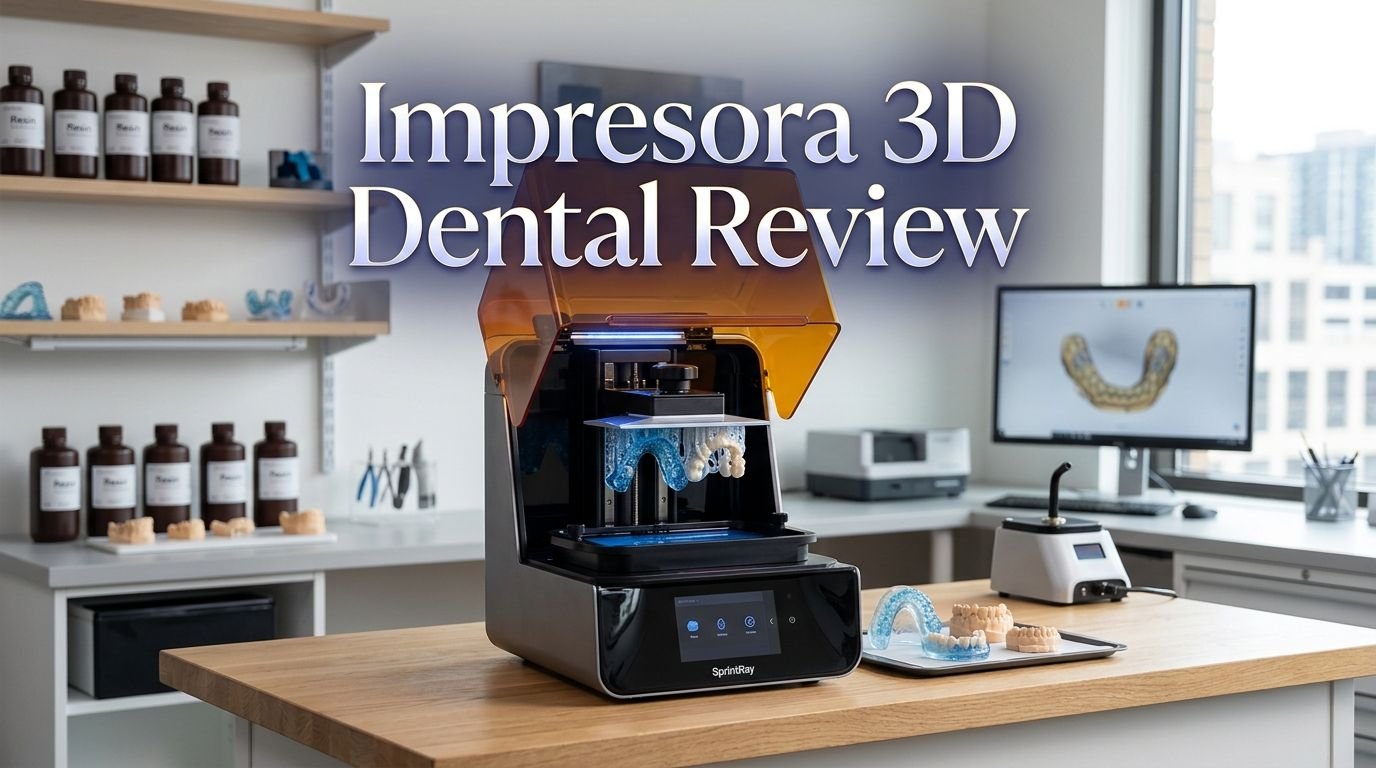
Impresora 3D Dental Review 2026: The Honest Truth
Are you a dental professional looking for the right 3D printer in 2026? The dental 3D printing market has exploded this year. New models print faster, deliver finer detail, and cost less than ever before.
Choosing the right impresora 3D dental (dental 3D printer) can save your clinic thousands of dollars each month. It can also reduce patient wait times from weeks to hours.
Same day crowns, surgical guides, clear aligners, and dentures are all possible with the right machine sitting in your office.

Key Takeaways:
- Dental 3D printers in 2026 offer print speeds up to 170mm/h, a huge improvement over models from just two years ago. Printers like the Formlabs Form 4B and Anycubic Photon Mono M7 Pro lead the speed race.
- Resolution matters most for dental work. Look for printers with at least 4K resolution. Models offering 8K to 16K resolution produce the fine detail needed for crowns, bridges, and surgical guides.
- Biocompatible resin support is essential. Not all 3D printers can use FDA cleared dental resins. Make sure your chosen printer has validated dental materials before you buy.
- The price range for dental capable 3D printers starts around $300 and goes beyond $5,000. Budget options like the ELEGOO Saturn 4 Ultra and Phrozen Sonic Mini 8K S can handle many dental applications. Professional machines like the Formlabs Form 4B and SprintRay Pro 2 offer validated workflows.
- Post processing equipment adds to the total cost. You will need a wash and cure station, and possibly a UV curing chamber. Factor these costs into your budget from the start.
- 3D printed dental restorations can last 10 to 15 years with proper care, matching traditional methods in many cases.

What Is an Impresora 3D Dental?
An impresora 3D dental is a 3D printer built or optimized for dental applications. These machines use resin based printing technology to create dental products with extreme precision. The most common technologies include LCD/MSLA, DLP, and SLA printing.
These printers create objects layer by layer. A UV light source cures liquid resin into solid shapes. Each layer can be as thin as 25 to 50 microns. This level of detail captures the fine anatomy of teeth, gums, and jaw structures.
Dental 3D printers produce a wide range of products. These include diagnostic models, surgical guides, custom trays, temporary crowns, dentures, night guards, and clear aligner molds. Some newer resins even allow direct printing of permanent crowns and long term prosthetics.
The key difference between a dental 3D printer and a standard resin printer is material validation. Dental printers support biocompatible resins that are safe for use inside the human mouth. These resins meet strict regulatory standards from organizations like the FDA and CE.
Formlabs Form 4B: The Professional Standard
The Formlabs Form 4B stands as one of the most respected dental 3D printers available today. This machine uses Low Force Display (LFD) technology to produce accurate dental parts at impressive speeds. It can print 11 clear aligner models in just 9 minutes.
The Form 4B offers an XY resolution of 50 microns. This delivers sharp edges and smooth surface finishes on every print. Dental professionals report near zero deviation from digital files. That level of accuracy matters for crowns, bridges, and surgical guides.
Speed is a standout feature. The Form 4B prints at speeds up to 100mm per hour. That makes it one of the faster professional dental printers on the market. A full build plate of dental models finishes in under 30 minutes in many cases.
Formlabs validates over 40 dental materials for this printer. These include resins for surgical guides, denture bases, denture teeth, temporary crowns, orthodontic models, and splints. Each material has documented clinical workflows.
The printer costs more than consumer options. But the integrated software, material tracking, and validated workflows justify the investment for busy dental practices. The Form 4B connects to PreForm software, which automates print setup and support placement.
SprintRay Pro 2: Built for Dental from the Ground Up
The SprintRay Pro 2 was designed exclusively for dental professionals. This DLP printer features a patent pending Optical Panel that delivers some of the highest accuracy in dental 3D printing today.
Print speed is excellent. Study models complete in about 25 minutes on the Pro 2. Temporary crowns at 100 micron layers print within 10 to 15 minutes. This speed makes same day dentistry a real option for any practice.
SprintRay includes a heated build plate and intelligent sensors. The heated plate improves resin flow and adhesion. The sensors detect errors before they ruin a print. These features reduce waste and failed prints significantly.
The Pro 2 works with SprintRay’s proprietary software and material ecosystem. Over 15 dental indications are supported. You can print surgical guides, night guards, denture bases, crown models, and sports guards from one machine.
One limitation stands out. The SprintRay Pro 2 cannot print aligners directly. It prints aligner models that require a separate thermoforming step. This adds time and equipment to the aligner workflow.
The machine costs around $5,000 to $7,000 depending on the package. SprintRay also offers the Pro Wash and Pro Cure stations as add ons. These complete the full digital workflow from scan to finished dental product.
Top 3 Alternatives for Formlabs Form 4B


ELEGOO Saturn 4 Ultra 16K: Budget Friendly Dental Printing
The ELEGOO Saturn 4 Ultra 16K brings 16K resolution to a sub $400 price point. This makes it one of the most affordable printers capable of dental quality output. The 10 inch monochrome LCD panel produces prints with a pixel size of just 14 x 19 microns.
Print speed reaches 150mm per hour with compatible resins. This puts the Saturn 4 Ultra among the fastest consumer grade resin printers available. A full plate of dental models can finish in under 20 minutes.
The printer features a smart tank heating system that warms resin to 30 degrees Celsius. Warm resin flows better and cures more evenly. This feature is important for consistent dental prints, especially in cooler work environments.
Build volume measures 211.68 x 118.37 x 220mm. That is large enough to print multiple dental arches, several surgical guides, or a batch of aligner models in one session. The flip up lid design makes model removal easy.
ELEGOO does not offer validated dental material profiles. You will need to calibrate resin settings yourself or use community developed profiles for dental resins. This requires more technical knowledge compared to closed ecosystem printers.
Wi Fi connectivity and an AI camera add convenience. You can monitor prints remotely and receive alerts if something goes wrong. These features help dental labs manage multiple printers at once.
Phrozen Sonic Mini 8K S: Precision at a Low Cost
The Phrozen Sonic Mini 8K S delivers 22 micron XY resolution. That is one of the highest resolution levels available in any consumer resin printer. Fine dental details like tooth anatomy, marginal ridges, and occlusal surfaces print with stunning clarity.
This compact printer uses a 7.1 inch monochrome LCD screen. The smaller screen means a smaller build area of 165 x 72 x 170mm. You can print about two to four dental models per batch depending on their size.
The Sonic Mini 8K S costs around $300 to $400. That makes it an excellent entry point for dental professionals testing 3D printing. It also works well as a secondary printer for detail critical jobs like crown and bridge models.
Print speed is moderate compared to newer machines. It does not match the 150mm/h speeds of the Saturn 4 Ultra or M7 Pro. But the unmatched resolution compensates for the slower pace on precision dental work.
The build plate features an additional groove for better grip. This improves model adhesion and reduces print failures. A thicker 20mm linear rail provides stable Z axis movement during printing.
Phrozen supports this printer with its own slicer software. Dental users can also use Chitubox or Lychee Slicer for more control over support placement and layer settings. Third party dental resin profiles are widely available online.
Anycubic Photon Mono M7 Pro: Speed Meets Resolution
The Anycubic Photon Mono M7 Pro combines 14K resolution with 170mm/h print speeds. This balance of speed and detail makes it attractive for dental applications that require quick turnaround without sacrificing quality.
The printer uses a 10.1 inch monochrome LCD with COB LighTurbo 3.0 light source. This technology delivers uniform light distribution across the entire build plate. Uniform light means consistent curing and accurate dimensions on every part of the print.
A dynamic heating function keeps resin at the optimal temperature throughout the print. This is critical for dental resins, which can become too viscous in cold conditions. Temperature controlled printing reduces layer separation and improves adhesion.
Build volume reaches 223 x 126 x 230mm. This is generous enough for full arch dental models, multiple surgical guides, or batches of orthodontic appliances. You can produce a high volume of dental parts in fewer print sessions.
The M7 Pro includes Wi Fi connectivity for remote file transfer and monitoring. An auto resin refill system keeps the vat topped up during long prints. These features reduce manual intervention during the printing process.
At around $400 to $500, the M7 Pro offers strong value for dental labs and practices. It lacks validated dental workflows like the Formlabs or SprintRay systems. But its raw printing capability matches or exceeds many higher priced machines.
Key Features to Look for in a Dental 3D Printer
Resolution determines how much detail your prints capture. For dental work, aim for at least 4K resolution. Printers at 8K, 14K, or 16K resolution produce finer detail for crowns, inlays, and surgical guides.
Print speed affects your daily output. Faster printers complete more jobs per day. Look for machines that print at 100mm/h or faster to handle same day dental workflows.
Build volume decides how many parts you can print at once. A larger build plate lets you batch print multiple models, guides, or appliances in a single session. This improves efficiency in busy labs.
Material compatibility is crucial. Check if the printer supports FDA cleared biocompatible resins. Some printers lock you into proprietary materials. Others accept third party resins, which gives you more options and lower costs.
Software integration matters for workflow efficiency. The best dental printers connect with intraoral scanners and CAD/CAM design software. Seamless file transfer from scan to print saves time and reduces errors.
Heating systems improve print consistency. Printers with built in resin heaters produce better results with thick dental resins. Cold resin can cause layer adhesion issues and surface defects.
Dental 3D Printing Applications in 2026
Same day crowns and restorations are the most exciting application. Dental clinics can now scan, design, and print a temporary crown in under two hours. Some advanced workflows even produce permanent restorations using new ceramic filled resins.
Surgical guides for dental implants benefit greatly from 3D printing. A printed guide fits over the patient’s teeth and directs the drill to the exact implant position. This improves placement accuracy and reduces surgery time.
Clear aligner production uses 3D printed models as molds. The printer creates a series of progressive dental models. Each model gets thermoformed with clear plastic to produce individual aligner stages. Some newer systems print aligners directly.
Dentures are now 3D printable. Both the denture base and teeth can be printed using specialized resins. Digital dentures reduce the number of patient visits from five or six down to just two or three.
Night guards and occlusal splints print quickly and fit precisely. A digital scan of the patient’s teeth feeds directly into splint design software. The printer produces a custom fitted guard in under an hour.
Diagnostic models and study casts have moved almost entirely to 3D printing. Traditional plaster models are heavy, fragile, and slow to produce. Printed models are light, durable, and ready in minutes.
Biocompatible Resins: What You Need to Know
Biocompatible resins are the materials that make dental 3D printing possible. These resins meet ISO 10993 standards for biological safety. They are tested for cytotoxicity, irritation, and sensitization.
Class I biocompatible resins work for short term oral contact. These include materials for surgical guides, diagnostic models, and custom trays. Contact time is limited to minutes or hours.
Class II biocompatible resins support longer term use. These materials produce denture bases, denture teeth, splints, and retainers. They are safe for extended wear inside the mouth, often for months or years.
Formlabs offers some of the widest selections of dental resins. Their lineup includes Dental Model Resin, Surgical Guide Resin, Denture Base and Teeth Resins, and Custom Tray Resin. Each material has specific curing and post processing requirements.
Third party dental resin brands have grown rapidly. Companies like NextDent, BEGO, Keystone Industries, and SprintRay all sell dental resins for various printer platforms. Compatibility varies by printer type and light wavelength.
Cost per print depends on the resin used. Basic model resin costs about $0.50 to $2.00 per dental model. Biocompatible resins for functional appliances cost more, typically $3 to $10 per part depending on size and material type.
Post Processing for Dental 3D Prints
Every dental 3D print requires post processing. The first step is washing the printed part in isopropyl alcohol (IPA) or a specialized cleaning solution. This removes uncured resin from the surface.
Washing typically takes 5 to 10 minutes in an automated wash station. Formlabs Form Wash, Anycubic Wash and Cure, and ELEGOO Mercury systems all handle this step. Proper washing ensures a clean surface for the next stage.
UV curing follows washing. The printed part goes into a UV curing chamber for additional light exposure. This step fully hardens the resin and activates its final mechanical properties. Dental resins often require specific curing times and temperatures.
Support removal comes next. Printed dental models and appliances have thin support structures that hold them to the build plate during printing. These supports need careful removal with flush cutters or a sharp blade.
Sanding and polishing improve the final surface. Dental appliances that contact soft tissue need smooth, polished surfaces. A few minutes with fine grit sandpaper or a polishing wheel makes a big difference in patient comfort.
For dentures and long term appliances, additional finishing steps include staining, glazing, and characterization. These steps add natural color and texture to make prosthetics look lifelike.
Cost of Setting Up a Dental 3D Printing Workflow
The 3D printer itself ranges from $300 to $7,000 depending on the model. Budget printers like the ELEGOO Saturn 4 Ultra and Phrozen Sonic Mini 8K S sit at the low end. Professional systems like the Formlabs Form 4B and SprintRay Pro 2 command higher prices.
A wash and cure station adds $200 to $800 to your setup. Basic models from ELEGOO and Anycubic cost less. Dedicated dental wash systems from Formlabs and SprintRay cost more but offer validated protocols.
Dental design software is another cost factor. Programs like exocad, 3Shape, and Medit Design require monthly or annual subscriptions. Some cost $100 to $500 per month depending on the modules you need.
An intraoral scanner connects the digital workflow. Scanners from Medit, 3Shape TRIOS, and iTero range from $15,000 to $45,000. This is often the largest single investment in a digital dental workflow.
Resin costs average $50 to $300 per liter depending on the type. Basic model resin is cheapest. Specialized biocompatible resins for splints, dentures, and surgical guides cost more per bottle.
The total startup cost for a basic dental 3D printing setup falls between $1,000 and $3,000 if you already own a scanner. A complete professional setup with scanner, printer, post processing, and software can exceed $25,000.
Digital Dentistry Trends Shaping 2026
Intraoral scanners now exceed 65 percent adoption in private dental practices worldwide. This growth drives demand for in office 3D printers. Scanned data needs a printer to become a physical product.
AI powered design software is reducing manual CAD work. New tools can auto design crowns, bridges, and denture setups from scan data. This cuts design time from 30 minutes to under 5 minutes per case.
Direct printed aligners are becoming reality. New biocompatible clear resins allow printing of aligners without the thermoforming step. This simplifies the workflow and reduces equipment costs for orthodontic practices.
Multi material printing is an emerging trend. Future dental printers may produce a denture base and teeth in a single print session using different resins. This would eliminate assembly and bonding steps.
Cloud based print management lets labs handle large volumes. Dental labs can receive files, queue prints, and monitor machines remotely. This improves efficiency and enables 24 hour production schedules.
Material science advances are producing stronger and more aesthetic resins every year. Ceramic filled and hybrid resins now approach the strength and appearance of traditional porcelain restorations.
Choosing the Right Impresora 3D Dental for Your Practice
Small dental practices with low volume needs should start with a budget printer like the ELEGOO Saturn 4 Ultra 16K or Phrozen Sonic Mini 8K S. These machines handle surgical guides, diagnostic models, and custom trays at minimal cost.
Mid size practices printing 10 to 30 cases per week benefit from the Anycubic Photon Mono M7 Pro. Its combination of speed, resolution, and build volume handles moderate production without breaking the budget.
High volume practices and dental labs should invest in the Formlabs Form 4B or SprintRay Pro 2. These professional systems offer validated materials, reliable workflows, and the throughput needed for daily production.
Consider your primary application. If you mainly print models and surgical guides, a budget printer works fine. If you print dentures, splints, and long term appliances, you need a printer with validated biocompatible resin support.
Think about support and training. Professional systems from Formlabs and SprintRay include customer support, training resources, and clinical workflow guides. Budget printers require more self directed learning and troubleshooting.
Factor in total cost of ownership. A cheap printer with expensive resin and high failure rates costs more over time than a premium printer with reliable results. Calculate cost per print, not just the sticker price of the machine.
FAQ: Impresora 3D Dental
How accurate are dental 3D printers in 2026?
Modern dental 3D printers achieve accuracy within 25 to 50 microns. This level of precision meets clinical requirements for crowns, bridges, surgical guides, and orthodontic appliances. Professional machines like the Formlabs Form 4B report near zero deviation from digital designs. Budget printers can also reach clinically acceptable accuracy with proper calibration and resin settings.
Can I use a regular resin 3D printer for dental work?
Yes, many general purpose resin printers can produce dental models and non clinical items. However, for products that go inside a patient’s mouth, you must use biocompatible resins. Not all printers support these materials. Check resin compatibility and curing wavelength before purchasing a consumer printer for dental applications.
How long do 3D printed dental products last?
3D printed dental crowns can last 10 to 15 years with proper care. Denture bases printed from validated resins last several years. Surgical guides are single use items. Night guards and splints typically last one to three years depending on the material and patient wear habits.
What is the best dental 3D printer for beginners?
The ELEGOO Saturn 4 Ultra 16K offers the best starting point for dental professionals new to 3D printing. It combines affordable pricing, high resolution, fast print speeds, and a user friendly interface. The Phrozen Sonic Mini 8K S is another strong choice for beginners who prioritize fine detail over speed.
How much does it cost to 3D print a dental model?
A single dental model costs approximately $0.50 to $2.00 in resin. Surgical guides cost $2 to $5 per piece. Denture components range from $5 to $15 depending on size and material. These costs are significantly lower than outsourcing the same products to an external dental lab.
Do I need special software for dental 3D printing?
You need two types of software. CAD software like exocad or 3Shape designs the dental product from scan data. Slicer software like Chitubox, Lychee, or the printer’s native software prepares the design file for printing. Some dental printers include their own integrated software that handles both steps.

Hello, i’m Ivoria i am the face behind Tech Tracker Blog. I am passionate about my work and love to explore gadgets and share about my experience.