FiiO E6 Portable Headphone Amplifier Review 2026: Worth Buying?
You want better sound from your headphones. You don’t want to spend a fortune. The FiiO E6 portable headphone amplifier has been a go-to pick for audio lovers on a tight budget for years. But here’s the real question: does this tiny amplifier still hold up in 2026?
This little device weighs just 16 grams and fits inside the palm of your hand. It costs around $30. And somehow, it packs enough punch to make your music sound noticeably different.
Whether you’re plugging into your phone, laptop, or MP3 player, the FiiO E6 promises cleaner audio, better bass, and a real volume boost for your favorite pair of headphones.
Key Takeaways:
- Ultra compact and lightweight build. The FiiO E6 measures just 1.6 x 1.5 x 0.35 inches and weighs only 16 grams. You can clip it onto your shirt, pocket, or bag strap and barely notice it’s there. This makes it one of the smallest portable headphone amplifiers ever made.
- Three built-in EQ modes offer real flexibility. You get a bass boost mode, a midrange boost mode, and a 3dB frequency drop mode. Each mode changes the audio signature in a meaningful way. The amplifier remembers your last EQ setting even after you turn it off.
- Battery life runs around 10 hours on a single charge. FiiO claims 10 hours, and real-world testing confirms this number is accurate. Charging happens through a mini USB port and takes about two hours.
- Output power of 100mW at 32 ohms suits most portable headphones. The E6 can drive headphones with impedance between 16 and 150 ohms. It won’t power high-impedance studio cans, but it handles most consumer and mid-range audiophile headphones without issue.
- Budget-friendly price point under $30. This amplifier delivers a surprising amount of value for its price. It improves sound clarity, adds volume headroom, and gives you EQ control at a cost lower than a casual dinner out.
- Successor to the popular FiiO E5 with notable improvements. The E6 uses a better amplifier circuit, adds digital volume control with 64 steps, and includes improved EQ options. It’s a meaningful upgrade over its predecessor in both sound and build quality.

FiiO E6 Portable Headphone Amplifier Overview
The FiiO E6 arrived on the market as a direct replacement for the legendary FiiO E5. FiiO, a company based in Guangzhou, China, built its reputation on affordable portable audio gear. The E6 carries that tradition forward with real improvements.
This amplifier uses a 3.5mm stereo input and output setup. You connect your audio source to the input jack and your headphones to the output jack. The signal passes through the E6’s amplifier circuit, boosting the power and giving you control over volume and EQ.
The E6 also shares the same basic circuit design and opamp found in FiiO’s larger E7 DAC/amplifier. That means you get a piece of higher-end audio engineering packed into a device smaller than a matchbox. For anyone looking to improve the sound of their smartphone, laptop, or portable music player, the E6 serves as a solid entry point.
Design and Build Quality of the FiiO E6
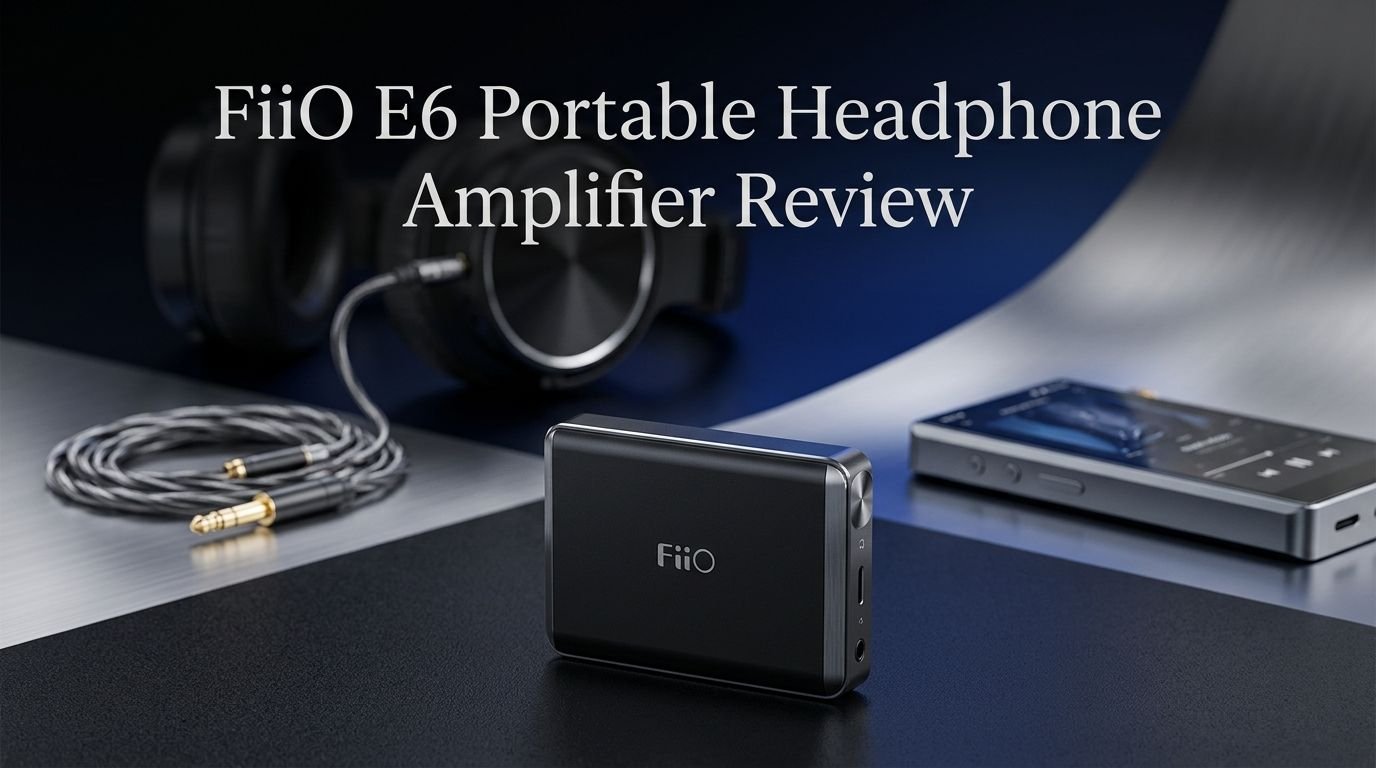
The first thing you notice about the FiiO E6 is how incredibly small it is. It fits inside your closed hand with room to spare. The body uses a smooth plastic shell with rounded edges. There are no sharp corners to snag on fabric or skin.
A silver-colored triangulated corner sits on the upper right of the device. This adds a touch of visual flair to the otherwise all-black design. That silver corner also doubles as a keychain loop, so you can attach it to your keyring or bag.
FiiO includes two transparent detachable clips in the box. These clips snap onto the silver corner and let you attach the E6 to your clothing or strap. The spare clip shows that FiiO thought ahead about daily wear and tear.
Some users may miss the metal body of the older E5. However, the plastic build keeps the weight down to just 16 grams. The device feels solid in hand. Shaking it reveals no loose parts aside from the volume control wheel. For a sub-$30 product, the build quality exceeds expectations.
Top 3 Alternatives for FiiO E6 Portable Headphone Amplifier
1. FiiO A1 Portable Headphone Amplifier

2. FiiO JadeAudio KA1 USB DAC and Headphone Amplifier

3. Fosi Audio DS1 USB C DAC Headphone Amplifier

Sound Quality and Audio Performance
The FiiO E6 delivers a clear and noticeable improvement over direct headphone output from most smartphones and laptops. The sound gets wider. Details that were buried in the mix become easier to hear. Instruments separate better in the stereo field.
Bass response tightens up compared to an unamplified signal. The low end feels more controlled and punchy rather than loose and muddy. Midrange frequencies gain warmth without losing clarity. Treble stays crisp and present, with a slight sparkle that adds energy to vocal tracks and acoustic instruments.
Testing with high-quality headphones like the Grado RS1 reveals the E6’s strengths and limits. It holds its own against portable amplifiers costing two to three times more. However, it falls short of a larger 9V-powered amp in terms of raw driving power and noise floor management.
On digital silence, the E6 is extremely quiet. There’s no audible hiss or background noise. This matters a lot for listeners who use sensitive in-ear monitors. The clean noise floor means you hear your music and nothing else.
EQ Settings and Sound Customization
One of the standout features of the FiiO E6 is its three-mode EQ system. You cycle through the modes by flicking the power switch up once while the device is on.
The first mode is indicated by a red LED on the back of the device. This mode boosts the upper bass frequencies. It adds weight and punch to kick drums, bass guitars, and electronic sub-bass. Distortion stays well-controlled even at higher volume levels. This mode works great for genres like hip-hop, EDM, and pop.
The second mode shows a blue LED. This mode boosts the midrange frequencies. Vocals come forward in the mix. Acoustic guitars and piano notes gain body and presence. This setting pairs well with headphones that already emphasize the midrange, like the Koss Portapro.
The third mode displays a pink LED and drops the entire frequency range by 3dB. This setting helps when your source device has a very strong output. It gives you more room on the volume dial before things get too loud. The E6 remembers your last EQ setting even after you power it off. This small detail saves time and frustration.
Battery Life and Charging
The FiiO E6 runs on a built-in rechargeable lithium-ion battery. FiiO rates the battery life at over 10 hours of continuous use. Real-world testing backs up this claim. You can expect a full day of listening on a single charge.
Charging happens through a mini USB port located on the side of the device. A full charge takes about 120 minutes. The charging indicator turns red while charging and switches to blue when the device is powered on and ready to use.
The 10-hour battery life is impressive for a device this small. It means you can take the E6 on a long flight, a full work day, or a weekend road trip without worrying about running out of power. For most users, charging the E6 once every two to three days will be enough.
One thing to note: the mini USB charging standard is older technology. Most modern devices use USB-C. You may need to carry a separate cable for the E6, which is a minor inconvenience in 2026.
Volume Control and Power Output
The FiiO E6 uses a digital volume control wheel located on the left side of the device. This wheel clicks through 64 individual volume steps. Each click provides a small and precise volume change.
The 64-step system gives you fine-grained control over your listening volume. You won’t experience sudden jumps between too quiet and too loud. This level of control is rare in amplifiers at this price point.
Output power tops out at over 100mW at 32 ohms. The E6 can drive headphones with impedance from 16 to 150 ohms. This covers most consumer headphones, earbuds, and many audiophile-grade portable headphones.
High-impedance headphones above 150 ohms will not reach their full potential with the E6. If you use 250-ohm or 600-ohm studio headphones, you’ll need a more powerful desktop amplifier. But for everyday portable listening, the E6 provides plenty of clean power.
Portability and Everyday Use
No products found.
The FiiO E6 was built for life on the go. At just 16 grams and roughly the size of a large postage stamp, it adds almost zero bulk to your pocket or bag. The included clip makes it easy to attach the E6 to a shirt collar, jacket pocket, or backpack strap.
The input and output jacks sit on opposite ends of the device. This layout keeps your cables organized and prevents tangling. You simply run one short cable from your phone or player to the E6’s input, then plug your headphones into the output.
The E6 works well with smartphones, iPods, laptops, and portable music players. It does not require any drivers or software. Just plug in and turn it on. The plug-and-play simplicity makes this amplifier ideal for non-technical users who want better sound without a learning curve.
For commuters, travelers, and students, the E6 fits seamlessly into a daily routine. Its tiny size means you can leave it attached to your headphone cable and forget it’s there. The clip keeps it secure during movement.
Who Should Buy the FiiO E6?
The FiiO E6 makes the most sense for first-time amplifier buyers and budget-conscious audio fans. If you’ve never used a headphone amplifier before, this device provides a clear and affordable introduction to the benefits of amped audio.
Students who listen to music during study sessions will appreciate the improved clarity and volume control. The EQ settings let you customize the sound for different types of content like podcasts, classical music, or bass-heavy electronic tracks.
Commuters and frequent travelers benefit from the E6’s tiny size and long battery life. You can toss it in your bag and enjoy better audio during flights, train rides, or long car trips without carrying extra weight.
The E6 also works well as a secondary amplifier. Experienced audiophiles who already own a desktop setup can use the E6 for portable listening. It won’t replace a high-end DAC/amp combo, but it provides a noticeable upgrade over a phone’s built-in audio output.
FiiO E6 Specifications Breakdown
Understanding the numbers behind the FiiO E6 helps you see what this device can and cannot do. The frequency response runs from 20Hz to 20kHz, which covers the full range of human hearing. This ensures you hear every low bass note and every high cymbal crash.
The signal-to-noise ratio sits at 95dB. This means the audio signal is 95 decibels louder than any background noise the amplifier introduces. A higher number means cleaner sound. While 95dB is good for a budget device, higher-end amplifiers often reach 110dB or more.
Input sensitivity is rated at 650mV. This tells you the minimum signal strength the E6 needs from your audio source to work properly. Most smartphones and portable players output well above this threshold.
The device draws power at DC 5V/500mA through its mini USB connection. Total charging time is about 120 minutes. The internal lithium-ion battery does not have a user-stated capacity in milliamp-hours, but FiiO quotes it at over 160mAh, which aligns with the 10-hour runtime.
Pros and Cons of the FiiO E6
Every product has its strengths and weaknesses. The FiiO E6 is no different.
On the positive side, this amplifier delivers real audio improvement at a rock-bottom price. The three EQ modes add surprising versatility. The build quality feels solid despite the plastic body. Battery life is strong, and the clip-on design makes portability effortless.
The 64-step digital volume control stands out as a premium feature at this price. It provides smooth, precise volume adjustments that you typically find on more expensive devices.
On the downside, the mini USB charging port feels outdated in 2026. Most users will need to carry an extra cable. The 16-to-150 ohm impedance range means the E6 cannot power high-impedance headphones properly.
The plastic body, while lightweight, lacks the premium feel of metal amplifiers. Some users report that the volume wheel can feel slightly loose after extended use. The E6 also lacks a built-in DAC, so it depends entirely on your source device’s digital-to-analog conversion quality.
FiiO E6 vs FiiO A1: How Do They Compare?
The FiiO A1 is the direct successor to the E6. It arrived with several upgrades that address some of the E6’s shortcomings. The A1 uses a metal body instead of plastic. It feels more premium in hand and offers better durability.
The A1 expands the EQ options to four modes compared to the E6’s three. It also widens the impedance range to 16 to 300 ohms, meaning it can drive a broader range of headphones. The signal-to-noise ratio jumps to 100dB, a clear improvement over the E6’s 95dB.
Battery life on the A1 drops slightly to around 13 hours, though this remains impressive. The A1 keeps the same tiny form factor and clip-on design that made the E6 popular.
If you’re choosing between these two, the A1 wins on almost every technical metric. However, the E6 often sells for less money. If budget is your top priority and you use headphones under 150 ohms, the E6 still delivers excellent value. For anyone willing to spend a few extra dollars, the A1 is the smarter long-term investment.
Is the FiiO E6 Still Worth Buying in 2026?
This is the big question. The FiiO E6 launched over a decade ago. Audio technology has moved forward significantly since then. USB-C DAC dongles now offer amplification and digital-to-analog conversion in one tiny package. Bluetooth amplifiers provide wireless convenience.
Yet the FiiO E6 still has its place. Its analog-only approach means zero latency. There’s no digital processing delay between your source and your headphones. The EQ modes offer physical sound shaping that doesn’t depend on software or apps.
For users with a simple setup like a phone and a pair of wired headphones, the E6 provides an immediate and noticeable upgrade. The price remains one of the lowest in the entire portable amplifier market.
However, if you need features like USB-C connectivity, a built-in DAC, or Bluetooth, the E6 won’t meet your needs. Modern alternatives like the FiiO KA1 or Fosi Audio DS1 offer those features at competitive prices. The E6 earns a recommendation as a pure analog amplifier for budget buyers who value simplicity and sound quality over modern connectivity.
How to Get the Best Sound From Your FiiO E6
Getting the most out of the FiiO E6 requires a few simple steps. First, use a line-out cable from your audio source instead of the headphone output. A line-out sends a cleaner signal that hasn’t been processed by your device’s internal amplifier. The FiiO L9 line-out cable works perfectly with iPods and similar players.
Second, experiment with the three EQ modes across different headphones and music genres. The bass boost mode doesn’t suit every headphone. Some cans already have strong bass and will sound muddy with the boost enabled. The midrange mode can breathe new life into bright-sounding headphones.
Third, keep the volume at moderate levels. The E6 sounds its cleanest in the lower two-thirds of its volume range. Pushing above level 50 of 64 can introduce slight distortion with sensitive headphones.
Finally, charge the E6 fully before extended listening sessions. A low battery can slightly affect audio performance. A fresh charge ensures you get the cleanest and most powerful output the E6 can deliver.
Final Verdict on the FiiO E6
The FiiO E6 portable headphone amplifier remains a solid budget pick in 2026. It delivers real, audible improvements to your music at a price that almost anyone can afford. The three EQ modes, the long battery life, and the tiny form factor make it a practical daily companion.
It won’t replace a dedicated DAC/amp combo or a high-end desktop amplifier. It won’t power your 600-ohm Beyerdynamic cans. But that was never its purpose.
The E6 exists to give everyday listeners a taste of better audio. It does that job well. If you’re looking for your first headphone amplifier, or you need a reliable portable option that costs less than a pair of movie tickets, the FiiO E6 earns a confident recommendation.
Frequently Asked Questions
Does the FiiO E6 work with smartphones?
Yes, the FiiO E6 works with any device that has a 3.5mm headphone output. You connect your smartphone’s headphone jack to the E6’s input using a standard 3.5mm cable. If your phone lacks a headphone jack, you’ll need a USB-C to 3.5mm adapter first. The E6 does not connect via USB or Bluetooth.
How long does the FiiO E6 battery last?
The FiiO E6 battery lasts approximately 10 hours on a full charge. This matches FiiO’s official rating. Charging takes about two hours through the mini USB port. Most users find that charging every two to three days is sufficient with regular daily use.
Can the FiiO E6 drive high-impedance headphones?
The FiiO E6 supports headphones with impedance between 16 and 150 ohms. It can output 16mW into 300-ohm headphones, but performance drops significantly at that level. For headphones above 150 ohms, a more powerful amplifier like the FiiO A1 or a desktop unit would be a better choice.
What is the difference between the FiiO E6 and FiiO E5?
The FiiO E6 improves on the E5 in several ways. It uses a better amplifier circuit with a higher signal-to-noise ratio. It adds three EQ modes compared to the E5’s single bass boost. The volume control switches from analog to digital with 64 precise steps. The E6 is also smaller and lighter than the E5.
Is the FiiO E6 good for gaming?
The FiiO E6 can improve gaming audio by boosting volume and clarity through your headphones. The zero-latency analog connection means no audio delay during gameplay. However, it lacks a built-in microphone pass-through. You would need a separate microphone for voice chat if you use the E6 with gaming headphones.
Does the FiiO E6 have a DAC built in?
No, the FiiO E6 is a pure analog amplifier. It does not include a digital-to-analog converter. It amplifies the analog signal that your source device sends through the 3.5mm jack. If you want a combined DAC and amplifier, consider alternatives like the FiiO KA1 or the Fosi Audio DS1.