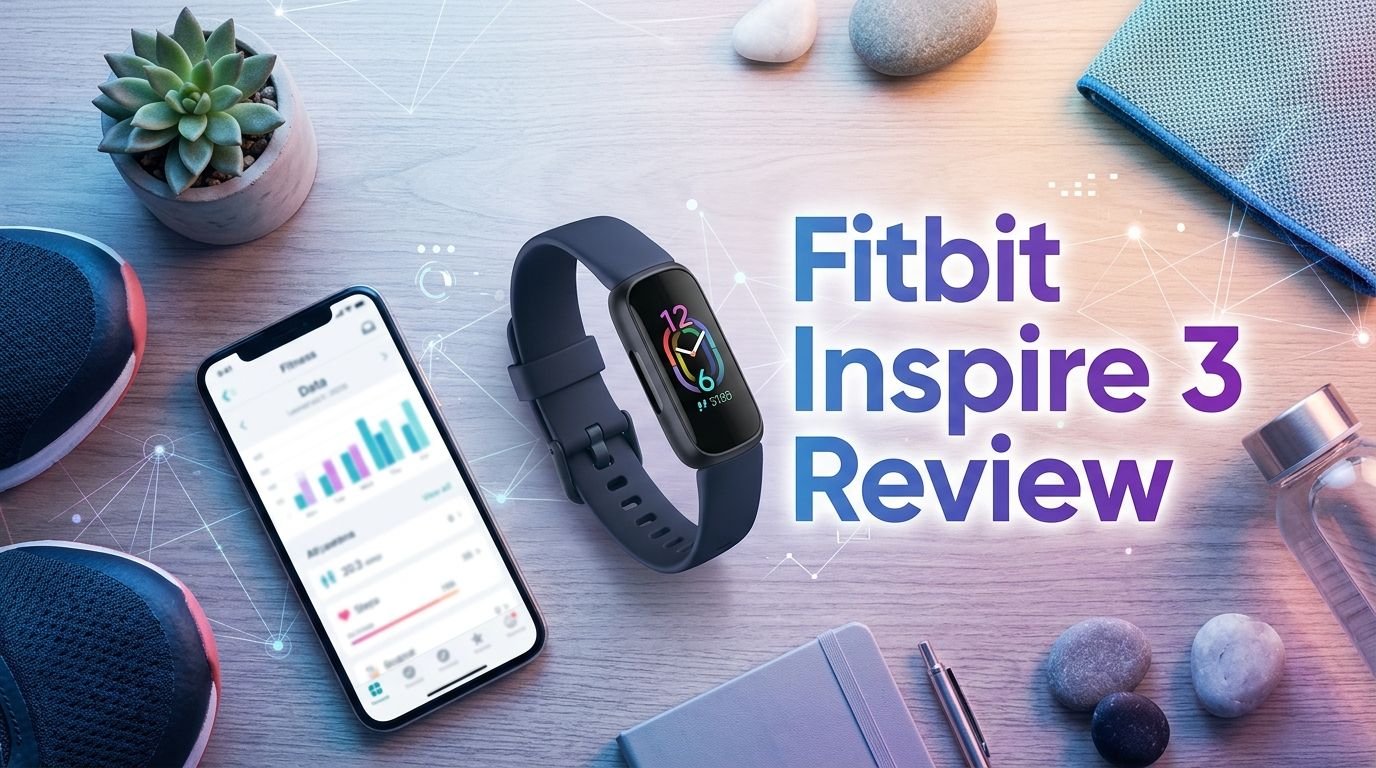
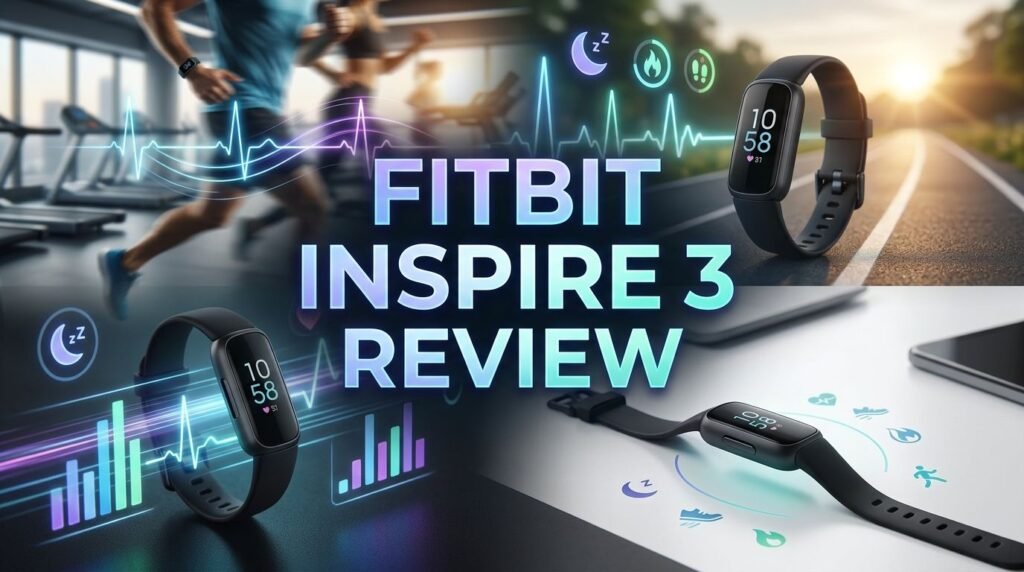
Fitbit Inspire 3 Review 2026: Is This Still Worth It?
Are you looking for an affordable fitness tracker that covers the basics without breaking the bank? The Fitbit Inspire 3 launched back in 2022.
Yet it remains one of the most popular budget wearables on the market in 2026. With a color AMOLED display, 24/7 heart rate monitoring, and up to 10 days of battery life, this little band packs a serious punch for under $100.
But here’s the real question. Does it still hold up against newer competitors from Xiaomi, Samsung, and Amazfit? With Fitbit now fully under Google’s umbrella and the account migration deadline looming in May 2026, there’s a lot to consider before you buy.
Key Takeaways:
- The Fitbit Inspire 3 retails for about $99.95 and frequently drops below $80 during sales. It offers excellent value for a tracker with heart rate monitoring, stress management, SpO2 tracking, and sleep analysis. Few competitors match this feature set at this price.
- Battery life is a standout strength. Fitbit claims up to 10 days per charge. Real world testing confirms you can go well over a week, even with notifications, auto workout detection, and continuous heart rate tracking turned on.
- The color AMOLED touchscreen is a big upgrade over the older Inspire 2. It is bright, responsive, and easy to read outdoors. The slim band design makes it comfortable for all day and all night wear.
- Sleep tracking is one of the best in its class. The Inspire 3 records light, deep, and REM sleep stages. Reddit users have even compared its readings against clinical sleep studies and found them surprisingly accurate for a sub $100 device.
- There is no built in GPS. If you run or cycle outdoors, you will need your phone nearby for route mapping. This is the biggest trade off for the price.
- Google account migration is required by May 19, 2026. If you own a Fitbit or plan to buy one, you must move your Fitbit account to a Google account. After that deadline, standalone Fitbit accounts will stop working. Security updates for the Inspire 3 are guaranteed through at least February 2028.

Fitbit Inspire 3 Design and Build Quality
The Fitbit Inspire 3 sports a slim, lightweight design that sits comfortably on your wrist. It weighs just about 20 grams without the band. You can wear it all day at work, during a workout, and even through the night without noticing it.
The body uses a durable plastic casing with rounded edges. It does not feel premium like a stainless steel watch, but it feels solid for its price range. The band attaches securely and does not come loose during exercise.
Fitbit offers the Inspire 3 in three color options: Midnight Zen, Morning Glow, and Lilac Bliss. Each comes with a matching silicone strap. You can also swap the bands with third party options available on Amazon for extra style.
The tracker is water resistant up to 50 meters (5 ATM). This means you can swim, shower, and sweat without worry. The buttons are gone on this model. All interaction happens through the touchscreen and a side tap gesture.
Display and Touchscreen Performance
The Fitbit Inspire 3 features a color AMOLED display. This is a major step up from the grayscale screen on the Inspire 2. Colors pop, text is sharp, and the screen is easy to read in direct sunlight.
The display uses a touch interface for scrolling through stats, notifications, and settings. Swipe up, down, left, and right to access different screens. The responsiveness is good for a budget tracker. There is minimal lag during normal use.
One limitation is the screen size. The display area is small compared to devices like the Samsung Galaxy Fit3 or Fitbit Charge 6. People with larger fingers may find it a bit tricky to tap on small icons. However, Fitbit keeps the interface simple enough that this rarely becomes a problem.
You can customize the watch face through the Fitbit app. Dozens of free clock faces are available, and they range from minimal digital layouts to colorful analog designs. The always on display feature is absent here, though. You need to raise your wrist or tap the screen to wake it.
Heart Rate Monitoring and Health Tracking
The Fitbit Inspire 3 includes 24/7 continuous heart rate monitoring. It uses an optical sensor on the back of the device to track your pulse throughout the day and night. This data feeds into resting heart rate trends, cardio fitness scores, and Active Zone Minutes.
Active Zone Minutes is one of Fitbit’s best features. It buzzes your wrist when you enter fat burn, cardio, or peak heart rate zones during a workout. This gives you real time feedback without checking your phone. The American Heart Association recommends 150 minutes of moderate activity per week. The Inspire 3 tracks your progress toward that goal automatically.
Heart rate accuracy is solid for this price point. A Reddit user compared their Inspire 3 data against a clinical sleep study and found the heart rate was within 1 BPM of the medical grade equipment. During high intensity workouts, wrist based sensors can occasionally lag. But for daily use and general fitness, the Inspire 3 performs reliably.
The tracker also measures SpO2 (blood oxygen saturation) overnight. This can help spot potential breathing issues during sleep. You will find this data in the Fitbit app each morning.
Top 3 Alternatives for Fitbit Inspire 3
If the Fitbit Inspire 3 does not check every box for you, these three alternatives are worth a close look. Each offers a slightly different set of strengths at a similar or lower price point.
1. Xiaomi Smart Band 9 offers a stunning 1.62 inch AMOLED display, up to 21 days of battery life, and over 150 workout modes. At around $30, it costs a fraction of the Inspire 3 and delivers incredible value.

2. Amazfit Band 7 features an 18 day battery, a 1.47 inch AMOLED screen, built in Alexa, and 120 sport modes. It tracks heart rate, SpO2, and stress. It usually sells for under $50.

3. Samsung Galaxy Fit3 brings a larger 1.6 inch AMOLED display, a premium aluminum frame, and up to 13 days of battery life. It works best with Samsung phones but also pairs with other Android devices.
![SAMSUNG Galaxy FIT 3 [2024] 1.6' AMOLED Display | 14 Days Battery Life | 100+ Watchfaces | 100+ Exercise Modes | International Model - (Gray)](https://techtracker.blog/wp-content/plugins/aawp/public/image.php?url=YUhSMGNITTZMeTl0TG0xbFpHbGhMV0Z0WVhwdmJpNWpiMjB2YVcxaFoyVnpMMGt2TkRGdVZHcDJWVkZTVUV3dVgxTk1NVFl3WHk1cWNHYz18MTc3NDI5NjI5Mw=)
Sleep Tracking Capabilities
Sleep tracking is one of the strongest selling points of the Fitbit Inspire 3. It records your total sleep time and breaks it down into light, deep, and REM stages. You also get a Sleep Score each morning that rates the quality of your rest on a scale from 1 to 100.
The tracker detects when you fall asleep and wake up automatically. You do not need to press any buttons. It also tracks restlessness and time spent awake during the night. This data appears in detailed graphs inside the Fitbit app.
Fitbit Premium subscribers get extra sleep insights. These include a Sleep Profile that assigns you a sleep animal based on your patterns over a month. You also get benchmark comparisons against other Fitbit users in your age group. However, the basic sleep data is available for free.
Accuracy is impressive for a budget device. Users on Reddit have reported that the Inspire 3’s sleep stage detection closely matched clinical polysomnography results. Blood oxygen readings were within 1% of professional equipment. For anyone who wants to improve their sleep habits, the Inspire 3 provides plenty of useful data.
Stress Management and Mindfulness Features
The Fitbit Inspire 3 includes a Stress Management Score. This score ranges from 1 to 100 and reflects how your body handles stress each day. It factors in heart rate variability, exertion balance, and sleep patterns to generate the number.
A higher score means your body shows fewer signs of physical stress. A lower score suggests you may need more rest or relaxation. You can track this score daily in the Fitbit app and spot trends over time.
The tracker also offers guided breathing sessions right on your wrist. You can choose a 2 minute or 5 minute session. The device vibrates gently to guide your inhales and exhales. This is a simple but effective way to take a quick mental break during a busy day.
Mindfulness reminders can be set through the app. You can schedule alerts that prompt you to pause, breathe, and check in with yourself. While these features are basic compared to a dedicated meditation app, they add real value to a tracker that costs under $100.
Workout and Exercise Tracking
The Fitbit Inspire 3 supports 20 exercise modes. These include running, walking, cycling, swimming, yoga, circuit training, and more. You can set your preferred activities on the device for quick access.
SmartTrack is the auto detection feature. It recognizes certain activities like walking, running, and cycling after a few minutes and logs them automatically. This is great for people who forget to start a manual workout session.
During exercise, the tracker displays real time stats like duration, heart rate, calories burned, and Active Zone Minutes. You can view a summary on your wrist after each session. The full workout details sync to the Fitbit app on your phone.
The biggest limitation is the lack of built in GPS. If you want distance and pace data for outdoor runs or bike rides, you need to carry your smartphone. The Inspire 3 uses your phone’s GPS through a feature called Connected GPS. This works well but adds the inconvenience of needing your phone nearby.
For gym workouts, home exercises, and general daily movement tracking, the Inspire 3 handles the job perfectly. It counts steps, floors climbed, and active minutes with good accuracy.
Battery Life and Charging
Battery life is one of the Fitbit Inspire 3’s biggest advantages. Fitbit rates it at up to 10 days per charge. In real world use with heart rate monitoring, sleep tracking, notifications, and occasional workouts, most users report getting 7 to 9 days consistently.
This is far better than many smartwatches that need nightly charging. You can go an entire week without thinking about the charger. This also means uninterrupted sleep tracking, which is a big plus.
Charging uses a proprietary magnetic cable. You snap the clip onto the back of the tracker, and it magnetically locks into place. A full charge takes about 2 hours from empty. The cable is small and easy to travel with.
One drawback is the proprietary charger itself. If you lose it, you need to buy a replacement. Universal charging standards like USB C or Qi wireless are not supported. Budget accessories on Amazon can fill the gap, but it is still a minor inconvenience.
Fitbit App and Software Experience
The Fitbit app serves as your health dashboard. It syncs with the Inspire 3 over Bluetooth and displays all your data in clean, easy to read charts. You can view heart rate trends, sleep history, step counts, workout summaries, and more.
The app is available on iOS and Android. It works smoothly on both platforms. Setting up the Inspire 3 takes about 5 minutes. You pair the tracker, create or sign in to your account, and you’re ready to go.
Fitbit Premium is the paid subscription that unlocks extra features. These include advanced sleep insights, guided workout videos, mindfulness content, and deeper health reports. Premium costs about $9.99 per month or $79.99 per year. The Inspire 3 comes with a 6 month free trial of Premium for new users.
Without Premium, you still get all core features. Step tracking, heart rate, basic sleep data, exercise logging, and the Stress Management Score are all free. Premium adds nice extras, but the Inspire 3 works very well without it.
Google Account Migration: What You Need to Know
This is an important topic for 2026. Fitbit accounts will stop working after May 19, 2026. Google, which owns Fitbit, requires all users to migrate their Fitbit data to a Google account before that date.
The migration process is straightforward. Open the Fitbit app, go to Settings, and follow the prompts to link or create a Google account. Your health data, history, and device settings transfer over. The process takes just a few minutes.
If you do not migrate by the deadline, you will lose access to the Fitbit app and your data. Google has set July 15, 2026 as the final date for downloading or deleting your Fitbit data before it begins processing deletions.
For new buyers, this means you will set up your Inspire 3 with a Google account from the start. It is a minor step, but worth knowing about. On the positive side, Google has confirmed that security updates for the Inspire 3 will continue through at least February 2028. So the device still has solid software support ahead.
Fitbit Inspire 3 Pros and Cons
Every product has strengths and weaknesses. Here is a balanced look at what the Fitbit Inspire 3 does well and where it falls short.
On the positive side, the Inspire 3 delivers excellent battery life that lasts a full week or more. The sleep tracking is accurate and detailed. The color AMOLED screen is bright and responsive. It is lightweight, comfortable, and water resistant to 50 meters. The Fitbit app provides a polished software experience. And the price stays under $100.
On the downside, there is no built in GPS. Outdoor athletes who want standalone route tracking will need to look elsewhere. The screen is small, which may frustrate users who prefer larger displays. The proprietary charger can be annoying if you misplace it. And some of the best health insights require a Fitbit Premium subscription.
The Inspire 3 also lacks advanced features found in pricier wearables. There is no ECG sensor, no skin temperature sensor for fever detection, and no onboard music storage. These omissions are expected at this price, but they are worth noting if you want a more complete health tool.
Overall, the pros far outweigh the cons for most users. If you want a reliable, affordable, and comfortable fitness tracker, the Inspire 3 delivers strong value.
Who Should Buy the Fitbit Inspire 3?
The Fitbit Inspire 3 is ideal for beginners and casual fitness users. If you want to track your steps, monitor your heart rate, and improve your sleep without spending $200 or more, this tracker fits the bill.
It is also a great pick for people who hate charging their devices. The 10 day battery means less time on the charger and more time on your wrist. This makes it perfect for continuous sleep and activity tracking.
People who prefer a slim, discreet design will love the Inspire 3. It does not look like a bulky smartwatch. It blends in with your outfit whether you are at the office, at the gym, or out to dinner.
However, it may not be the best choice for serious runners or cyclists who need built in GPS. It also falls short for users who want a large, feature rich screen. If you need ECG monitoring or advanced health sensors, the Fitbit Charge 6 or a full smartwatch would serve you better.
Fitbit Inspire 3 vs Fitbit Charge 6
The Fitbit Charge 6 costs about $60 more than the Inspire 3 but adds several key features. It includes built in GPS, an EDA sensor for stress tracking, and Google integration with Maps and Wallet.
The Charge 6 also has a brighter, slightly larger display and a physical side button for easier control during workouts. Its heart rate sensor is more advanced, and it supports YouTube Music control.
The Inspire 3 wins on comfort and battery life. Its slimmer design is less noticeable on the wrist. And its battery lasts a couple of days longer than the Charge 6.
If your primary needs are step counting, heart rate monitoring, and sleep tracking, the Inspire 3 gives you 80% of the experience at 60% of the price. But if GPS and advanced sensors matter to you, the Charge 6 is the better investment.
Is the Fitbit Inspire 3 Worth It in 2026?
Yes, the Fitbit Inspire 3 remains worth buying in 2026. It is still one of the best budget fitness trackers available. The combination of accurate health tracking, long battery life, and the polished Fitbit ecosystem makes it a compelling choice.
The competition has gotten stronger. Devices like the Xiaomi Smart Band 9 offer similar features at half the price. But the Fitbit app experience, sleep tracking accuracy, and brand reliability keep the Inspire 3 relevant.
With Google guaranteeing security updates through February 2028, you have at least two more years of software support. The Google account migration adds a small hassle, but the process is quick and painless.
If you find the Inspire 3 on sale below $80, it is an outstanding deal. Even at full price, it provides strong value for anyone who wants a simple, effective fitness tracker without the cost and bulk of a smartwatch.
Frequently Asked Questions
Does the Fitbit Inspire 3 have GPS?
No, the Fitbit Inspire 3 does not have built in GPS. It uses Connected GPS, which means it borrows your smartphone’s GPS signal during outdoor activities. You need to carry your phone to get distance, pace, and route data for runs or bike rides.
Is the Fitbit Inspire 3 waterproof?
The Fitbit Inspire 3 is water resistant up to 50 meters (5 ATM). You can wear it while swimming in a pool, taking a shower, or sweating through a workout. Fitbit does not recommend wearing it in a hot tub or sauna, as extreme heat can damage the sensor.
How long does the Fitbit Inspire 3 battery last?
Fitbit rates the battery at up to 10 days. Most users report getting 7 to 9 days with typical use, including heart rate monitoring, notifications, and sleep tracking. Heavy workout tracking may reduce battery life slightly.
Do I need Fitbit Premium to use the Inspire 3?
No, the core features work without any subscription. You get step tracking, heart rate monitoring, basic sleep data, and the Stress Management Score for free. Fitbit Premium unlocks extra insights like Sleep Profiles, guided workouts, and detailed health reports. The Inspire 3 includes a 6 month free Premium trial.
Will the Fitbit Inspire 3 still work after 2026?
Yes. Google has confirmed that the Inspire 3 will receive security updates through at least February 2028. However, you must migrate your Fitbit account to a Google account by May 19, 2026. After that date, standalone Fitbit accounts will be deactivated.
Can the Fitbit Inspire 3 track swimming?
Yes. The Inspire 3 has a dedicated swim mode and is water resistant to 50 meters. It tracks your swim duration and calories burned. However, it does not count laps or detect stroke types like more advanced swim trackers do.
Does the Fitbit Inspire 3 work with iPhone and Android?
Yes. The Fitbit Inspire 3 is compatible with both iOS and Android devices. You need the Fitbit app installed on your phone to set up the tracker and sync your data. The app works on iPhones running iOS 15 or later and Android phones running OS 9 or later.