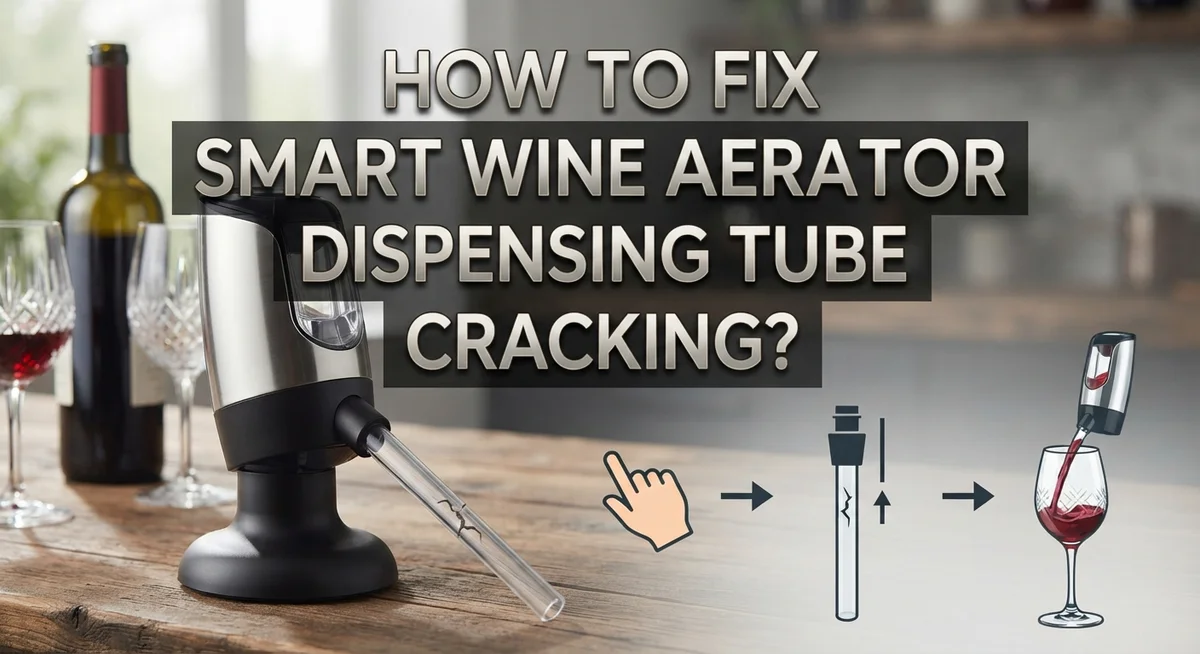
How To Fix Smart Wine Aerator Dispensing Tube Cracking?
Your smart wine aerator makes wine taste smoother. It saves you time before dinner. But then you notice a crack in the dispensing tube.
This problem happens more often than you think. Many wine lovers face this same frustrating issue. The good news is that you can fix it.
Most cracks happen because of one simple mistake. Too much force during assembly damages the delicate tube. People push connections too hard without realizing the damage they cause.
In a Nutshell
- Gentle force is key. Never push or twist tube connections hard. A soft touch keeps the plastic safe from stress cracks.
- Hand wash always. Skip the dishwasher for your aerator parts. Lukewarm soapy water and a soft cloth work best for long term care.
- Check connections often. Look at your tube joints before each use. Catching small cracks early stops bigger problems later.
- Replace damaged tubes fast. A cracked tube leaks air and wine. Swap it out quickly to keep your aerator working right.
- Try other methods too. Decanters, gentle swirling, or letting wine sit also aerate well. These options give your smart aerator a break.
- Realistic expectations help. Aerators smooth wine a bit but won’t create dramatic changes. They save time more than they transform taste.
Why Dispensing Tubes Crack: Understanding the Root Cause
Dispensing tubes crack because of one main reason: too much force during assembly. When you connect the air tube to your main pourer unit, you might push harder than needed. This extra pressure stresses the plastic material and causes tiny fractures. Over time, these fractures grow into visible cracks.
The plastic used in dispensing tubes is flexible but not indestructible. It needs gentle handling to stay intact. Many people assume connections require firm pressure, but smart aerators work with minimal force. A light hand connection is all you need.
Temperature changes also contribute to tube damage. When you wash your aerator in hot water and then expose it to cold air, the plastic contracts. This expansion and contraction cycle weakens the material gradually. Repeated temperature shifts make cracks more likely to form.
Over-tightening components is another common mistake. You might think a tighter connection works better, but this assumption causes problems. The tube cannot handle excessive pressure without developing stress points.
Rough handling during assembly makes cracking worse. Dropping your aerator, bending the tube at sharp angles, or twisting components with force all damage the plastic. Even small impacts can create hairline cracks that spread later.
Storage conditions matter too. Leaving your aerator in direct sunlight or extremely hot environments degrades the plastic quality. The material becomes brittle and more prone to cracking.
Dishwasher cycles also accelerate tube damage. The high heat and aggressive water pressure inside a dishwasher stress the plastic connections. This environment speeds up the cracking process significantly.
Understanding these root causes helps you prevent future damage. The key is recognizing that your aerator’s dispensing tube needs gentle treatment at every stage. From assembly to cleaning to storage, minimal force and careful handling keep your tube intact and functional for years.
Signs Your Aerator Tube Is Cracked or About to Fail
Your smart wine aerator will show you clear warning signs before the dispensing tube completely fails. Knowing these signs helps you catch problems early and avoid mess during wine service.
Wine flows slower than normal when you pour. The tube may have small cracks that restrict liquid movement. You might notice the aerator takes longer to dispense wine compared to when it was new.
Visible cracks or splits appear on the tube surface. Look closely at the entire length of the dispensing tube under good lighting. Even tiny hairline fractures count as damage. White stress marks sometimes appear before actual cracks form.
Leaking occurs around connection points. Water or wine drips from where the tube connects to the main aerator unit. This suggests the tube has lost its seal integrity. Leaks often start small and get worse quickly.
The tube feels soft or mushy when you touch it gently. A healthy tube feels firm and holds its shape. Degraded plastic becomes spongy or loses its rigidity. This means material breakdown has already started.
Strange smells come from the tube. Cracked tubes allow bacteria and mold to grow inside. A sour or musty odor signals internal damage you cannot see.
The aerator makes unusual sounds during use. Gurgling or hissing noises suggest air is escaping through cracks. Normal operation should be relatively quiet.
Wine tastes off or metallic. Damaged tubes may leach chemicals or allow contamination. Your wine flavor changes noticeably from previous uses.
The tube appears discolored or cloudy. This indicates material degradation from age, heat, or chemical exposure. Discoloration often accompanies structural weakness.
Check your aerator regularly for these signs. Early detection prevents damage to your wine and embarrassing spills at the table. Replace tubes at the first sign of trouble rather than waiting for complete failure.
Step-by-Step Guide to Fixing a Cracked Dispensing Tube
Step 1: Assess the Damage Severity
First, examine your cracked tube closely. Small hairline cracks may still function temporarily. Larger splits or breaks require immediate attention. Hold the tube up to light to spot hidden damage. Check both the interior and exterior surfaces carefully.
Step 2: Remove the Tube Safely
Gently disconnect the tube from the main pourer unit. Apply minimal pressure when twisting or pulling. Never force the connection. If it feels stuck, run warm water over the connection point to loosen it. Wait a few minutes before trying again.
Step 3: Clean the Tube Thoroughly
Rinse the damaged tube with lukewarm soapy water. Use a soft brush to remove wine residue and debris. Pay attention to the interior passages where buildup occurs. Dry it completely with a soft cloth. Never use harsh chemicals or abrasive scrubbers.
Step 4: Decide on Repair or Replacement
Small cracks may work temporarily with careful use. However, replacement is the safest option for your wine quality and device safety. Cracked tubes can leak bacteria into your wine. They also reduce aerating effectiveness significantly.
Step 5: Reassemble Correctly
If you’re reusing the tube, reconnect it with gentle pressure only. Hand tighten connections until they feel snug. Stop immediately when you feel resistance. Over tightening causes the same damage again.
Step 6: Test Before Use
Pour water through your aerator first. Watch for leaks around connection points. Listen for unusual sounds. Only use it with wine once you confirm it works properly.
This approach prevents frustration and keeps your aerator working smoothly for years.
Proper Assembly Technique to Prevent Future Cracks
Proper assembly technique is your best defense against cracking your smart wine aerator’s dispensing tube. The key rule is simple: use minimal force when connecting any parts together.
Most people damage their tubes by pushing too hard during assembly. The plastic needs only gentle pressure to seat properly. Think of it like connecting two puzzle pieces. They fit together smoothly without forcing. If you feel resistance, stop and check the alignment instead of pushing harder.
Start by examining both connection points before you join them. Make sure nothing is bent or misaligned. Dirt or debris can make connections seem tight when they actually need cleaning. Rinse both parts with lukewarm water first.
When you connect the air tube to the main pourer unit, use your fingers only. Never use tools or wrenches on plastic components. Hand tightening is all you need. If the connection feels snug after a gentle turn or two, it’s tight enough. Resist the urge to over-tighten.
During assembly, support the main unit with one hand. Use your other hand to guide the tube into place. This prevents accidental twisting or bending that creates stress on the plastic. Work slowly and deliberately.
After assembly, test your aerator with water before using wine. Pour gently to check for leaks at connection points. If water drips from the seams, disconnect and reassemble with slightly more hand pressure. Don’t jump straight to maximum force.
Store your aerator in a cool, dry place between uses. Temperature swings can make plastic brittle and more prone to cracking. Keep it away from direct sunlight and heat sources.
Hand wash all components after each use. Lukewarm soapy water works best. Avoid aggressive dishwasher cycles since the heat and pressure can weaken connections over time. Gentle care during assembly and maintenance prevents most cracking problems before they start.
Cleaning and Maintenance Best Practices
Keeping your smart wine aerator clean is the foundation of preventing dispensing tube cracks. When you maintain your aerator properly, you catch small problems before they become major damage.
Start with gentle hand washing after every use. Use lukewarm soapy water and a soft cloth or sponge. Avoid aggressive scrubbing on the dispensing tube, as this weakens the material over time. Rinse thoroughly with clean water to remove all soap residue.
Never put your aerator in the dishwasher. The high heat and powerful water jets inside dishwashers create stress on the tube connections. This pressure can cause existing weak spots to crack or develop new fractures. Hand washing takes just a few minutes and protects your investment.
Deep cleaning should happen weekly if you use your aerator frequently. Soak all removable parts in lukewarm soapy water for 15 minutes. This removes wine residue and mineral buildup that can degrade the tube material. Use a soft brush to gently clean inside the tube opening.
Check your connection points during every cleaning session. Look for any signs of wear, discoloration, or small cracks forming. Catching these early means you can address them before the tube fails completely.
Store your aerator in a cool, dry place between uses. Avoid direct sunlight, which can make plastic tubes brittle and more prone to cracking. Keep all components together in one spot so nothing gets lost or damaged.
Handle the dispensing tube with care during cleaning. Never bend it sharply or apply pressure while wet. The tube is more flexible when damp, so rough handling during this time causes permanent damage.
These maintenance practices work together to extend your aerator’s lifespan. Regular gentle cleaning prevents buildup that stresses the tube. Proper storage protects materials from environmental damage. Together, they keep your dispensing tube strong and crack-free for years of use.
Common Mistakes That Lead to Tube Damage
Most people crack their smart wine aerator tubes by applying too much force during assembly. The connection points need very little pressure to work properly. Your fingers should do all the work—no tools required.
Forcing connections too hard is the number one mistake. People assume tight connections mean secure connections. This assumption causes most of the damage. The tube material is flexible and delicate by design. Extra pressure causes stress fractures that grow over time.
Over-tightening components happens when you twist the air tube onto the main unit. Even a quarter turn beyond snug is too much. You only need enough pressure to hold the pieces together. Think of it like screwing a lightbulb in gently until it stops naturally.
Rough handling during assembly creates another common problem. Dropping the aerator or banging components together can cause immediate cracks. These cracks may not appear right away. Damage becomes visible weeks later during normal use.
Aggressive dishwasher cleaning accelerates existing damage. Hot water and high pressure from spray jets stress the tube material. Small cracks expand faster in the dishwasher environment. Hand washing with lukewarm water keeps tubes intact longer.
Bending the tube sharply while cleaning is another mistake people make. The dispensing tube isn’t designed to flex at extreme angles. Forcing it to bend during cleaning weakens the structure. Support the tube gently with your hand while washing.
Storing your aerator improperly between uses causes hidden damage. Placing heavy items on top of it or storing it in extreme temperatures stresses the material. Cool, dry storage protects all components.
Understanding these mistakes helps you avoid them completely. Most tube damage is preventable through gentle handling and minimal force during assembly. Your smart wine aerator will last much longer when you treat the connections with care and respect.
Troubleshooting Persistent Cracking Issues
When your smart wine aerator’s dispensing tube keeps cracking despite your best efforts, you need a systematic approach to find the root cause. Start by inspecting the tube itself for hairline fractures or weak spots. Hold it up to light and rotate it slowly. Small cracks often appear near connection points where stress concentrates.
Next, examine your assembly technique. Even slight pressure differences matter when connecting components. If you’ve been using tools or applying hand strength, that’s likely your problem. The tube material becomes brittle over time, especially if exposed to temperature changes or direct sunlight. Check where you store your aerator between uses.
Test your water pressure when using the aerator. High pressure forces water through the tube faster, which stresses the material. If your tap pressure is strong, reduce the flow by opening the valve more gradually. This simple adjustment reduces strain on the tube walls significantly.
Consider the tube’s age and usage frequency. Dispensing tubes have a lifespan. If you use your aerator daily for months, material fatigue becomes inevitable. Repeated flexing weakens the plastic or silicone regardless of gentle handling.
Inspect your tap water quality too. Hard water deposits can build up inside the tube, creating pressure points. Mineral buildup narrows the internal passage, forcing more pressure through smaller spaces. This accelerates cracking patterns.
Finally, evaluate your cleaning method honestly. Even hand washing with hot water can stress older tubes. Lukewarm water is genuinely better. If you’ve been using any cleaning tools that contact the tube interior, stop immediately.
When persistent cracking continues after these checks, the tube material itself may be failing. At this point, replacement becomes your practical solution. Some users find that switching to alternative aeration methods eliminates the problem entirely.
Final Thoughts
A cracked dispensing tube does not mean your smart wine aerator is useless. Most cracks happen because of rough handling, not poor design. Gentle care solves the problem for most users.
Remember to apply minimal force when connecting the air tube. Your hands should guide the pieces together, not push them. This one habit prevents most future cracks.
Clean your aerator by hand every time you use it. Lukewarm soapy water works better than any dishwasher cycle. This simple routine adds years to your tube’s life.
If cracking continues despite gentle handling, the tube material may have reached its limit. Tubes wear out over time, especially with frequent use. Replacement becomes the practical choice at this point.
You also have other options if tube problems keep returning. Traditional decanters offer a reliable alternative without any tubes to crack. Coravin systems provide another path for wine lovers who want convenience.
Simple swirling and letting wine sit works too. This method costs nothing and carries zero risk of breakage. Many wine drinkers find it just as satisfying.
Keep in mind that aerators offer moderate benefits, not miracles. They speed up the aeration process and smooth out flavors somewhat. They don’t dramatically transform a bottle of wine.
Understanding this helps you set realistic expectations. Your aerator saves time, but it works within limits. That perspective makes any minor inconvenience easier to accept.
Whatever tool you choose, gentle handling remains the key rule. Treat your dispensing tube like glass, even if it feels sturdy. This mindset alone will prevent most cracking issues.
Wine enjoyment should feel relaxed, not stressful. Choose the method that fits your routine and budget. Whether it’s an aerator, a decanter, or simple patience, your wine will taste better with a little care.
Frequently Asked Questions
Why does my smart wine aerator tube crack so easily?
Dispensing tubes crack because they’re made from delicate materials that don’t handle pressure well. Excessive force during assembly is the main culprit. When you connect the air tube to the main pourer unit, even gentle pressure can cause tiny stress fractures. These fractures grow larger over time with regular use.
Water quality also plays a role. Hard water deposits can weaken the tube material. Temperature changes during washing create expansion and contraction that stresses the plastic.
Can I prevent tube cracking before it happens?
Yes. The key is using minimal force when connecting components together. Your fingers should do almost all the work. No twisting or pushing needed.
Hand wash your aerator with lukewarm soapy water instead of using the dishwasher. Aggressive cycles speed up material degradation. Store your aerator in a cool, dry place away from direct sunlight.
Avoid bending the tube sharply during cleaning. Let water flow through naturally without forcing it.
What should I do if my tube already has small cracks?
Small cracks will grow larger with continued use. Stop using the aerator immediately to prevent complete failure during wine service.
Inspect the crack under good lighting. If it’s hairline thin and not leaking, you might extend its life by being extra gentle. However, replacement is usually the best option.
Are there alternatives if my aerator keeps failing?
Yes. Traditional decanters work well and never crack. Manual swirling or letting wine sit for 15 minutes also aerates wine naturally. These methods take longer but cost nothing and require no maintenance.
Remember that aerators provide moderate benefits, not dramatic transformations. Your wine enjoyment matters more than perfect aeration tools.

Hello, i’m Ivoria i am the face behind Tech Tracker Blog. I am passionate about my work and love to explore gadgets and share about my experience.