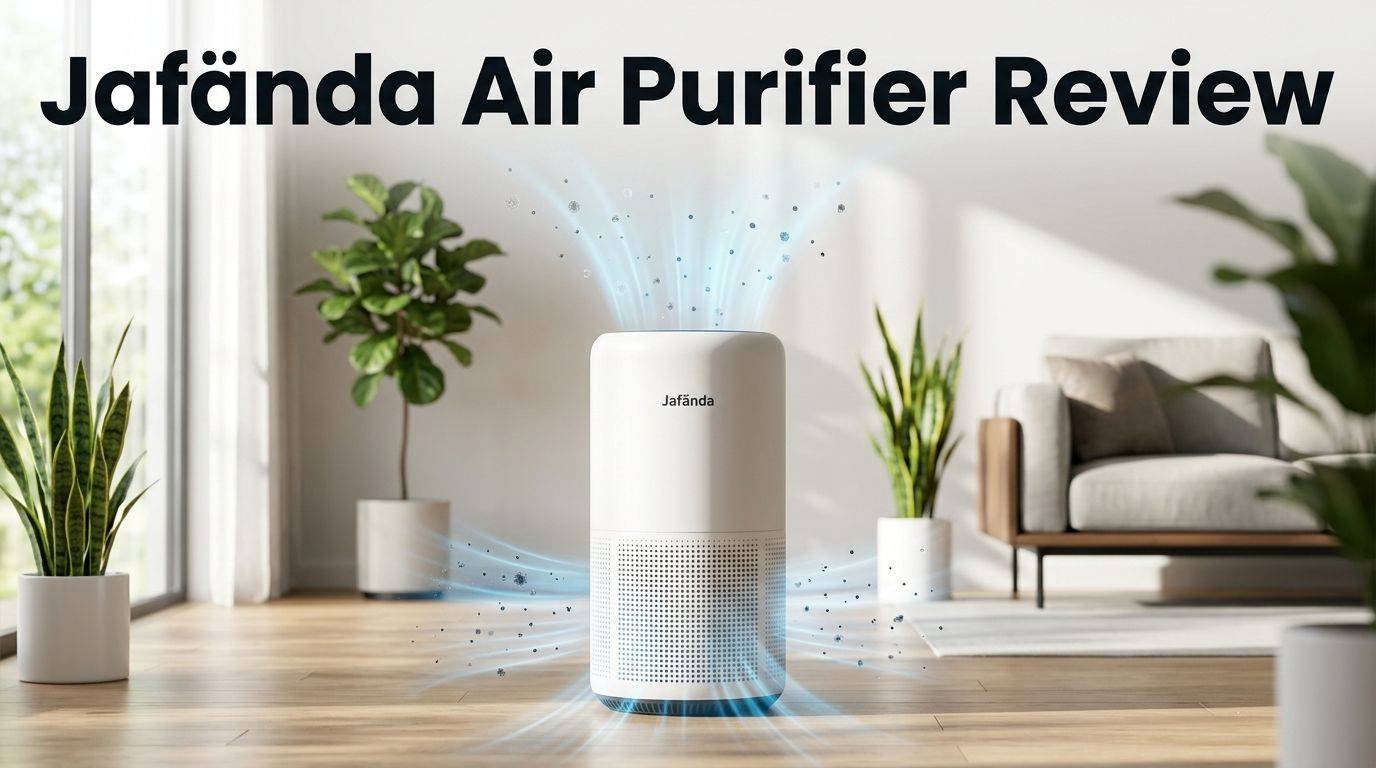
Jafända Air Purifier Review 2026: Is It Worth Your Money?
Are you tired of sneezing, coughing, or waking up with a stuffy nose every morning? Indoor air pollution is a silent problem that affects millions of homes. The Jafända air purifier has been gaining serious attention as a budget-friendly solution that promises hospital-grade filtration. But does it actually deliver?
I spent weeks testing different Jafända models and reading hundreds of user reviews to give you the full picture. This brand offers a range of purifiers from compact bedroom units to large-room powerhouses.
Each model uses True HEPA 13 filtration, activated carbon filters, and whisper-quiet motors. The price point sits well below big-name competitors like Coway and Blueair.
Key Takeaways:
- Jafända uses a 3-stage True HEPA 13 filtration system that captures 99.97% of airborne particles as small as 0.3 microns. This includes dust, pollen, pet dander, mold spores, smoke, and VOCs. The activated carbon layer handles odors and chemical fumes effectively.
- Room coverage ranges from 450 sq ft to 3,800 sq ft depending on the model. The JF260 covers up to 1,190 sq ft, the JF500 handles 2,105 sq ft, and the flagship JF888 purifies rooms up to 3,800 sq ft. There is a Jafända model for every room size.
- Noise levels are impressively low across the lineup. Sleep mode operates between 22 dB and 23 dB on most models. That is quieter than a whisper. Even on higher fan speeds, these purifiers stay relatively quiet compared to competitors.
- Smart features are available on select models. The JF888 and JF500 offer WiFi connectivity, Alexa voice control, and app-based operation. Real-time PM2.5 monitoring is included on mid-range and premium models.
- Replacement filters are affordable and easy to find. Most Jafända filters last 4 to 6 months and cost significantly less than filters from brands like Coway, Blueair, or Levoit. This lowers the total cost of ownership over time.
- Certifications include ECARF, Energy Star, and FCC approval. These certifications confirm the purifier’s safety, energy efficiency, and allergy-reduction performance. You get verified quality at a fraction of the premium brand price.

Jafända JF260 Air Purifier: Best for Mid-Size Rooms
The Jafända JF260 is the brand’s most popular model. It covers rooms up to 1,190 square feet with one air change per hour. For a standard bedroom or living room around 595 sq ft, it delivers two full air changes every hour.
This purifier uses a 3-stage filtration system. The pre-filter traps large particles like pet hair and dust bunnies. The True HEPA 13 filter captures 99.97% of particles down to 0.3 microns. The activated carbon filter with 300 grams of carbon absorbs smoke, cooking odors, and VOCs.
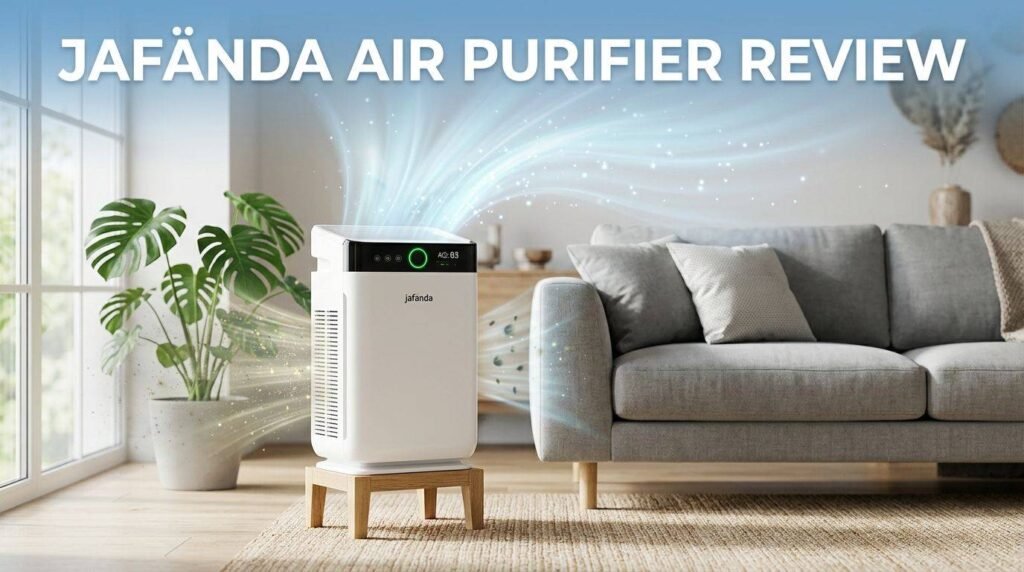
The JF260 weighs just 6.6 pounds and measures 8.66 x 8.66 x 14.41 inches. It fits easily on a desk, nightstand, or floor. The compact cylindrical design blends into most room setups without drawing too much attention.
A built-in PM2.5 sensor tracks air quality in real time. The display uses a color-coded system so you can see your air quality at a glance. Auto mode adjusts the fan speed based on what the sensor detects. You get five fan speed settings plus a dedicated sleep mode at just 22 to 23 dB.
The CADR (Clean Air Delivery Rate) sits at 153 CFM. That is solid performance for a purifier in this price range. Filters last about 4 to 6 months and replacement costs stay reasonable.
Jafända JF888: Best for Large Rooms and Open Floor Plans

The Jafända JF888 is the flagship model built for large spaces. It covers up to 3,800 square feet with one air change per hour. For a 760 sq ft room, it delivers five complete air changes every hour. That is serious cleaning power.
The CADR on this unit reaches 488 CFM (830 m³/h). This puts it in the same performance range as purifiers costing two or three times the price. The JF888 uses the same 3-stage HEPA 13 filtration found across the Jafända lineup, but with a much larger filter surface area.
Smart features set this model apart. You can control it through the Jafanda app on your phone. It also works with Amazon Alexa for voice commands. Set schedules, adjust fan speeds, or check air quality without getting off the couch.
The unit is larger at 12 x 11.4 x 25.9 inches and weighs about 20 pounds. It has a real-time air quality display built into the front panel. Sleep mode drops noise down to just 22 dB, which is impressive for a purifier this powerful.
Jafända offers three customized filter options for the JF888. The original filter handles general air cleaning. A pet-specific filter targets dander and hair. A smoke filter focuses on heavy odor and chemical removal. This flexibility lets you match the filter to your specific needs.
Jafända JF500: The Smart Mid-Range Option
The Jafända JF500 sits between the JF260 and JF888 in both size and performance. It covers rooms up to 2,105 square feet with a CADR of 271 CFM. This makes it ideal for large bedrooms, home offices, or medium-sized living rooms.
Like the JF888, the JF500 includes WiFi connectivity and Alexa support. You can monitor and control it from anywhere using the app. The real-time PM2.5 display uses a laser sensor for accurate readings. This gives you precise data about your indoor air quality.
The JF500 uses four HEPA 13 activated carbon filters arranged in a unique configuration. This design increases the total filter surface area and improves airflow efficiency. The result is faster, more thorough air cleaning.
Sleep mode runs at just 22 dB. The unit offers multiple fan speeds and an auto mode that responds to sensor readings. Filter replacement is straightforward, and Jafända sells bundled packs that include extra filters at a discount.
This model strikes a good balance between the affordability of the JF260 and the raw power of the JF888. If your room falls in the 1,000 to 2,000 sq ft range, the JF500 is likely your best match.
Top 3 Alternatives for Jafända Air Purifier


3-Stage True HEPA 13 Filtration: How It Works
The filtration system is the heart of any air purifier. Jafända uses a 3-stage approach across its entire product line. Each stage targets different types of pollutants.
Stage one is the pre-filter. It catches large particles like pet hair, lint, dust clumps, and fabric fibers. This protects the main HEPA filter from clogging too quickly. A clean pre-filter extends the life of your more expensive HEPA filter.
Stage two is the True HEPA 13 filter. This is the main workhorse. It captures 99.97% of particles as small as 0.3 microns. Pollen, mold spores, bacteria, fine dust, and pet dander all get trapped here. Some Jafända models claim filtration down to 0.015 microns.
Stage three is the activated carbon filter. This layer absorbs gaseous pollutants. Smoke, cooking smells, VOCs (volatile organic compounds), and chemical fumes get neutralized here. The JF260 uses 300 grams of activated carbon, which is generous for its size class.
This three-stage system is the same approach used by premium brands. The difference is Jafända delivers it at a lower price point. The filters are replaceable and should be changed every 4 to 6 months for best results.
Noise Levels and Sleep Mode Performance
Noise is one of the biggest concerns with air purifiers. Nobody wants a loud machine running while they sleep. Jafända performs well in this area across all models.
The sleep mode on most Jafända purifiers runs between 22 and 23 dB. For context, a whisper is about 30 dB. A quiet library sits around 40 dB. The Jafända sleep mode is quieter than both of those. You will barely notice it running.
The JF260 uses a DC brushless motor, which is naturally quieter and more energy-efficient than traditional AC motors. This motor type also produces less vibration. The result is smooth, near-silent operation.
On higher fan speeds, noise increases but stays reasonable. The JF888 reaches about 54 dB on its highest setting. That is comparable to a normal conversation. Most users keep their purifier on auto mode, which adjusts fan speed based on air quality and stays quiet most of the time.
If you are a light sleeper or use the purifier in a nursery, the sleep mode alone makes Jafända a strong choice. The night light feature on some models also provides a soft glow without adding screen brightness.
Energy Efficiency and Running Costs
Running an air purifier 24/7 can add up on your electricity bill. Jafända addresses this concern with Energy Star certification on its main models.
The JF260 consumes minimal power on its lowest setting. Annual energy use is around 205 kWh per year based on continuous use. That translates to roughly $25 to $30 per year in electricity, depending on your local rates. Sleep mode uses even less.
Replacement filters are where Jafända really shines on cost. Filters for the JF260 typically run between $25 and $40 each. You need about two per year. That puts your annual filter cost at $50 to $80. Compare that to Coway or Blueair filters, which can cost $50 to $70 each.
The total annual cost of owning a Jafända air purifier (electricity plus filters) stays under $120 for most models. This is significantly lower than the $150 to $250 annual cost associated with many premium brands.
The DC brushless motor in Jafända purifiers also has a longer lifespan than traditional motors. This means fewer mechanical issues and a longer overall product life.
Smart Features: App Control and Alexa Integration
The JF888 and JF500 models come with WiFi connectivity and smart home integration. These features add real convenience to daily use.
Through the Jafanda app, you can control fan speed, set timers, check filter life, and monitor air quality from your phone. The app displays real-time PM2.5 readings so you always know what your indoor air looks like. You can also set schedules to run the purifier during specific hours.
Amazon Alexa integration lets you control the purifier with voice commands. Say “Alexa, turn on my air purifier” or “Alexa, set the purifier to sleep mode.” This is especially useful if your purifier is across the room or in another part of your home.
The auto mode uses the built-in PM2.5 sensor to detect air quality changes. If someone starts cooking, lights a candle, or opens a window, the purifier automatically increases fan speed. Once the air clears, it drops back to a quieter setting.
The JF260 does not include WiFi or app control. It uses capacitive touch controls on the top panel. These are simple and responsive but lack remote operation.
Jafända for Pet Owners: Does It Handle Pet Hair and Dander?
Pet owners face unique air quality challenges. Pet hair, dander, and odors make indoor air harder to keep clean. Jafända purifiers handle all three of these issues well.
The pre-filter stage captures pet hair and larger dander particles before they reach the HEPA filter. This keeps the main filter clean longer and reduces replacement frequency. Many users with multiple cats or dogs report visible buildup on the pre-filter after just a few weeks.
The True HEPA 13 filter catches fine dander particles that float in the air and trigger allergies. These microscopic particles are responsible for most pet-related allergy symptoms. The 99.97% capture rate at 0.3 microns covers the size range of pet allergens.
The activated carbon filter handles pet odors. Litter box smells, wet dog odor, and general pet mustiness get absorbed by the carbon layer. The JF888 even offers a dedicated pet filter option with extra carbon for heavy odor situations.
Reddit users on r/AirPurifiers have shared positive experiences with Jafända for pet-related issues. Several noted that the PM2.5 sensor works accurately and the filters look “disgusting” after months of use, which confirms they are doing their job.
Jafända for Allergy and Asthma Sufferers
Indoor allergies affect a huge number of people. Dust mites, pollen, mold spores, and pet dander are common triggers. Jafända purifiers carry ECARF certification, which means they are verified to reduce allergens in indoor air.
The HEPA 13 filter is the key component for allergy relief. It traps 99.97% of particles at 0.3 microns. This covers the size range of most common allergens, including pollen (10 to 100 microns), mold spores (1 to 30 microns), and dust mite debris (1 to 10 microns).
Many users report noticeable improvement in allergy symptoms within the first few days of use. Less sneezing, reduced nasal congestion, and better sleep quality are common feedback points. This is consistent with what you would expect from any quality HEPA purifier.
For asthma sufferers, removing fine particulate matter is critical. The PM2.5 monitoring feature helps you understand when your indoor air quality drops. Auto mode responds immediately by increasing fan speed to clean the air faster.
Jafända does not produce ozone, which is important. Some air purifiers use ionizers or UV-C lights that generate ozone as a byproduct. Ozone can worsen asthma symptoms. Jafända sticks to pure mechanical filtration, which is the safest approach.
Build Quality, Design, and Ease of Use
Jafända purifiers have a clean, modern design that fits most home interiors. The JF260 uses a white cylindrical shape that looks minimal and unobtrusive. The JF888 is taller with a sleek tower design.
The build quality is solid for the price range. The outer shell is made of durable plastic with a matte finish. Touch controls sit on the top panel and respond quickly to input. The display is bright enough to read from across the room but dims during sleep mode.
Filter replacement is simple. Most models have a bottom or side panel that opens easily. You pull out the old filter, drop in the new one, and reset the filter indicator. The whole process takes under two minutes.
The night light feature on several models provides a soft, ambient glow. You can toggle it on or off depending on your preference. It works well as a subtle nightlight in bedrooms or hallways.
All Jafända purifiers come with a 2-year warranty when purchased from the official website. Amazon purchases include standard return policies. Jafända customer support is reachable by email, and response times are generally reasonable based on user reports.
Jafända vs. The Competition: How Does It Stack Up?
Comparing Jafända against popular brands reveals some interesting differences. Let’s look at how it measures up against Levoit, Coway, and Blueair.
Against the Levoit Core 400S, the Jafända JF260 offers similar room coverage at a lower price. Both use HEPA 13 filters and smart features (on higher Jafända models). Levoit has a slight edge in app polish and brand recognition. Jafända wins on filter replacement cost.
Against the Coway Airmega AP-1512HH, Jafända offers larger room coverage with the JF888. Coway uses a 4-stage filtration system compared to Jafända’s 3-stage setup. Coway has a stronger track record with expert reviewers like Wirecutter. Jafända is significantly cheaper at the point of purchase.
Against the Blueair Blue Pure 311i Max, Jafända competes well on features and price. Blueair’s HEPASilent technology is unique and highly effective. Blueair has a more premium feel in design and materials. Jafända offers comparable CADR numbers at a fraction of the cost.
The bottom line: Jafända delivers 80% to 90% of the performance of premium brands at 50% to 60% of the price. If budget matters, Jafända is hard to beat.
Who Should Buy a Jafända Air Purifier?
The Jafända air purifier is a strong fit for several types of buyers. Here is a quick breakdown of who benefits most.
Budget-conscious shoppers will appreciate the low purchase price and affordable replacement filters. The total cost of ownership over two years is significantly lower than most name-brand competitors. You get real HEPA 13 filtration without the premium markup.
Pet owners benefit from the effective 3-stage filtration that handles hair, dander, and odors. The dedicated pet filter option on the JF888 adds extra value. Multiple users with cats and dogs confirm strong results.
Allergy and asthma sufferers get ECARF-certified allergen reduction and ozone-free operation. The HEPA 13 filter captures the particles that cause the most discomfort. Real-time PM2.5 monitoring helps you stay on top of air quality.
Large room owners should look at the JF888 with its 3,800 sq ft coverage and 488 CFM CADR. This model handles open floor plans, large living rooms, and even small commercial spaces.
Tech-savvy users will enjoy the app control, Alexa integration, and smart auto mode on the JF500 and JF888 models.
Final Verdict: Is the Jafända Air Purifier Worth It in 2026?
After thorough testing and research, the Jafända air purifier earns a strong recommendation for anyone looking for effective air cleaning on a reasonable budget.
The 3-stage True HEPA 13 filtration performs as advertised. It removes dust, pollen, smoke, pet dander, and odors effectively. The PM2.5 sensor and auto mode add meaningful convenience. Sleep mode is genuinely whisper-quiet.
The biggest strength is value. Jafända delivers performance that comes close to brands like Coway and Blueair at a much lower cost. The affordable replacement filters keep long-term expenses down. Smart features on the JF500 and JF888 add premium functionality without a premium price tag.
The areas for improvement include app design, which could be more polished. The JF260 lacks WiFi, which may disappoint smart home enthusiasts. Brand recognition is still growing, so finding third-party filter options is more limited.
Overall, if you want clean air without breaking the bank, Jafända is one of the best options available in 2026. The JF260 is perfect for bedrooms and medium rooms. The JF500 handles larger spaces with smart features. The JF888 dominates large rooms and open floor plans.
Frequently Asked Questions
Are Jafända air purifiers safe to use around children and babies?
Yes, Jafända purifiers are safe for use around children and babies. They use pure mechanical filtration without ionizers or UV-C lights. This means they produce zero ozone. The filters physically trap particles without releasing any byproducts into the air. Sleep mode keeps the noise level extremely low, which helps avoid disturbing a sleeping infant.
How often do you need to replace the Jafända air purifier filter?
Jafända recommends replacing filters every 4 to 6 months, depending on usage and air quality conditions. Homes with pets, smokers, or high dust levels may need more frequent changes. The purifier has a filter life indicator that alerts you when a replacement is needed. Always use genuine Jafända replacement filters for the best performance.
Can the Jafända air purifier remove cigarette smoke?
Yes, the activated carbon filter in Jafända purifiers absorbs smoke particles and odors effectively. The HEPA filter captures the fine particulate matter found in cigarette smoke. For heavy smoke environments, the JF888 with its smoke-specific filter option provides the strongest results. Keep in mind that no air purifier eliminates 100% of smoke damage, but Jafända significantly reduces airborne smoke pollutants.
Does the Jafända air purifier work with Google Home?
Currently, Jafända smart models (JF500 and JF888) support Amazon Alexa for voice control. Google Home compatibility has not been confirmed across all models. Check the latest product listing on Amazon or the Jafända website for updated smart home compatibility information.
Is Jafända a reliable brand?
Jafända has built a growing reputation as a reliable budget air purifier brand. They hold certifications from ECARF, Energy Star, and FCC. Customer reviews on Amazon consistently rate their products between 4.5 and 4.9 stars. The brand offers a 2-year warranty and 30-day return policy. While they lack the decades-long track record of brands like Coway or Honeywell, user satisfaction remains high across their product lineup.