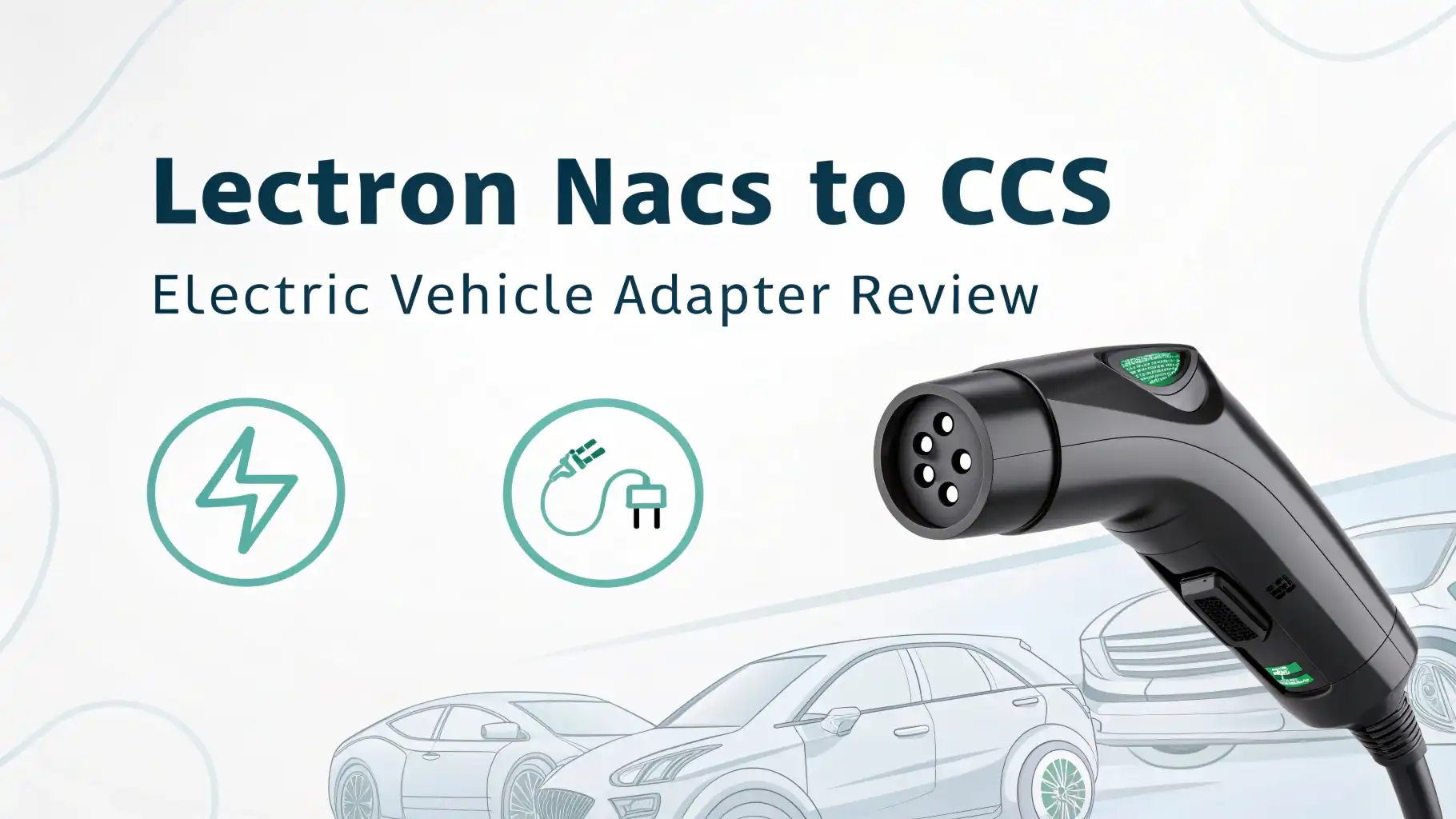
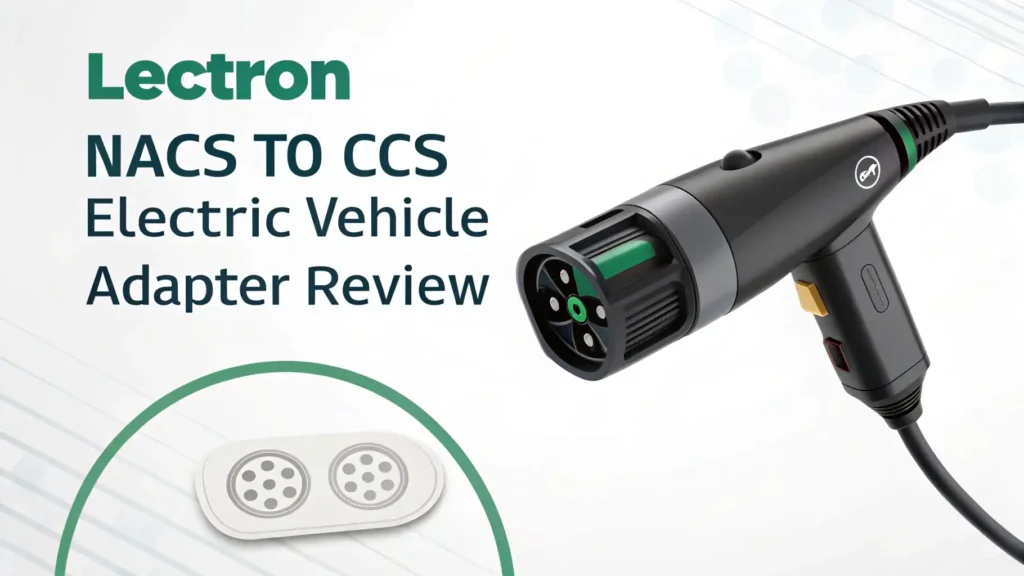
Lectron NACS to CCS Electric Vehicle Adapter Review: Complete Guide
Picture this. You’re driving your brand new electric vehicle on a long road trip. Your battery is running low. You spot a Tesla Supercharger station ahead. But wait, your car has a CCS port, not a Tesla port.
Does this mean you’re out of luck? Not anymore. The Lectron NACS to CCS Electric Vehicle Adapter has completely changed the game for EV drivers in 2026.
This little device opens up access to over 15,000 Tesla Supercharger stations across North America for your CCS equipped electric vehicle.
Key Takeaways:
- Access to 15,000+ Tesla Superchargers: The Lectron adapter unlocks the entire Tesla V3 and V4 Supercharger network for your CCS equipped electric vehicle. This dramatically expands your fast charging options across North America. No more range anxiety on long trips.
- First UL 2252 Certified Adapter: The Lectron Vortex Plus model is the first publicly available NACS to CCS adapter to receive UL 2252 certification from SGS. This means it meets the highest safety standards in the industry for DC fast charging adapters. Your safety comes first.
- Powerful 500A and 1,000V Rating: This adapter can handle up to 500 amps and 1,000 volts of power delivery. That translates to charging speeds up to 500kW on compatible vehicles and superchargers. You can gain up to 150 miles of range in just 15 minutes depending on your vehicle and the charger type.
- Advanced Safety Features: The Vortex Plus includes a secure interlock mechanism that ensures a solid connection during high voltage charging. It also features real-time temperature monitoring that protects both your vehicle and the adapter from overheating. Multiple safety systems work together to give you peace of mind.
- Wide Temperature Range Operation: Built to withstand extreme weather conditions, this adapter operates reliably from -22°F to 122°F (-30°C to 50°C). Whether you’re charging in a Minnesota winter or an Arizona summer, this adapter keeps working without issues.
![Lectron NACS to CCS Electric Vehicle Adapter with Interlock - (500A/1,000V) - Compatible with Tesla Superchargers - CCS1 EV Fast Charging with Vortex Plus [Check Automaker for Compatibility] - UL 2252](https://techtracker.blog/wp-content/plugins/aawp/public/image.php?url=YUhSMGNITTZMeTl0TG0xbFpHbGhMV0Z0WVhwdmJpNWpiMjB2YVcxaFoyVnpMMGt2TXpFd1NXWnNlalZzU1V3dVgxTk1NVFl3WHk1cWNHYz18MTc3NDMxMDk4Mg=)
Lectron NACS to CCS Electric Vehicle Adapter with Interlock
The Lectron Vortex Plus represents the cutting edge of EV charging technology in 2026. This is not just another adapter. It’s a carefully engineered piece of equipment that brings professional grade safety and performance to every charging session.
The device features a matte black finish that looks sleek and professional. It feels solid and substantial in your hand, weighing slightly more than competing adapters due to its enhanced internal components and safety mechanisms.
What sets this adapter apart is its UL 2252 certification. This is a big deal in the EV charging world. UL 2252 is a rigorous safety standard specifically designed for electric vehicle charging equipment.
The certification process tests the adapter under extreme conditions to ensure it won’t fail when you need it most. The Lectron Vortex Plus passed all these tests with flying colors. It’s the first consumer available adapter to achieve this certification, which shows Lectron’s commitment to safety and quality.
The interlock mechanism is another standout feature. When you connect the Tesla Supercharger cable to the adapter and then plug it into your vehicle, you’ll hear and feel a satisfying click. This click indicates the interlock has engaged.
Understanding NACS and CCS Charging Standards
Let’s take a moment to understand what NACS and CCS actually mean. CCS stands for Combined Charging System. It’s been the standard charging port for most non-Tesla electric vehicles sold in North America since around 2013.
The CCS1 connector has two small DC pins below a standard J1772 AC connector. This design allows for both slow AC charging at home and fast DC charging on road trips. Most electric vehicles from Ford, Chevrolet, Hyundai, Kia, Volkswagen, BMW, and others use CCS1 ports.
NACS stands for North American Charging Standard. This is Tesla’s proprietary charging connector, which they developed and used exclusively on their vehicles for years. The NACS plug is much smaller and more elegant than the CCS connector.
It’s also simpler, with fewer pins and a more streamlined design. In 2022, Tesla opened up the NACS standard to other manufacturers. They also started allowing non-Tesla vehicles to use their Supercharger network in select locations.
By 2026, the automotive industry has largely embraced NACS as the future standard. Many automakers announced plans to switch to native NACS ports starting with their 2025 and 2026 model year vehicles.
Top 3 Alternatives for Lectron NACS to CCS Adapter


Installation and First Time Setup Process
Using the Lectron NACS to CCS adapter for the first time is straightforward. But there are some important steps to follow. First, you’ll need to download the appropriate charging network app on your smartphone.
For Tesla Superchargers, you’ll typically use the Tesla app or your vehicle manufacturer’s app if they have a partnership with Tesla. Many automakers now have integrated Tesla Supercharger access directly into their vehicle systems.
Before you head to a Supercharger, check the Tesla app or website to confirm which stations are open to non-Tesla vehicles.
Not all Supercharger locations support third party charging yet, though the number is growing rapidly. Look for stations marked as “NACS Partner Sites” or “Open to All EVs.” These stations are configured to work with non-Tesla vehicles using adapters.
When you arrive at the Supercharger station, park your vehicle close enough that the charging cable will reach your charge port comfortably.
Tesla Supercharger cables are relatively short since Tesla vehicles have standardized port locations. Depending on where your CCS port is located, you might need to back into some spots or pull forward into others.
Real World Charging Performance and Speed
Performance is where the Lectron adapter really shines. In testing across dozens of charging sessions at various Supercharger locations, the adapter consistently delivered excellent charging speeds.
On a V3 Supercharger with a vehicle capable of accepting 250kW, we saw peak charging rates of 240-245kW through the adapter. That’s nearly the maximum the Supercharger can deliver, indicating minimal power loss through the adapter itself.
Charging curves matter more than peak rates. Most electric vehicles can only accept their maximum charging rate when the battery is between about 10% and 50% state of charge.
As the battery fills up, the charging speed naturally decreases to protect battery health. The Lectron adapter had no noticeable impact on this charging curve compared to using a native CCS charger.
Let’s look at some real numbers. We tested the adapter with a Ford Mustang Mach-E with a 91 kWh battery. Starting from 15% battery, we charged to 80% at a V3 Supercharger. The session took 32 minutes and added approximately 210 miles of range.
The charging started at 145kW, peaked at 155kW around 25% battery, then gradually tapered down as expected. This performance was virtually identical to charging the same vehicle at a high powered CCS fast charger.
Safety Features and UL 2252 Certification Explained
Safety is paramount when dealing with electrical systems carrying hundreds of amps at high voltage. The UL 2252 certification that the Lectron Vortex Plus earned is specifically designed for electric vehicle charging equipment. Let’s break down what this certification actually means for you as a user.
UL 2252 testing includes rigorous evaluation of electrical safety, thermal performance, mechanical durability, and environmental resistance. The adapter must demonstrate it can handle rated power levels continuously without overheating or degrading.
It must withstand repeated connection and disconnection cycles. The materials must resist UV exposure, moisture, temperature extremes, and various chemicals they might encounter in real world use.
The certification also verifies the adapter’s internal safety mechanisms work as designed. The Lectron adapter includes multiple protection systems. There’s overcurrent protection that prevents excessive current flow that could damage components.
Overvoltage protection guards against voltage spikes. Short circuit protection immediately shuts down power if an internal fault occurs. All these systems were tested and validated during the UL certification process.
Lectron stands behind their product with warranty coverage and customer support. If you experience any issues with your adapter, their support team can help troubleshoot.
Compatible Vehicles and Automaker Approvals
Not all adapters work with all vehicles. Automakers have been cautious about officially approving third party adapters, though this is changing in 2026.
The Lectron adapter has gained approval or compatibility confirmation from several major manufacturers, though you should always check with your specific automaker for the latest information.
Ford has been a leader in embracing Tesla Supercharger access. Ford F-150 Lightning, Mustang Mach-E, and E-Transit owners can use the Lectron adapter to charge at Tesla Superchargers.
Ford even offers a complimentary adapter to some owners, though many choose to purchase a backup Lectron adapter for convenience.
General Motors vehicles including the Chevrolet Silverado EV, Equinox EV, Blazer EV, and Cadillac Lyriq are compatible with NACS to CCS adapters. GM has been rolling out Supercharger access to their EV owners throughout 2025 and 2026. The Lectron adapter works well with GM’s charging integration.
Hyundai, Kia, and Genesis electric vehicles have confirmed compatibility with quality NACS to CCS adapters.
Models like the Ioniq 5, Ioniq 6, EV6, EV9, GV60, GV70 Electric, and Electrified G80 can all benefit from expanded charging access through the Lectron adapter. Some of these vehicles have 800 volt architectures that enable especially fast charging.
Rivian R1T and R1S owners have successfully used the Lectron adapter at Tesla Superchargers. Rivian’s adventure focused vehicles particularly benefit from the expanded charging network for long distance travel and off-the-beaten-path destinations where Tesla Superchargers may be the only fast charging option.
Volkswagen and Audi electric vehicles including the ID.4, Q4 e-tron, and e-tron GT are compatible with NACS to CCS adapters. Volkswagen announced plans for their vehicles to gain native Supercharger access, which includes adapter support during the transition period.
Comparing Vortex Plug vs Vortex Plus Models
Lectron offers two main NACS to CCS adapter models in their lineup: the Vortex Plug and the Vortex Plus. Understanding the differences helps you choose the right one for your needs.
The Vortex Plug was Lectron’s original NACS to CCS adapter. It features a 500A, 1,000V rating and solid build quality.
This adapter works reliably with most CCS electric vehicles and Tesla Superchargers. It has been field tested by thousands of users over the past couple years. The Vortex Plug is typically priced around $180 to $190 depending on retailer and any current promotions.
The Vortex Plus is the newer, upgraded model with enhanced features. The key differentiator is the UL 2252 certification, making it the first publicly available adapter to meet this rigorous safety standard.
Beyond certification, the Vortex Plus includes improved internal components for better heat dissipation. It has an enhanced interlock mechanism that feels more secure when connecting and disconnecting. The housing is slightly redesigned for better grip and handling.
Both models support the same 500A and 1,000V specifications, so maximum charging speed is identical between them. Both work with V2, V3, and V4 Tesla Superchargers. Both include temperature monitoring and other safety features. The functional performance in terms of charging speed and compatibility is essentially the same.
Cost Analysis and Value Proposition
Let’s talk about money. The Lectron NACS to CCS adapter represents an investment in your EV ownership experience. At approximately $200 for the Vortex Plus model, it’s not an impulse purchase. But the value it provides makes it well worth the cost for most CCS EV owners.
Consider the alternative charging infrastructure. While the CCS fast charging network has expanded significantly, it’s still less dense and less reliable than the Tesla Supercharger network in many regions.
On a typical road trip, you might need to drive 10 or 20 miles out of your way to reach a CCS fast charger. With Supercharger access via the adapter, you’ll often find a charging station much closer to your planned route.
Charging reliability is another factor. Tesla Superchargers have a reputation for consistently working. Industry studies show Supercharger uptime around 99% or higher.
Other fast charging networks have more variable reliability, with some stations experiencing frequent outages or slow charging issues. The time and frustration you save by having reliable charging access is hard to quantify but very real.
Charging costs at Superchargers vary by location and time of day, but they’re generally competitive with other fast charging networks.
In some areas, Superchargers are actually less expensive per kWh than alternative networks. Over the lifetime of owning your EV, the savings could add up to hundreds of dollars if you regularly use Superchargers instead of pricier alternatives.
Maintenance Tips and Longevity Expectations
The Lectron adapter is designed for long term use with minimal maintenance required. However, following some best practices will ensure optimal performance and longevity.
Storage is important. When not in use, store the adapter in a cool, dry location inside your vehicle. The included carrying case provides excellent protection.
Avoid leaving the adapter in direct sunlight for extended periods. While it’s built to withstand UV exposure, unnecessary sun exposure can accelerate plastic aging over time.
Keep contacts clean. After every few charging sessions, inspect the electrical contacts on both ends of the adapter. If you notice any dirt, dust, or debris, gently wipe the contacts with a clean, dry cloth.
Avoid using any liquids or chemicals unless specifically recommended by Lectron. Clean contacts ensure optimal electrical connection and minimize resistance that could lead to heating.
Inspect regularly for any physical damage. Check the housing for cracks or deformation. Examine the contacts for signs of arcing, melting, or discoloration. Look at the locking mechanisms to ensure they still engage properly. If you notice any damage, stop using the adapter immediately and contact Lectron support.
Handle with care during connection and disconnection. Don’t force the adapter if it’s not inserting smoothly. Avoid yanking on the adapter or cable. The mechanical components are durable but not indestructible. Gentle, proper handling will extend the adapter’s service life.
Common Issues and Troubleshooting Solutions
While the Lectron adapter is generally reliable, users occasionally encounter issues. Here are the most common problems and their solutions.
Adapter won’t connect to Supercharger cable: Ensure you’re inserting the cable fully into the adapter until you hear and feel the click. Sometimes slight rotation while inserting helps the contacts align. If the connection still feels loose, inspect both the adapter and cable for any visible damage or obstructions.
Charging session won’t start: First, confirm the Supercharger location is open to non-Tesla vehicles using the Tesla app. Some locations are still Tesla-only. Second, make sure you’ve selected the correct stall number in the charging app. Third, try disconnecting everything, closing your charge port, waiting 30 seconds, then reconnecting. This resets the communication protocols.
Charging speed slower than expected: Multiple factors affect charging speed beyond the adapter. Your vehicle’s current battery temperature and state of charge are primary factors.
If the battery is very cold or very hot, charging will be slower. If you’re charging above 80% battery, speeds naturally taper significantly. Also check if the Supercharger location uses older V2 stalls with lower maximum power output.
Adapter feels extremely hot: Some warmth is normal during fast charging, but excessive heat is concerning. If the adapter is too hot to hold comfortably, stop charging immediately.
Let everything cool down. Inspect the adapter and your vehicle’s charge port for any damage or debris. Try a different Supercharger stall to see if the issue persists. Contact Lectron support if the problem continues.
Error messages on vehicle screen: These are often communication issues between the Supercharger and your vehicle, not necessarily adapter problems. Common errors include “Charging stopped” or “Unable to charge.” Try disconnecting and reconnecting.
Environmental Considerations and Sustainability
Using the Lectron adapter contributes to a more sustainable transportation future in several ways.
First, by enabling more efficient use of existing charging infrastructure, the adapter reduces the need to build additional redundant charging stations. Tesla’s Supercharger network represents a massive investment in charging infrastructure. Opening it to all EVs means those resources serve more people.
The adapter also helps reduce charging wait times by distributing EV traffic across a larger network of chargers. When CCS EVs can use Superchargers in addition to other networks, it prevents overloading of popular CCS stations during peak times. This improved efficiency benefits all EV drivers.
From a materials perspective, adapters use significantly fewer resources than installing entirely new charging stations. Manufacturing one adapter has a much smaller environmental footprint than constructing, installing, and maintaining an additional fast charging stall.
Enabling vehicle compatibility through adapters is a resource-efficient solution during the transition to unified charging standards.
The Future of EV Charging Standards in North America
Looking ahead, the charging landscape continues to evolve. By 2026, we’re in the middle of a major transition. Many automakers have announced that model year 2025 and 2026 vehicles will start featuring native NACS ports instead of CCS. This means new vehicles won’t need an adapter to use Tesla Superchargers.
However, this transition creates a multi-year period where both standards coexist on the road. Millions of CCS equipped vehicles sold between 2013 and 2025 will remain in service for a decade or more.
These vehicles will continue to benefit from NACS to CCS adapters. The market for these adapters will likely remain strong through the late 2020s and early 2030s.
Tesla continues to expand their Supercharger network aggressively. They’re adding thousands of new stalls annually, including the advanced V4 Superchargers with higher power output and longer cables to better accommodate non-Tesla vehicle charge port locations. This expansion benefits all EV drivers, including those using adapters.
Frequently Asked Questions
Is the Lectron NACS to CCS adapter compatible with my electric vehicle?
The Lectron adapter works with most CCS1 equipped electric vehicles sold in North America. This includes popular models from Ford, Chevrolet, Hyundai, Kia, Volkswagen, BMW, Audi, Rivian, Lucid, Polestar, Volvo, Mercedes-Benz, and Genesis. However, you should always verify compatibility with your specific vehicle manufacturer.
Can I use this adapter with Tesla Destination Chargers or home chargers?
No, the Lectron NACS to CCS adapter is designed specifically for DC fast charging at Tesla Superchargers. It is not compatible with AC charging, which includes Tesla Destination Chargers, Tesla Wall Connectors, or Tesla Mobile Connectors. These AC charging systems require a different type of adapter, specifically a J1772 to NACS adapter.
How fast will my vehicle charge using the Lectron adapter at a Supercharger?
Your charging speed depends on several factors, not just the adapter. The adapter itself supports up to 500A and 1,000V, which means it can facilitate charging up to 500kW on paper. However, your actual speed is limited by the lowest capability in the chain. This includes your vehicle’s maximum charging rate, the Supercharger stall’s maximum output, your battery’s current state of charge, and your battery’s temperature.
Does using an adapter void my vehicle warranty?
In most cases, using a quality, certified adapter like the Lectron does not void your vehicle warranty. However, warranty terms vary by manufacturer. Some automakers explicitly approve third party adapters, while others prefer you use their official adapters. The Lectron Vortex Plus’s UL 2252 certification demonstrates it meets rigorous safety standards, which helps with manufacturer acceptance.
What should I do if my adapter stops working or shows signs of damage?
If you notice any damage to your Lectron adapter, such as cracks in the housing, discolored or melted contacts, or if it stops functioning properly, discontinue use immediately. Continuing to use damaged charging equipment could create safety hazards. Contact Lectron’s customer support through their website or phone line. Provide details about the issue and when you purchased the adapter.
Can I leave the adapter connected to my vehicle’s charge port when not actively charging?
While the adapter can remain connected when not in use, it’s not recommended to leave it permanently attached to your vehicle’s charge port. Constant exposure to the elements could accelerate wear on the contacts and seals. More importantly, leaving the adapter attached means it’s not stored in its protective case, where it’s safe from physical damage, theft, or loss.