Xiaomi UltraThin Magnetic Power Bank 5000 15W Review 2026
Have you ever wished your power bank could feel like a credit card in your pocket? Xiaomi made that dream real.
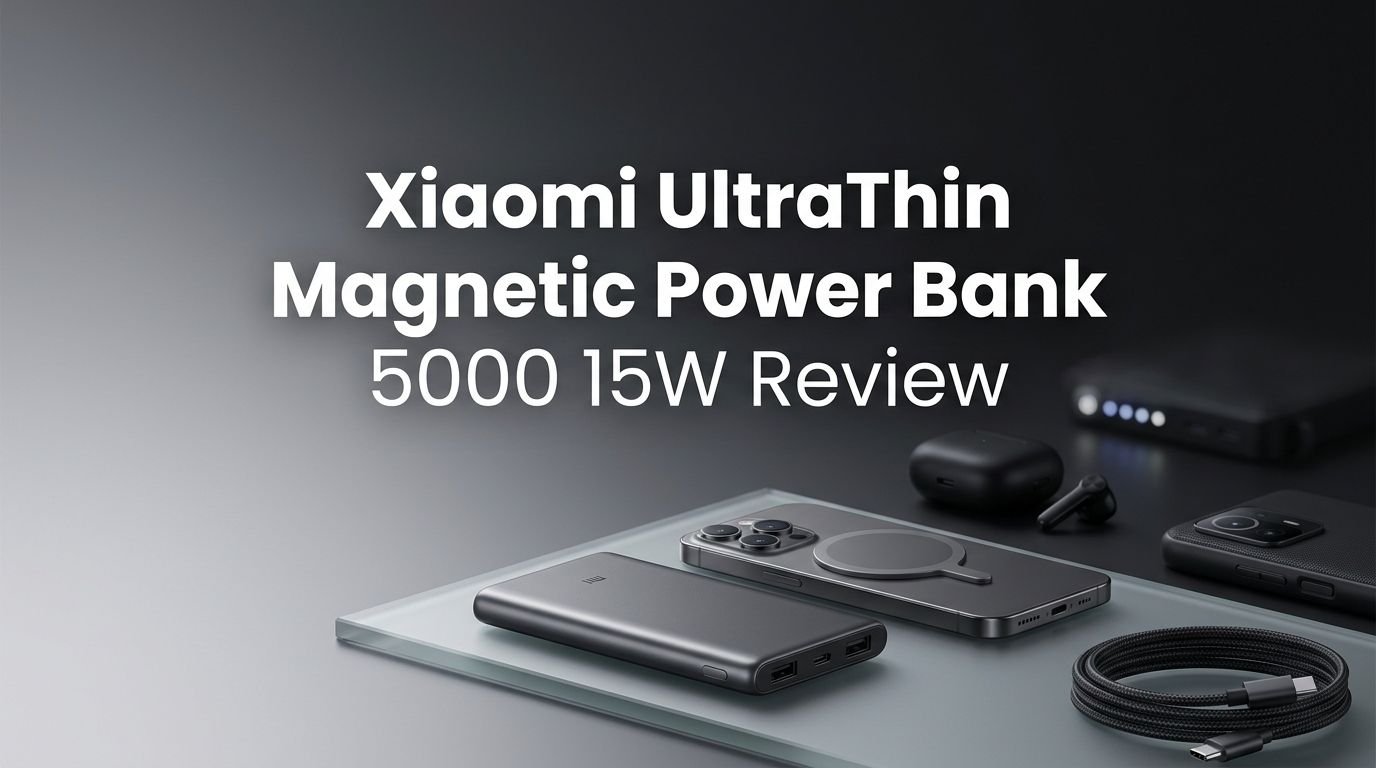
The Xiaomi UltraThin Magnetic Power Bank 5000 15W measures just 6mm thin and weighs only 98 grams. It snaps to the back of your phone with strong magnets and charges it wirelessly at up to 15W.
This power bank launched globally in early 2026 and quickly grabbed attention from tech reviewers everywhere. Outlets like The Verge, GSMArena, and YugaTech all praised its incredible thinness. But is slim design enough to justify a purchase? Does it charge fast enough for daily use?
Key Takeaways
- The Xiaomi UltraThin Magnetic Power Bank 5000 15W is the world’s thinnest magnetic power bank at just 6mm. It weighs only 98 grams, which is lighter than most smartphones on the market today. You can slip it into any pocket without adding bulk.
- Wireless charging tops out at 15W for Android/Xiaomi devices but drops to 7.5W for iPhones. This means iPhone users will experience noticeably slower wireless charging speeds compared to Xiaomi or Samsung users.
- The 5,000mAh capacity gives you a partial top up, not a full charge. In real world tests, it boosted an iPhone 17 Pro Max from 50% to about 70%. This is a top up device, not a full charge solution.
- USB C wired charging supports up to 22.5W input and 20W output. You can recharge the power bank itself in about 30 to 45 minutes with a 60W charger. That is impressively fast for such a thin device.
- Magnetic alignment is strong and secure. The power bank snaps into place cleanly and stays put during walking and casual handling. It works best with MagSafe iPhones and flat backed Android phones.
- It comes in three colors: Glacier Silver, Graphite Black, and Orange. No charging cable is included in the box, so you will need your own USB C cable.

Xiaomi UltraThin Magnetic Power Bank 5000 15W Overview
The Xiaomi UltraThin Magnetic Power Bank 5000 15W carries model number MDY-20-EB. Xiaomi built this power bank around one core idea: portability over capacity. It uses a silicon carbon battery to achieve its remarkably thin profile.
The battery cell holds 5,000mAh with a rated capacity of 3,000mAh at 5V/2A. Total battery energy sits at 18.58Wh. This meets international aviation regulations, so you can carry it on flights without issues.
Xiaomi released this power bank globally in February 2026. It first launched in China before reaching international markets. The global price sits around $39 to $49 USD depending on the color and region. The orange version typically costs a few dollars more.
This power bank supports Qi2 magnetic wireless charging. It works with iPhones from the iPhone 12 series onward, multiple Samsung Galaxy models, Google Pixel phones, and Xiaomi’s own flagship devices. The official compatibility list is extensive and covers most modern smartphones with magnetic charging support.
Design and Build Quality
The first thing you notice is the extreme thinness. At 6mm, this power bank feels more like a metal card than a battery pack. Hold it in your hand and it almost disappears between your fingers.
Xiaomi used matte metallic aluminum for the outer shell. The finish resists fingerprints well and feels cool and smooth to the touch. Our review research shows the Glacier Silver variant has a lighter shade similar to a silver iPad.
The build quality is solid throughout. There is no flex or creaking. The edges are flat with softly rounded corners. Xiaomi kept the design minimal with a subtle logo at the center and a visible magnetic alignment ring on the back.
At the bottom, you get a single USB C port for both input and output. A power button sits on the side. Press it and four LED indicators light up to show remaining battery level. The entire design follows a clean, industrial look that pairs well with modern smartphones.
What Is Inside the Box
Xiaomi kept the packaging simple. Inside the box, you get the power bank itself, a user manual, and a warranty notice. That is everything.
There is no USB C cable included. This is a small downside because most buyers expect at least a basic cable with their purchase. You will need to use an existing cable or buy one separately.
The packaging itself is compact and lightweight. Xiaomi clearly focused on reducing waste here. The box is small enough to fit in one hand. Documentation is minimal and straightforward.
For a product at this price point, the missing cable feels like a cost cutting decision. However, most people already own multiple USB C cables. It should not be a deal breaker for most buyers.
Portability and Everyday Carry
This is where the Xiaomi UltraThin Magnetic Power Bank truly shines. At 98 grams, you barely notice the extra weight on your phone. It does not make your device feel top heavy or unbalanced.
Slip it into your pocket and it feels like carrying five stacked ATM cards. That is it. The 6mm thickness maintains the original slim profile of your phone. This matters for people who hate bulky accessories.
Compare this to typical 10,000mAh magnetic power banks that weigh 200 grams or more. The Xiaomi feels like a completely different product category. You can carry it in a shirt pocket, wallet pouch, or slim shoulder bag without any trouble.
This power bank is built for daily carry. It is meant to live in your pocket every day. It is not a replacement for a large capacity power bank you keep in your backpack. Think of it as an emergency top up tool that you always have with you.
Top 3 Alternatives for Xiaomi UltraThin Magnetic Power Bank 5000 15W
1. Anker MagGo Power Bank Ultra Slim 5000mAh

2. Baseus Picogo Power Bank 0.3″ Ultra Slim 5000mAh MagSafe

3. TORRAS MiniMag Power Bank Ultra Slim 5000mAh

Magnetic Strength and Alignment
The magnets inside this power bank are strong and reliable. Alignment happens instantly. Snap it on the back of your phone and it locks into place with a satisfying click.
During testing, reviewers found the power bank stayed firmly attached during walking, casual handling, and even light jogging. It does not slide around or lose alignment easily. This is a major improvement over cheap generic magnetic power banks sold on budget platforms.
The magnetic ring aligns properly with MagSafe compatible iPhones and Qi2 Android devices. Even with a phone case, the magnets hold strong enough for daily use. You do need a MagSafe compatible case for the best results though.
Compared to competitors like UGREEN magnetic power banks, reviewers described the Xiaomi’s magnet strength as competitive and reliable. It gives you confidence to use the power bank while moving around. You will not worry about it falling off during normal activities.
Wireless Charging Performance
Let’s talk about the charging speeds. The Xiaomi UltraThin supports up to 15W wireless charging for Android and Xiaomi devices. That is the headline number.
However, iPhone users only get 7.5W maximum wireless charging speed. This is noticeably slower. You will feel the difference compared to wired charging. iPhone wireless charging here is more of a slow drip than a fast pour.
In real world tests with an iPhone 17 Pro Max, the power bank boosted the phone from 50% to about 70% before fully draining. That gives you roughly a 20% boost in practical use. This matches expectations for a slim 5,000mAh magnetic pack.
The charging is steady but not aggressive. Think of this as a “top up while commuting” device. It is not built for heavy duty charging sessions. If you just need enough juice to survive your commute or get through a meeting, this does the job perfectly.
Wired USB C Charging Performance
The USB C port offers a much faster alternative to wireless charging. Wired output reaches up to 20W, which charges your phone significantly quicker.
In tests by Pokde.net, the power bank delivered about 3,650mAh of usable capacity through USB C. It reached 45% charge in just 20 minutes via wired connection. That is impressive for such a compact device.
The USB C port supports both input and output. Input reaches up to 22.5W, which means the power bank itself charges up fast. Output maxes at 20W for quick phone charging.
If speed matters to you, wired charging is the clear winner here. Wireless charging adds convenience, but plugging in a cable delivers noticeably faster results. The good news is you have both options available depending on the situation.
How Fast Does the Power Bank Recharge
Here is one of the most impressive features. Using a 60W charger, you can fully recharge this power bank in roughly 30 to 45 minutes. That is remarkably fast for a device this thin.
This fast recharge time means you can drain it during your morning commute and top it back up at the office in under an hour. By lunchtime, it is ready to go again. This creates a practical daily charging cycle that works for busy people.
The 22.5W input through USB C makes this possible. Not all slim power banks recharge this quickly. Many competitors take 60 to 90 minutes for a similar capacity. Xiaomi’s fast recharge is a genuine advantage here.
Just make sure you use a charger rated at 20W or higher for the best results. A basic 5W charger will work but take much longer. A good 30W or 60W USB C charger will get you the fastest recharge times.
Heat Management During Use
Wireless charging generates heat. That is a fact of physics. The Xiaomi UltraThin does get warm during wireless charging sessions.
However, multiple reviewers confirmed the warmth stays manageable. It feels warm to the touch but never hot or uncomfortable. There is no alarming overheating behavior during normal use.
The thin aluminum body actually helps here. Metal conducts and dissipates heat better than plastic. You will feel the warmth through the metal shell, but it spreads evenly rather than building up in one hot spot.
Xiaomi included over temperature protection as one of ten built in safety features. If the power bank gets too warm, it will reduce charging speed or stop charging to protect both itself and your phone. This gives peace of mind for daily use.
Safety Features and Certifications
Xiaomi packed this slim power bank with ten different safety protections. These include electrostatic protection, input overvoltage protection, output overvoltage protection, and over temperature protection.
The full list also covers output overcurrent protection, undervoltage protection, short circuit protection, over discharge protection, overcharge protection, and foreign object detection. This is a comprehensive safety suite for a product this small.
The 18.58Wh battery energy falls well within airline carry on limits. Most airlines allow power banks under 100Wh in carry on luggage. You can bring this on any flight without issues or special approval.
Xiaomi has a solid reputation for power bank safety. This model carries proper certifications for international sale. The multiple layers of protection ensure the device shuts down safely if it detects any abnormal conditions during charging.
Device Compatibility
No products found.
The Xiaomi UltraThin works with a wide range of devices. The official compatibility list includes iPhone 12 through iPhone 17 series, Samsung Galaxy S23 Ultra through S25 Ultra, Google Pixel 9 through Pixel 10 Pro Fold, and Xiaomi 12 through Xiaomi 15 Ultra.
However, there is an important catch. Phones with large protruding camera modules may not work properly. The power bank needs to sit flush against the back of your phone for proper magnetic alignment and charging.
In testing, the power bank did not work with the Vivo X300 Ultra because its camera bump was too large. A helpful tip from reviewers: if the back of your phone can fit a flat credit card without wobbling, the power bank will likely work fine.
For iPhones with MagSafe, setup is instant. Just snap it on and charging begins automatically. No buttons to press, no apps to install. Android phones with Qi2 support work the same way. Older phones without magnetic charging will need a separate magnetic case or ring.
Xiaomi UltraThin vs Apple MagSafe Battery Pack
Many buyers will compare this to Apple’s own MagSafe Battery Pack. Here is how they stack up. The Xiaomi offers 5,000mAh while the Apple battery holds only about 3,149mAh. That gives Xiaomi a clear capacity advantage.
The Xiaomi is also thinner at 6mm compared to Apple’s thicker profile. Weight is competitive between both products. Price is another win for Xiaomi, which typically costs $20 to $30 less than Apple’s option.
However, Apple’s battery pack integrates more deeply with iOS software. You get battery level readings in the widget and tighter system level integration. The Xiaomi uses four basic LED indicators instead.
For pure value and capacity, the Xiaomi wins. For seamless Apple ecosystem integration, the Apple battery still has advantages. Most budget conscious buyers will find the Xiaomi offers better bang for their money.
Who Should Buy This Power Bank
This power bank is perfect for light users who need a quick top up during the day. If you commute by train, work in an office, or travel frequently, this fits your lifestyle.
It is ideal for people who hate bulky accessories. If you value a slim phone setup and refuse to carry a thick power bank, the Xiaomi UltraThin is built exactly for you. Students, office workers, and frequent travelers will appreciate the minimal weight and size.
This is not the right choice for heavy phone users who drain their battery completely every day. If you need a full 0 to 100% charge, look at a 10,000mAh or larger option instead. The 5,000mAh capacity provides a partial boost only.
It is also not ideal for users whose phones have very large camera bumps. Check your phone’s compatibility before buying. MagSafe iPhone users and flat backed Android phone users will get the best experience.
Pros and Cons Summary
The biggest strengths of this power bank are its incredible thinness, lightweight build, and premium aluminum finish. The fast recharge time of 30 to 45 minutes is a genuine standout feature. Strong magnetic alignment and dual charging options add real value.
The main weaknesses are the limited 5,000mAh capacity and slower 7.5W wireless speed for iPhones. The missing cable in the box feels like an oversight at this price. Warmth during wireless charging is noticeable but not problematic.
The power bank also lacks a digital display for precise battery percentage. The four LED indicators give you a rough estimate only. Some competitors offer digital readouts at similar price points.
Overall, the pros outweigh the cons for the target audience. If you understand this is a top up device and not a full charge solution, you will be very happy with the Xiaomi UltraThin Magnetic Power Bank 5000 15W.
Final Verdict
The Xiaomi UltraThin Magnetic Power Bank 5000 15W is not built to be the most powerful magnetic power bank on the market. It is built to be the most convenient. At 6mm thin and 98 grams, it disappears into your pocket and adds almost no bulk to your phone.
If you want a reliable emergency top up device that you can carry every single day without thinking about it, this is one of the best options in 2026. The build quality is excellent. The magnetic alignment is strong. The fast recharge time keeps it ready whenever you need it.
Just know its limits. The 5,000mAh capacity gives you a partial charge, not a full one. Wireless speed is moderate, especially for iPhone users. For the price and the form factor, the Xiaomi UltraThin delivers exactly what it promises: ultra portable power in an ultra thin package.
Frequently Asked Questions
Can I Take the Xiaomi UltraThin Magnetic Power Bank on a Plane?
Yes. The battery energy is 18.58Wh, which falls well below the 100Wh limit set by most airlines. You can carry it in your carry on luggage on any commercial flight. Power banks are generally not allowed in checked luggage, so keep it in your hand carry bag.
How Long Does the Xiaomi UltraThin Take to Fully Charge My Phone?
It depends on your phone model and charging method. The power bank provides a partial charge, not a full one. In tests, it boosted an iPhone 17 Pro Max from 50% to about 70% wirelessly. Using the USB C wired connection delivers faster and more efficient charging.
Does the Xiaomi UltraThin Work With Samsung Galaxy Phones?
Yes. The official compatibility list includes the Samsung Galaxy S23 Ultra, S24 Ultra, S25, and S25 Ultra. Your Samsung phone needs Qi2 or magnetic wireless charging support. A MagSafe compatible case may be needed for the best magnetic alignment.
Is the Xiaomi UltraThin Magnetic Power Bank Worth Buying in 2026?
It depends on your needs. If you want a super slim daily carry power bank for quick top ups, it is an excellent choice. If you need a full phone charge or fast wireless speeds for iPhone, consider a larger capacity alternative. The value is strong for its form factor and build quality.
Does It Come With a Charging Cable?
No. The box includes only the power bank, user manual, and warranty notice. You will need to provide your own USB C cable. Most households already have several USB C cables, but it is worth noting before purchase.
What Colors Are Available for the Xiaomi UltraThin Magnetic Power Bank?
Xiaomi offers three color options: Glacier Silver, Graphite Black, and Orange. The orange version may cost slightly more depending on the retailer and region. All three colors use the same aluminum finish and share identical specifications.