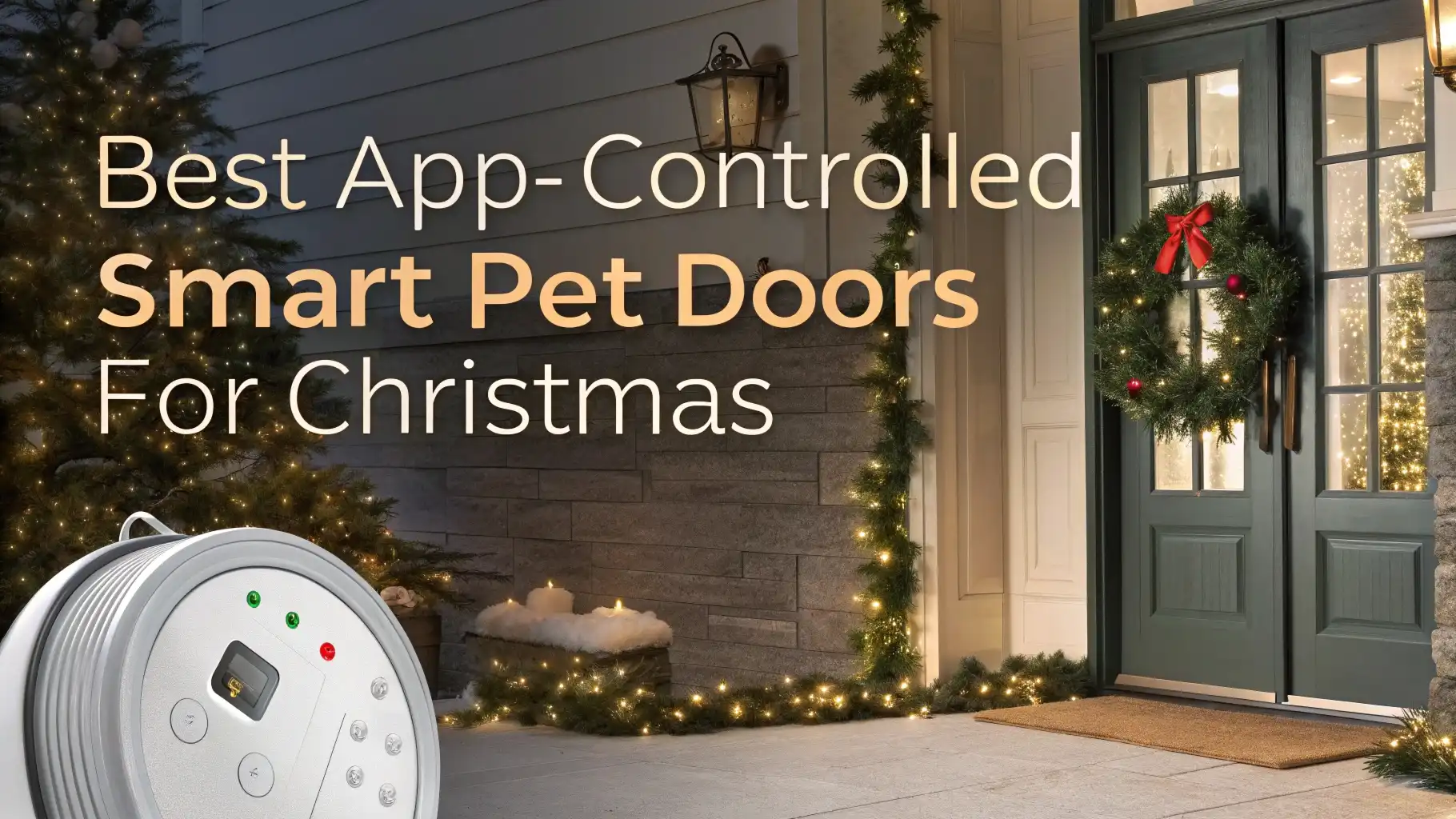
5 Best App-Controlled Smart Pet Doors for Christmas 2026
Your furry friend deserves the freedom to come and go as they please. Smart pet doors with app control make this dream a reality while keeping your home secure.
These innovative doors give you complete control from your smartphone. You can monitor your pet’s activity, set schedules, and ensure only your pets can enter your home.
This guide will help you find the perfect smart pet door for your home this Christmas season. We tested and reviewed the top options available on Amazon.

Key Takeaways
- Complete smartphone control lets you manage access from anywhere. You can lock or unlock the door remotely, set custom schedules for different times of day, and receive notifications when your pet uses the door. This feature gives you peace of mind whether you are at work or traveling.
- Selective entry prevents unwanted animals from entering your home. Smart doors use RFID collars, microchip scanning, or ultrasonic technology to identify your pets. Only authorized animals can open the door. This keeps out raccoons, stray cats, and other neighborhood animals.
- Energy efficiency features help reduce your heating and cooling costs. Modern smart doors include airtight seals, automatic deadbolt locks, and weatherproof flaps. These features prevent drafts and maintain your home’s temperature better than traditional pet doors.
- Installation flexibility suits different home types and pet sizes. You can find models for doors, walls, sliding glass panels, and patio doors. Size options range from small cats to extra large dogs weighing up to 100 pounds.
- Advanced features include activity tracking, curfew modes, and multi-pet management. You can monitor when and how often your pet goes outside. Set nighttime curfews to keep pets inside after dark. Manage up to 40 different pets with individual access permissions.
High Tech Pet Power Pet WiFi Automatic Door

Last update on 2026-08-04 / Affiliate links / Images from Amazon Product Advertising API Some of the links on this website are affiliate links, which means that at no additional cost to you, I earn a commission if you click through and make a purchase. I only recommend products and services that I believe will add value to my readers. Thank you for your support!
The High Tech Pet Power Pet represents the premium choice for smart pet door technology. This door uses WiFi connectivity for complete smartphone control.
You can operate the door from anywhere in the world. The ultrasonic collar system provides reliable pet identification. Your pet wears a lightweight collar that triggers the door to open. The system includes automatic deadbolt security that locks when not in use.
Installation takes about two hours for most homeowners. The door fits openings from 6 to 12 inches wide. It accommodates pets up to 100 pounds. The door frame is made from rust-proof materials. Weather seals keep out drafts and moisture.
Battery backup ensures the door works during power outages. You can set custom schedules for different times of day. The door also includes directional sensing to know if your pet wants to enter or exit.
Pros:
Complete WiFi app control from anywhere
Automatic deadbolt security lock
Dual range control for indoor and outdoor activation
Directional sensing technology
Works for pets up to 100 pounds
Weather resistant and airtight design
Cons:
Premium price point
Requires professional installation for some setups
Collar batteries need regular replacement
Initial setup can be complex
PetSafe SmartDoor Connected Pet Door


Last update on 2026-08-04 / Affiliate links / Images from Amazon Product Advertising API Some of the links on this website are affiliate links, which means that at no additional cost to you, I earn a commission if you click through and make a purchase. I only recommend products and services that I believe will add value to my readers. Thank you for your support!
The PetSafe SmartDoor offers excellent app control at a more affordable price. This door connects through your home WiFi network.
The smartphone app lets you control access for up to five pets. Each pet wears a smart collar key that identifies them at the door. You can customize access permissions for each animal individually. The door features a rust-proof aluminum frame that lasts for years.
Selective entry and exit control sets this door apart. You can allow one pet to only go outside while another can come and go freely. This helps during training periods or medical recovery. The app tracks each pet’s activity separately.
Pros:
Affordable app-controlled option
Manages up to 5 pets individually
Selective entry and exit for each pet
Custom scheduling and curfew modes
Never rust aluminum construction
Activity tracking in the app
Cons:
Mixed customer reviews on reliability
App connectivity issues reported
Smart keys can be expensive to replace
Limited to 5 pets maximum
Power Pet Electronic Door with Manual and App Control

Last update on 2026-08-04 / Affiliate links / Images from Amazon Product Advertising API Some of the links on this website are affiliate links, which means that at no additional cost to you, I earn a commission if you click through and make a purchase. I only recommend products and services that I believe will add value to my readers. Thank you for your support!
This next generation Power Pet door combines three control methods. You get ultrasonic collar operation, manual control, and WiFi app management.
The flexibility means your door keeps working even if your phone dies or WiFi goes down. Your pet’s collar triggers the door automatically. You can also use the control panel or smartphone app. This redundancy provides reliable operation every day.
Security features include a high-strength deadbolt that locks automatically. The door is 100% airtight when closed. No drafts can get through the weather seals.
This saves energy on heating and cooling costs. The door fits pets weighing up to 100 pounds. Installation options include door mounting or wall mounting. The system includes everything needed for a complete installation.
Pros:
Triple control methods for reliability
100% airtight seal saves energy
High security automatic deadbolt
Improved WiFi app connectivity
Directional sensing prevents accidents
Battery backup during outages
Cons:
Higher cost than basic models
Collar must be worn at all times
Installation requires some DIY skills
May need tunnel extension for thick walls
PetSafe Electronic Pet Door with Smart Collar

Last update on 2026-08-04 / Affiliate links / Images from Amazon Product Advertising API Some of the links on this website are affiliate links, which means that at no additional cost to you, I earn a commission if you click through and make a purchase. I only recommend products and services that I believe will add value to my readers. Thank you for your support!
The PetSafe Electronic Pet Door provides reliable collar-activated entry without WiFi complications. This door does not connect to your smartphone. Instead, it uses a programmable smart collar system.
Your pet wears a lightweight collar that unlocks the door. The system can store up to five different pet collars. This door works great if you want automatic pet access without app features.
Programming takes just minutes using the control panel. Each collar has four range settings. You choose how far away the door starts to unlock. This prevents false triggers from nearby pets.
The rust-proof frame withstands years of outdoor exposure. Energy efficient design includes a dual flap system. The inner flap provides extra insulation against weather.
Pros:
Affordable electronic pet door
No WiFi or app complications
Stores up to 5 pet collars
Energy efficient dual flap system
Rust-proof construction
Easy installation
Cons:
No remote smartphone control
No activity tracking features
Collar batteries need replacement
Cannot set schedules or curfews
Smart Electronic Pet Door with Three Modes

Last update on 2026-08-04 / Affiliate links / Images from Amazon Product Advertising API Some of the links on this website are affiliate links, which means that at no additional cost to you, I earn a commission if you click through and make a purchase. I only recommend products and services that I believe will add value to my readers. Thank you for your support!
This upgraded smart door offers three operating modes at a budget price. Manual mode lets you lock the door completely. Automatic mode allows pets with the sensing key to come and go freely.
One-way mode permits exit only or entry only. The battery powered design eliminates wiring complications. Your pet wears a sensing key on their collar. The door unlocks when it detects the key signal.
The system includes one sensing key. You can purchase additional keys for multiple pets. Setup takes less than 30 minutes for most users. The door fits pets up to 85 pounds. The frame is constructed from durable ABS plastic.
Weather stripping keeps out drafts and moisture. The door works reliably in temperatures from minus 40 to 122 degrees Fahrenheit.
Pros:
Very affordable price point
Three operating modes
Battery powered no wiring needed
Works in extreme temperatures
Easy installation
Sensing key included
Cons:
No smartphone app control
Basic features compared to WiFi models
Additional sensing keys cost extra
Weight limit of 85 pounds
No activity tracking
Installation Tips for Smart Pet Doors
Installing a smart pet door requires careful planning. Choose the right location first. The door should be convenient for your pet but not compromise home security.
Many people install the door in a garage entrance or laundry room door. This provides pet access while keeping the main house secure. Measure your pet carefully before selecting a door size. The opening should allow comfortable passage without being too large.
Wall installations offer more security than door installations. Exterior walls require cutting through siding and framing. This takes more skill but provides a permanent solution. Door installations are easier but may weaken the door structure.
Consider hiring a professional for wall installations. Most smart doors include detailed installation templates. These help you cut the opening to exact specifications.
Training Your Pet to Use a Smart Door
Training is essential for successful smart door adoption. Start by propping the door open so your pet can walk through freely. Let them investigate the door without pressure.
Place treats on both sides to encourage exploration. Praise your pet enthusiastically when they walk through the opening. This builds positive associations with the new door.
Gradually introduce the automatic function. Hold the flap open while encouraging your pet to pass through. Let the flap gently touch them as they pass. This helps them understand the flap will move.
Progress to having them push through the flap themselves. Use treats and praise to reward brave attempts. Most pets learn within a few days. Some nervous animals may take several weeks.
Energy Efficiency and Weather Protection
Modern smart doors include excellent weather protection features. Airtight seals prevent drafts when the door is closed. The automatic locking mechanism creates a tight seal. This stops cold air in winter and hot air in summer.
Quality doors include dual or triple flap systems. Multiple layers provide extra insulation. Energy efficient doors can reduce heating and cooling costs by 15 to 25 percent compared to traditional pet doors.
Weather stripping around the frame blocks moisture and insects. The flaps themselves use heavy duty vinyl or plastic materials. These materials resist cracking in cold weather.
UV protection prevents sun damage over time. Some premium doors include heated flaps for extreme cold climates. The heating prevents ice buildup that could jam the door mechanism.
Security Features of Smart Pet Doors
Security remains a top concern for pet door owners. Smart doors offer significant security advantages over traditional flaps. The automatic locking mechanism engages when no pet is using the door.
This creates a barrier against intruders. The selective entry feature prevents unauthorized animals from entering. Only pets with the correct collar or microchip can unlock the door.
Tamper resistant designs make forced entry extremely difficult. Quality doors use heavy duty frames that resist prying. The locking mechanism is protected inside the door housing.
Some models include break-in alarms that alert you to tampering attempts. App-connected doors send instant notifications if someone tries to force the door open.
Cost Considerations and Value
Smart pet door prices range from 150 dollars to over 600 dollars. Basic electronic doors without WiFi start around 150 to 200 dollars. These offer automatic collar-activated operation but no smartphone features.
Mid-range WiFi doors with app control cost 300 to 400 dollars. These include most smart features like scheduling and activity tracking. Premium models with advanced features run 500 to 650 dollars.
Installation costs add to the total investment. Professional installation for door mounting costs 100 to 200 dollars. Wall installations run 200 to 400 dollars depending on wall construction.
DIY installation saves money but requires tools and skills. Factor in the cost of extra collar tags if you have multiple pets. Replacement collar batteries cost 5 to 15 dollars depending on the model.
Comparing WiFi versus Non-WiFi Models
WiFi-enabled doors connect to your home network for smartphone control. You can lock or unlock the door from anywhere. Set schedules, receive notifications, and monitor activity logs. The app provides complete control and information.
WiFi doors cost more initially but offer maximum convenience. These doors require stable internet connections to function properly. Power outages or WiFi problems can affect operation.
Non-WiFi electronic doors use collar activation without internet connectivity. These doors operate independently of your network. They cost less and have simpler operation. No app means no connectivity issues or software updates.
These doors work reliably regardless of internet status. You program them using buttons on the control panel. Settings are stored in the door’s memory.
Maintenance and Troubleshooting
Regular maintenance keeps your smart door functioning properly. Clean the flaps weekly to remove dirt and pet hair. Use mild soap and water for plastic components.
Dry thoroughly before reassembling. Check the frame and weather stripping monthly for damage. Replace worn weather stripping immediately to maintain energy efficiency. Lubricate moving parts every three months with silicone spray.
Battery maintenance prevents operation problems. Replace collar batteries when the low battery indicator appears. Most collars use common batteries available at any store.
Door batteries in non-wired models need changing every 6 to 12 months. Keep spare batteries on hand to avoid unexpected failures. WiFi doors connected to power do not need battery changes for door operation.
Making the Right Choice for Your Home
Assess your specific needs before purchasing. Consider your pet’s size and weight first. Measure accurately to ensure the door opening fits comfortably. Think about where you will install the door. Wall installations provide better security but cost more. Door installations are easier but may limit door options.
Evaluate your desired features carefully. Do you need smartphone control or is basic automatic operation sufficient? Multiple pets require doors that support several collar tags.
Activity tracking helps monitor pet health and behavior patterns. Set a realistic budget that includes installation and accessories. Remember that quality doors last many years and provide daily value.
Frequently Asked Questions
Do smart pet doors work with multiple pets?
Yes, most smart pet doors support multiple pets. Entry-level models typically handle 3 to 5 pets. Premium models can manage up to 40 different animals. Each pet wears their own collar tag or uses their microchip for identification. You can set individual permissions for each pet through the app or control panel. This lets you customize access for different animals based on their needs.
Will smart pet doors work during power outages?
Many smart pet doors include battery backup systems. These keep the door functioning when electricity goes out. Battery-powered models work independently of home power. WiFi features may not work without power, but the door still operates in basic automatic mode. Some owners install uninterruptible power supplies for continuous operation. Check the specific model’s specifications for backup power capabilities.
Can other animals open my smart pet door?
Smart pet doors are designed to prevent unauthorized access. The door only opens for pets wearing the correct collar tag or having the registered microchip. Stray animals, raccoons, and other wildlife cannot trigger the door. The identification system ensures only your approved pets can enter. This security feature is a major advantage over traditional always-open pet doors.
How difficult is smart pet door installation?
Installation difficulty varies by door type and mounting location. Door installations typically take 1 to 2 hours for average DIYers. Wall installations require more skill and time, often 3 to 4 hours. You need to cut an opening, install the frame, and seal properly. Most doors include detailed instructions and templates. Professional installation costs 100 to 400 dollars depending on complexity.
Do smart pet doors drain smartphone batteries?
Smart pet door apps use minimal battery power on your smartphone. The app runs in the background and only activates when needed. Push notifications use very little energy. You might notice slightly faster battery drain if you check the app frequently throughout the day. Overall impact on phone battery life is negligible for normal use.
What happens if my pet loses their collar tag?
Losing a collar tag requires ordering a replacement from the manufacturer. Most companies sell additional tags for 20 to 40 dollars each. The door will not open for your pet without the tag or registered microchip. Some owners keep spare programmed tags as backups. Microchip-reading doors eliminate this concern since the chip is permanently implanted. Program the new tag through your door’s control panel or app when it arrives.
Can I control the pet door when away from home?
WiFi-enabled smart doors allow remote control from anywhere. You need the smartphone app and internet connection. Lock or unlock the door remotely as needed. Change schedules, check activity logs, and receive notifications. This feature provides peace of mind when traveling or at work. Non-WiFi models only offer control when physically present at the door.

Hello, i’m Ivoria i am the face behind Tech Tracker Blog. I am passionate about my work and love to explore gadgets and share about my experience.