How To Fix Avalanche Airbag Canister Puncture Pin Jamming?
Picture this. You are deep in the backcountry. Snow shifts beneath your feet. You pull your airbag trigger and nothing happens.
That moment of panic is exactly why we need to talk about puncture pin jamming. This small mechanical issue can turn your safety device into a useless pack.
Your avalanche airbag relies on a tiny pin to puncture the canister and release air fast. When this pin jams, your entire system fails at the worst possible time.
The good news? Most jamming problems come from simple, fixable issues. Improper canister connection and debris buildup cause the majority of failures.
In a Nutshell
- Check the connection first. Make sure your cylinder links properly to the trigger pin. This single step solves most jamming issues right away.
- Look at both threads. Your canister has a large thread and a small thread. Both must connect fully to the trigger pin for the system to work.
- Screw the canister in completely. A loose canister is a common reason pins jam. Give it a full turn before every trip out.
- Avoid the usual mistakes. Closed trigger handles, loose canisters, and unbuckled straps all cause deployment failures. Check these every single time.
- Build a maintenance routine. Inspect your cylinder connection often. Follow your manufacturer’s guidelines for care and storage.
- Practice makes it automatic. Run through your deployment steps regularly. Muscle memory matters when seconds count on the mountain.
Understanding the Puncture Pin Mechanism
The puncture pin mechanism works like a simple mechanical system. When you pull your airbag trigger, the handle moves and pushes a pin forward. This pin travels down into the compressed air canister and pierces it. Once pierced, pressurized air rushes out and inflates your airbag in seconds.
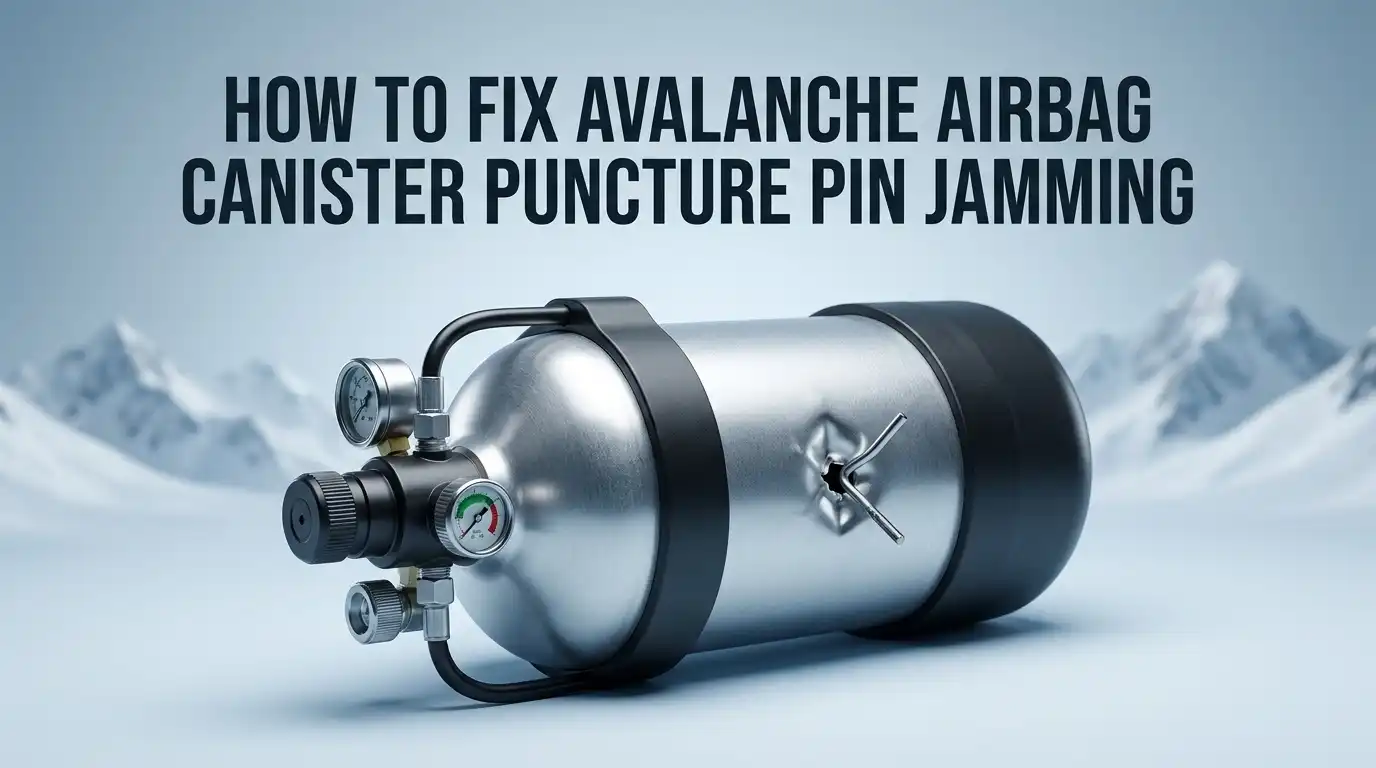
Your canister has two different thread sizes. The large outer thread screws into your airbag pack. The small inner thread connects directly to the trigger mechanism. Both threads must engage fully for the puncture pin to align correctly with the canister’s valve.
Jamming happens when these threads don’t connect properly. If either thread is loose or partially engaged, the pin cannot reach the canister’s valve. The pin gets stuck before it can do its job. This is why full screw in engagement matters so much.
The trigger handle controls everything. When you pull it, a mechanical linkage pushes the puncture pin downward. If your trigger handle stays closed or gets stuck, the pin never moves. This creates a false jam even though the mechanism itself works fine.
Debris also causes problems. Dirt, ice, or lint can lodge between the threads or around the pin. This blocks the pin’s path and prevents it from traveling freely.
Understanding this simple sequence helps you spot problems quickly. The pin must move freely, both threads must connect fully, and your trigger must pull smoothly. When all three conditions exist, your puncture pin works perfectly. Most jamming issues trace back to one of these three factors. Regular inspection keeps everything aligned and functional.
Common Causes of Puncture Pin Jamming
Puncture pin jamming occurs when the small metal pin that pierces your canister gets stuck and won’t move. Understanding the root causes helps you prevent deployment failures before they happen.
Improper cylinder connection ranks as the top jamming cause. Your canister has two distinct thread sizes that must engage fully with the trigger pin. If either thread sits loose or misaligned, the pin binds up and refuses to move. This happens more often than you’d think because the connection feels secure even when it’s not completely threaded.
Debris and dirt create another major problem. Dust, sand, or moisture accumulates inside the trigger mechanism over time. When you need your airbag, this debris blocks the pin’s path. Even small particles can jam the entire system.
Incomplete canister insertion frequently causes jamming too. Your canister needs full screw-in engagement every single time. Many users assume a partial turn is “good enough,” but this leaves the threads misaligned and traps the pin.
Trigger handle position matters more than most people realize. If your handle stays closed or partially deployed, the pin cannot move freely. The mechanical linkage between the handle and pin requires full activation to work properly.
Worn or damaged threads develop over multiple seasons of use. Metal threads wear down gradually, creating gaps where the pin gets caught. Regular inspection catches this problem before it becomes critical.
Environmental factors also play a role. Temperature changes, humidity, and storage conditions affect metal expansion and contraction. These shifts can alter how tightly components fit together, creating binding points for the pin.
Step-by-Step Fix: Reconnecting the Cylinder and Trigger Pin
Start by examining where your cylinder connects to the trigger pin. This connection point is critical because it controls whether the puncture pin can move freely when you need it.
Look closely at both metal threads on your canister. You have a large thread and a small thread that must both engage with the trigger pin. If either thread sits loose or misaligned, the pin gets stuck. Spin the canister by hand to feel for resistance. Smooth rotation means good connection. Grinding or catching means something is wrong.
Now screw the canister in completely. Hand tighten it firmly until you feel it seat fully against the trigger pin. A partially inserted canister is one of the most common jamming culprits. Many users think “close enough” works, but it doesn’t.
Check that the trigger handle itself moves freely. Pull it back and forth several times. It should operate smoothly without sticking. A stuck handle prevents the pin from doing its job, even if everything else connects properly.
Inspect the threads themselves for damage. Look for bent metal, stripped grooves, or visible wear. Damaged threads won’t grip correctly, which causes jamming. If you see damage, the threads may need professional service.
Once everything connects properly, deploy your airbag system once to verify the fix works. This confirms the puncture pin moves when triggered. Test deployment builds your confidence and ensures your system responds correctly when you need it.
Keep your cylinder connection tight before every tour. This single habit prevents most jamming problems. Make it part of your pre-trip routine, just like checking your bindings.
Verifying Proper Canister and Thread Engagement
Proper canister and thread engagement forms the foundation of a working avalanche airbag system. Your puncture pin jamming problem often stems from loose or incomplete connections at this critical junction.
Start by examining your canister’s connection point. You’ll see two distinct metal threads of different sizes on your trigger pin assembly. The large thread and small thread must both engage fully with your canister. Many people miss this detail and only partially screw in their canister, leaving one thread disengaged.
Screw your canister in completely using steady pressure. You should feel resistance as the threads lock into place. A canister that spins freely or stops midway indicates incomplete engagement. This loose connection directly causes your puncture pin to jam because the mechanism cannot align properly.
Check the trigger handle position next. It should move smoothly without resistance. A stuck or partially closed handle prevents proper pin deployment, which users often mistake for a jammed pin problem.
Inspect both thread surfaces for visible damage, dirt, or debris. Even small particles trapped in the threads prevent full seating. Clean these areas gently if needed, then reinsert your canister.
Once you’ve verified complete engagement, test your system by deploying it once. This confirms the fix actually works before you head into the backcountry.
Make thread verification part of your routine before every tour. Spend 30 seconds checking that both threads are fully connected and your canister sits tight. This simple habit prevents most jamming issues before they occur. Proper engagement takes seconds but saves your life when you need your airbag system most.
Mistakes That Lead to Jamming or Deployment Failure
Many people make simple mistakes that lead to puncture pin jamming or deployment failure. Understanding these errors helps you avoid expensive problems on the mountain.
Leaving your trigger handle in the closed position ranks as the most common mistake. Your airbag won’t deploy if the handle stays locked. Always check that your trigger handle moves freely before you head out. Practice pulling it several times to build muscle memory.
Failing to fully screw your canister in completely causes jamming more often than you’d think. Both the large and small metal threads must connect fully to your trigger pin. A loose canister won’t engage properly, and your system won’t work when you need it most. Screw it in with steady, firm pressure until you feel resistance.
Leaving your waist and chest straps unbuckled creates another serious problem. Your airbag won’t inflate if these straps aren’t secured. Take two seconds to check both straps before every tour.
Ignoring debris and dirt around your connection point leads to jamming too. Sand, ice, and dirt prevent threads from engaging properly. Wipe your canister and trigger pin area clean before each use.
Skipping regular maintenance checks allows problems to develop silently. Inspect your cylinder connection weekly during avalanche season. Look for damaged threads or corrosion that might prevent deployment.
Not practicing your deployment procedure means you won’t recognize problems until an emergency. Deploy your system once per season in a safe location. This simple test reveals connection issues before they matter.
These mistakes are preventable. Take five minutes before each tour to verify your system works correctly.
Routine Maintenance to Prevent Future Jamming
Regular maintenance prevents most jamming problems before they start. Check your cylinder connection every single time you prepare for a tour. This simple habit catches loose threads and debris early.
Inspect both metal thread sizes on your canister weekly during the season. Look for dirt, ice, or corrosion around the connection point. Clean these areas gently with a dry cloth. Compressed air cylinders need regular checks too. Follow the manufacturer’s guidelines for your specific model.
Build muscle memory through practice deployments. Deploy your system at least once per month in a safe location. This keeps you familiar with how the trigger feels and sounds. You’ll notice immediately if something feels wrong.
Prepare your cylinder properly before airline travel. Some models require depressurization before flying. Check your manual for specific instructions. Improper preparation can damage threads and cause jamming later.
Store your airbag system in a cool, dry place. Moisture and temperature changes affect metal threads over time. Keep your pack away from extreme heat or cold when possible.
Document your maintenance checks in a simple log. Write down when you inspected connections and performed test deployments. This record helps you spot patterns if problems develop.
Replace your canister according to manufacturer recommendations. Even well maintained canisters have service life limits. Older canisters develop micro cracks in threads that aren’t visible to the eye.
Train yourself to verify full engagement before each tour. Screw your canister in completely using steady, even pressure. Listen for the click that indicates proper seating. These consistent habits eliminate most jamming issues permanently.
Pre-Tour Inspection Checklist
Before you head out on a tour, you need a solid inspection routine. This checklist catches problems before they become dangerous.
Start by examining your airbag pack itself. Look for any visible cracks, tears, or damage to the fabric. Check all zippers and straps to confirm they open and close smoothly. A damaged pack won’t protect you when you need it most.
Next, focus on your canister connection. Hold your pack steady and locate where the cylinder screws in. Grasp the canister firmly and turn it clockwise with steady, even pressure. You should feel resistance as it tightens. Stop when you can’t turn it anymore. This full engagement prevents jamming during deployment.
Inspect your trigger handle position carefully. Pull it gently to confirm it moves freely. The handle should sit in the open, ready position. A stuck or partially closed handle signals a problem that needs fixing before your tour.
Examine both thread sizes on your canister connection point. Look for dirt, ice, or debris caught in the threads. Use a clean, dry cloth to wipe away any buildup. Metal threads must be completely clean to function properly.
Test your system’s response one final time. Press your trigger handle and listen for the hiss of air release. This confirms your puncture pin will fire when needed.
Write down the date and time of your inspection. Document any issues you find. This simple log helps you track problems over time and catch patterns early.
Complete this checklist every single tour. Consistency prevents surprises when conditions turn dangerous.
Traveling and Storing Your Airbag Cylinder Safely
Storing and traveling with your avalanche airbag cylinder requires specific care to prevent puncture pin jamming. Your canister’s condition during transport directly affects its performance when you need it most.
Keep your cylinder in a cool, dry location when you’re not using it. Temperature swings and moisture create rust and corrosion around the metal threads. These conditions make connections loose and unreliable. Store your system away from direct sunlight and extreme heat sources.
Before packing for any trip, verify that your canister sits completely secure on the trigger mechanism. Both the large and small metal threads must be fully engaged. Screw the canister in until you feel solid resistance. A partially connected canister will jam during deployment.
When traveling by air, check your airline’s rules about compressed gas cylinders. Some airlines require you to depressurize your canister before boarding. Follow these guidelines exactly to avoid confiscation or safety issues. Contact the airline ahead of time rather than discovering problems at the airport.
During transport, protect your airbag pack from impact and crushing forces. Rough handling can bend the trigger mechanism or misalign the puncture pin. Keep your pack in a padded bag or protective case when possible. Avoid placing heavy items on top of your equipment.
Inspect your cylinder connection before each journey. Wiggle the canister gently to confirm it doesn’t move. If it shifts or feels loose, unscrew it completely and reconnect. Check that no dirt or debris sits between the threads.
Document when you last inspected your system. This simple record helps you stay consistent with maintenance. Travel safely by treating your canister connection as a critical safety component that demands regular attention.
Final Thoughts
A jammed puncture pin can turn a life saving tool into a useless one. That’s why fixing this problem matters so much.
The good news is that most jamming issues come from simple, fixable causes. Loose connections and skipped checks account for the majority of problems.
Your canister needs both metal threads fully connected to the trigger pin. This single check prevents most deployment failures.
Make this verification a habit, not an afterthought. Check it before every single tour, no exceptions.
Regular maintenance keeps your system reliable when you need it most. A few minutes of inspection can save your life on the mountain.
Practice your deployment procedure often. Muscle memory matters during high stress moments. You want your hands to know what to do without thinking.
Proper storage and travel prep also protect your equipment. Cylinders that get damaged or improperly packed cause connection problems later.
Think of your airbag system as a partnership between you and your gear. Your gear only works well if you maintain it well.
Small efforts now prevent big failures later. Skipping a check today could mean a jammed pin tomorrow, right when you need deployment most.
Avalanche safety depends on many factors working together. Your airbag system is one piece of a larger puzzle that includes terrain awareness and group communication.
Take these fixes seriously. Build them into your regular backcountry routine.
Your safety and the safety of your touring partners depend on equipment that works when called upon. Don’t let a jammed pin be the reason things go wrong.
Stay prepared, stay informed, and stay safe out there this season and beyond.
Frequently Asked Questions
What causes puncture pin jamming in avalanche airbag canisters?
Puncture pin jamming happens when your canister doesn’t connect properly to the trigger mechanism. The most common culprit is a loose or incomplete connection between the metal threads and the trigger pin. Debris can also block the connection point, preventing smooth operation when you need it most.
How do I know if my puncture pin is jammed?
Test your system by pulling the trigger handle. If the airbag doesn’t deploy or deploys partially, your puncture pin may be stuck. You might also notice resistance when connecting your canister, or the trigger handle feels unusually stiff. These signs tell you to stop and inspect your equipment before heading out.
Can I fix a jammed puncture pin myself?
Yes, most jamming issues are fixable at home. Start by disconnecting your canister completely. Inspect both the large and small metal threads for dirt or damage. Clean any debris carefully with a soft cloth. Then reconnect the canister slowly, ensuring both thread sizes engage fully with the trigger pin. Screw it in completely until you feel firm resistance, not just a light touch.
Why do I need to check my connection before every tour?
Your canister connection can loosen during storage, transport, or from normal handling. A loose connection means your airbag won’t deploy when an avalanche hits. Checking takes just two minutes and could save your life. Make this verification your automatic habit, like putting on your helmet.
What’s the difference between the two metal thread sizes?
Your canister has both large and small threads that must connect to the trigger pin simultaneously. The large threads provide primary engagement, while the small threads ensure a secure secondary lock. Both must be fully connected for proper puncture pin function and safe deployment.

Hello, i’m Ivoria i am the face behind Tech Tracker Blog. I am passionate about my work and love to explore gadgets and share about my experience.