
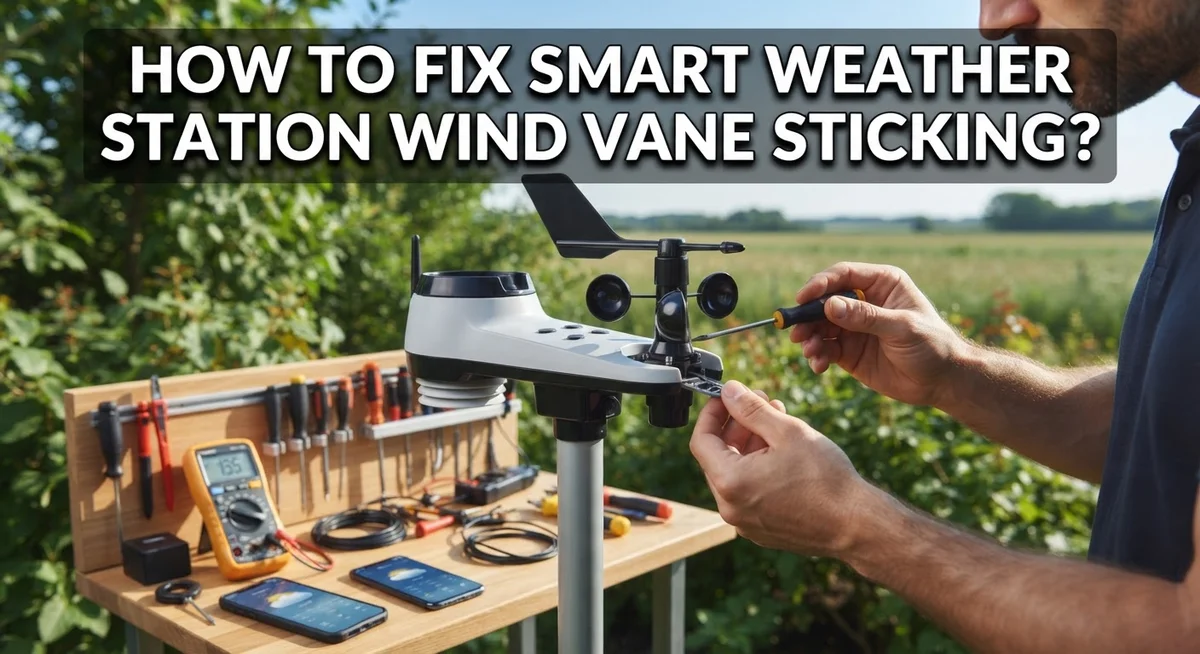
How To Fix Smart Weather Station Wind Vane Sticking?
Does your smart weather station give you strange wind readings? Maybe the wind vane feels stuck. Maybe it points the wrong way even on a calm day.
This is a common problem. Many smart weather station owners face this issue at some point.
The good news? You can often fix it yourself. A sticking wind vane does not always mean your device is broken.
Sometimes it is a small mechanical issue. Sometimes it is just a calibration problem. Debris, loose parts, or a faulty reed switch can all cause sticking.
In this guide, we will help you figure out what is really going on. You will learn how to spot the difference between a mechanical fault and a simple calibration error.
In a Nutshell
- Listen for sounds first. A metallic tinkling noise means a part is loose or damaged inside the vane.
- Check for calibration errors. If the vane points the wrong way, it might just need to be reset to true north. This is not always a mechanical failure.
- Look for physical blockages. Dirt, ice, or small debris can jam the vane and stop it from spinning freely.
- Test the reed switch. This tiny component often causes sticking issues. It detects wind direction, and if it fails, the vane will not move correctly.
- Avoid DIY repairs on the reed switch. This part usually needs a manufacturer fix. Trying to open and repair it yourself can cause more damage.
- Recalibrate before you replace anything. Many owners assume the worst, but a simple direction reset often solves the issue completely.
Understanding How a Wind Vane Works
A wind vane is a simple but clever device that measures wind direction. It sits on top of your weather station and rotates freely to point toward the wind source.
The vane itself is the arrow shaped part you see on the outside. It catches the wind and spins around a central axis. As it rotates, it moves in the direction the wind is coming from. This gives you accurate directional readings like north, south, east, or west.
Inside the vane housing sits the reed switch. This is a small electronic component that does the real work. As the vane rotates, the reed switch detects the position and sends signals to your weather station display. It tells your device which direction the wind is blowing.
The reed switch works like a tiny magnetic sensor. It opens and closes as the vane spins past different positions. Each position represents a different wind direction. When the switch functions properly, you get smooth, accurate readings.
Sticking happens when this system breaks down. The vane might not spin freely because of mechanical friction. Or the reed switch might fail to detect positions correctly. Either problem stops the vane from rotating or gives you wrong direction readings.
Understanding this basic structure helps you diagnose problems. When your vane sticks, you now know it involves either the physical rotation mechanism or the electronic reed switch inside. Some issues are simple fixes like removing debris. Others, like reed switch failure, require professional repair.
Knowing how your wind vane works makes troubleshooting much easier. You can identify whether the problem is mechanical, electronic, or just a calibration issue.
Common Causes of Wind Vane Sticking
Wind vane sticking happens for specific reasons. Understanding these causes helps you fix the problem faster.
Debris and environmental buildup is the most common culprit. Dust, pollen, and dirt accumulate around the vane’s moving parts over time. Rain can mix with this debris and create sticky residue. Ice formation in cold weather also locks the vane in place. Bird droppings and spider webs add another layer of obstruction.
Reed switch failure ranks as the second major cause. This tiny magnetic sensor inside the vane housing detects wind direction changes. When it fails, the vane cannot respond to wind movements properly. The failure often happens gradually, making the vane feel stuck or sluggish.
Mechanical friction and wear develops naturally over months or years. The bearing that allows the vane to rotate smoothly can accumulate corrosion. Metal parts may rust slightly, especially in humid or coastal environments. This friction prevents smooth spinning.
Loose internal components create resistance too. Vibration from wind or storms can loosen screws and fasteners inside the housing. Damaged bearings or bent support brackets also cause sticking sensations.
Calibration misalignment sometimes feels like sticking. If the vane points the wrong direction consistently, it might simply need recalibration to true north. This is not a mechanical failure but a positioning issue.
Moisture and condensation inside the housing causes electrical and mechanical problems. Water entering the sealed chamber leads to corrosion and reed switch malfunction.
Most sticking issues involve debris, reed switch problems, or mechanical wear. Some causes require professional service, while others respond to basic cleaning and maintenance.
Diagnosing the Problem: Mechanical vs. Calibration Issues
Figuring out whether your wind vane has a mechanical problem or a calibration issue takes a few simple steps. Start by observing how the vane behaves when wind is present. Does it move at all, or is it completely frozen in one direction?
Mechanical problems show specific signs. Listen carefully for a metallic tinkling sound when you gently tap the vane housing. This noise tells you a component inside is loose or damaged. You might also notice the vane moves stiffly or requires significant wind force to budge it.
Calibration issues present differently. The vane spins freely, but it points to the wrong direction. If your weather station reads north when the wind actually comes from the east, calibration is likely your culprit, not mechanical failure.
Here’s how to test the reed switch specifically. Manually rotate the vane slowly through a full circle. Watch your weather station display to see if it registers direction changes smoothly. Jumpy readings or skipped directions suggest reed switch problems.
Check for physical blockages next. Inspect the vane’s rotation point for dirt, ice, or debris. Even small particles jam the mechanism. Gently clean around the base where the vane connects to the housing.
The key distinction is this: if the vane spins but reads wrong, recalibrate it to true north first. If it doesn’t spin smoothly or makes noise, you have mechanical damage. This diagnosis determines your next repair step. Mechanical issues often need professional help, while calibration problems you can usually fix yourself with directional adjustment.
Step-by-Step Guide to Cleaning and Freeing a Stuck Vane
Start by examining the wind vane from the outside. Look for visible debris like leaves, dirt, or bird droppings stuck around the vane or its base. Remove any loose material with a soft brush or cloth.
Next, gently try to rotate the vane by hand. Push it slowly in different directions. A stuck vane won’t move at all, while a calibration issue allows movement but gives wrong readings. If it moves freely, you likely have a calibration problem instead of a mechanical one.
Listen carefully while rotating the vane. Metallic tinkling or clicking sounds mean loose internal components. These sounds suggest the problem is mechanical, not just dirt buildup.
Check the mounting area where the vane connects to the weather station. Tighten any visible bolts or screws. Sometimes vibration from wind loosens these connections, which restricts movement.
Inspect the vane’s bearing point at the top. This is where the vane pivots. Look for corrosion, rust, or mineral deposits. If you see buildup, spray it lightly with a water displacement product and let it sit for a few minutes. Gently wipe away the residue with a clean cloth.
Rotate the vane again to check for improvement. If it now spins more freely, you’ve solved the problem.
If the vane still sticks after cleaning, the issue likely involves the reed switch or internal mechanical components. At this point, professional repair through the manufacturer is your best option. Attempting to disassemble the housing yourself can damage the sensor or create new problems.
How to Recalibrate Your Wind Vane to True North
Recalibrating your wind vane to true north is essential when direction readings seem incorrect. This process separates actual mechanical failure from simple calibration drift. Many people assume their wind vane is broken when it simply needs realignment.
Start by identifying true north at your location. Use a compass or smartphone app to find magnetic north, then adjust for magnetic declination in your area. Your weather station manual should list this adjustment value. Write down the exact north direction before you begin.
Position yourself where you can see your weather station clearly. Look at where the vane currently points compared to true north. The vane should align with north when your station displays north on its screen or app.
Access your station’s calibration menu. Most digital weather stations have a settings or setup option specifically for wind direction. Look for terms like “wind calibration,” “direction offset,” or “compass calibration.” Your manual explains the exact menu path for your model.
Rotate the vane by hand until it points directly at true north. Keep it steady in this position while you enter the calibration mode. The station will record this as your north reference point.
Release the vane and let it move freely. Watch it settle into its natural position. Check your station’s display to confirm it now reads north correctly.
Test the vane by rotating it manually to other directions. It should accurately reflect each position. If readings still seem wrong after recalibration, you likely have a mechanical or reed switch issue rather than a calibration problem.
Document your calibration settings. This helps if you need to recalibrate again after weather changes or seasonal shifts affect magnetic conditions at your location.
When to Suspect Reed Switch Failure
A reed switch failure is one of the most common reasons your wind vane gets stuck. Understanding when this happens helps you decide between a quick fix and professional repair.
Reed switches are tiny electrical components that detect the vane’s position. They sit inside the weather station housing and work with a magnet attached to the spinning vane. When the magnet passes the reed switch, it sends a signal to your display unit. If this switch fails, the vane cannot communicate its position properly.
You should suspect reed switch failure when the vane spins freely by hand but your display shows no direction change. This means the mechanical part works fine, but the electrical signal isn’t reaching your station’s brain. Another sign is when the vane points in one direction and refuses to move, even after cleaning away debris.
Listen for unusual sounds too. A soft clicking noise during rotation suggests the reed switch is still working. Complete silence combined with stuck movement points toward switch failure.
Temperature changes can damage reed switches over time. Extreme heat or cold stresses the internal contacts. Moisture that sneaks past the housing seals corrodes the delicate components inside.
Testing is straightforward. Manually rotate the vane while watching your display. If the direction reading never updates, the reed switch likely failed. If readings change when you move the vane by hand, your switch still functions.
Reed switch replacement requires returning your station to the manufacturer. This isn’t a DIY repair because the switch sits deep inside sealed components. Attempting to open the housing yourself may void your warranty and cause additional damage. Contact your manufacturer’s support team for repair options and shipping instructions.
Mistakes to Avoid When Troubleshooting
Don’t jump to conclusions about what’s wrong with your wind vane. Many people assume a sticking vane means mechanical failure when the real problem is something much simpler.
Avoid assuming direction errors are mechanical issues. If your vane points the wrong way, calibration might be the answer, not replacement parts. Test this first before taking apart anything. Spin the vane by hand and watch your display. Does it register movement? If yes, recalibration could solve your problem.
Don’t attempt DIY reed switch replacement. These tiny electrical components require special equipment and expertise. Opening your weather station yourself may void your warranty and cause more damage. Manufacturer repair is the right path here.
Never force a stuck vane. Applying excessive pressure can break the bearing or damage internal parts beyond repair. Gentle rotation is always better. If it won’t move with light pressure, stop immediately and investigate the cause.
Avoid ignoring metallic sounds. A tinkling noise during rotation tells you something is loose inside. This could be a simple fix like tightened fasteners, or it could indicate component damage. Pay attention to these audio clues.
Don’t skip the cleaning step. Dirt, debris, and bird droppings often cause sticking that looks like mechanical failure. A thorough cleaning with soft brushes and mild solutions frequently restores normal function.
Don’t confuse calibration with failure. Your vane may work perfectly but point the wrong direction because it needs alignment to true north. This is normal maintenance, not a broken component.
Finally, avoid making repairs without proper diagnosis. Identify the actual problem first. Is it sticking, spinning but reading wrong, or making unusual sounds? Your answer determines the correct solution.
Preventive Maintenance to Keep the Vane Moving Freely
Preventive maintenance keeps your wind vane working smoothly and prevents sticking problems before they start. The best approach is regular cleaning and inspection.
Clean your vane every few months. Dust, pollen, and debris accumulate on the vane’s surface and inside the bearing assembly. Use a soft brush or cloth to gently remove buildup around the vane’s edges and the central pivot point. Avoid spraying water directly into the bearing area, as moisture can cause corrosion.
Check the vane’s movement regularly by giving it a gentle spin by hand. It should rotate freely without resistance or grinding sounds. If you notice any stiffness, stop immediately and investigate rather than forcing it to move.
Inspect the mounting hardware quarterly. Look for loose bolts or screws where the vane connects to your weather station. Vibration from wind can loosen these connections over time. Tighten any loose fasteners with the appropriate tool, but don’t over tighten as this can damage the bearing.
Apply a light lubricant to the pivot point if your manufacturer recommends it. Check your station’s manual first, as some models have sealed bearings that shouldn’t be lubricated. When lubricating is appropriate, use only a small amount of light machine oil or silicone spray.
Protect your station from harsh weather when possible. During extreme storms or ice formation, consider removing your weather station temporarily. This prevents damage to delicate components like the reed switch and bearing assembly.
Position your vane away from trees and structures that shed leaves or debris. A clear location reduces the amount of material that lands on your equipment.
These simple steps significantly reduce the chance of your wind vane sticking.
Final Thoughts
A stuck wind vane feels frustrating, but most fixes are simple. Start with the basics before assuming the worst.
Clean the vane first. Debris causes many sticking issues. A quick wipe often solves the problem.
Check for calibration errors next. Wrong direction readings don’t always mean mechanical failure. True north alignment fixes this quickly.
Listen carefully for sounds. Metallic tinkling points to loose parts. Silent sticking suggests reed switch trouble.
Test the reed switch properly. Spin the vane by hand. If your display shows no change, the switch likely failed.
Remember that reed switches wear out over time. Temperature swings stress these tiny components. This is normal wear, not user error.
Never attempt reed switch repairs yourself. This job belongs with the manufacturer. Sending your station back is the safest option.
Keep up with regular maintenance. Clean the vane every few months. Check mounting hardware for looseness.
Gentle care prevents most problems. Avoid forcing a stuck vane at any point. Force damages bearings and internal parts permanently.
Protect your station during harsh weather too. Ice and storms strain components. Removing the unit temporarily can help.
Most wind vane problems have clear solutions. Cleaning fixes debris issues. Calibration fixes direction errors. Manufacturer repair fixes reed switch failure.
The key is proper diagnosis. Don’t guess at the cause. Test methodically to find the real problem.
Your wind vane should work reliably with good care. Regular maintenance prevents many sticking issues before they start. When mechanical failure does happen, professional repair keeps your station accurate.
Stay patient with troubleshooting. Most issues resolve with simple steps. Your weather station will track wind direction correctly again soon.
Frequently Asked Questions
Why is my wind vane sticking in place?
A sticking wind vane usually means one of two things. Either debris has built up inside the bearing, or the reed switch has failed. The reed switch detects wind direction by sensing a magnet on the vane. When it fails, the vane stops responding to wind changes.
Listen carefully for metallic tinkling sounds. These indicate loose or damaged internal parts. If you hear nothing but the vane still won’t move, the reed switch is likely the culprit.
Could it be a calibration problem instead?
Yes, absolutely. Many people think their vane is broken when it actually just needs recalibration. If your vane points the wrong direction consistently, that’s usually a calibration issue, not a mechanical failure.
Recalibrate your vane by pointing it toward true north using a compass or directional markers. Check your weather station’s manual for specific calibration steps. After recalibration, test if the readings match the actual wind direction.
What should I do if cleaning doesn’t help?
If cleaning the vane and bearing doesn’t solve the problem, the reed switch has likely failed. Reed switches wear out over time and cannot be easily replaced by users.
Contact the manufacturer. Most companies offer repair or replacement services for this exact issue. Attempting DIY reed switch replacement will void your warranty and may cause more damage.
Can I force the vane to move if it’s stuck?
Never force a stuck vane. Applying pressure can break the bearing or damage internal components beyond repair. This makes the problem worse and more expensive to fix.
Instead, apply gentle pressure and listen for resistance. If the vane won’t budge easily, stop immediately and move to professional repair options.

Hello, i’m Ivoria i am the face behind Tech Tracker Blog. I am passionate about my work and love to explore gadgets and share about my experience.