
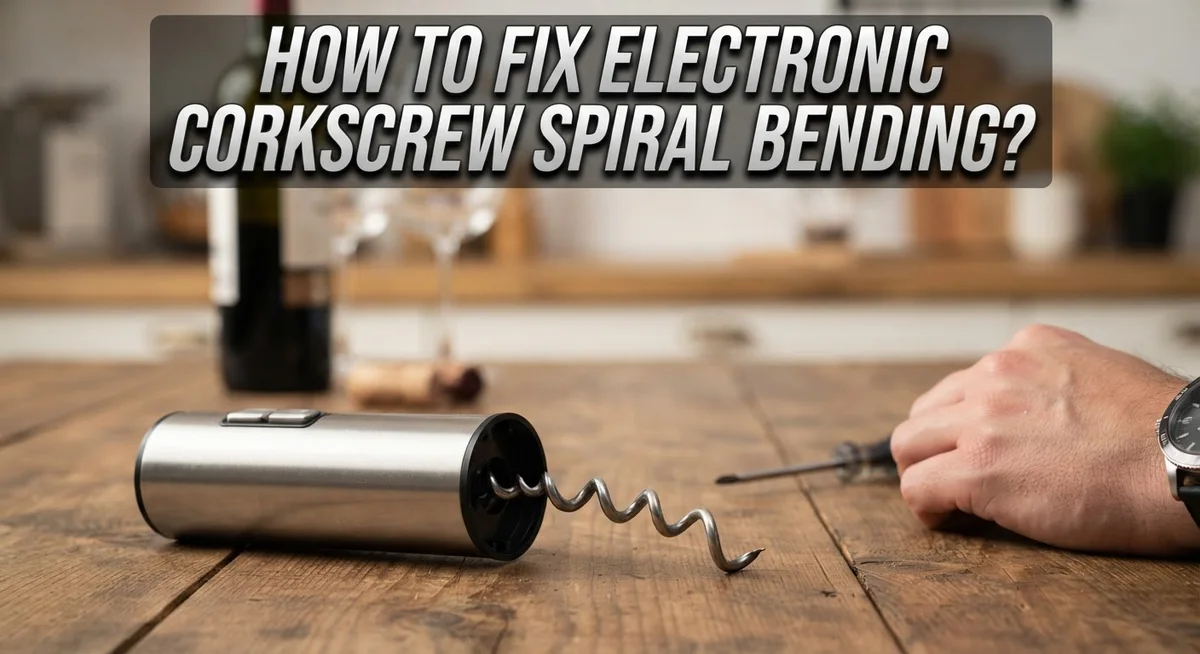
How To Fix Electronic Corkscrew Spiral Bending?
Your electronic corkscrew makes wine opening quick and easy. But sometimes the spiral bends and stops working right. This can turn a simple task into a frustrating problem.
A bent spiral usually happens from incorrect insertion or sideways pressure. It can also occur when the device grips a stubborn cork at the wrong angle. The good news is this issue is often fixable.
This guide will show you exactly how to fix a bent spiral on your electronic corkscrew. You will learn simple steps to remove the lever and worm assembly safely. We will also cover how to extract a stuck cork without causing more damage.
In a Nutshell
- Remove the lever and worm assembly first. This gives you clear access to the bent spiral without damaging other parts.
- Turn the mechanism counterclockwise if a cork is stuck. This safely releases the cork before you inspect the spiral.
- Check if the bend is permanent. Small bends can sometimes be straightened, but severe damage means you need a replacement spiral.
- Insert the corkscrew perpendicular to the bottle opening every time. This one habit prevents most future bending issues.
- Avoid pulling sideways during use. Lateral force is the main reason spirals bend or weaken over time.
- Use the reverse or eject function on electric models. This releases corks smoothly without forcing the spiral at odd angles.
Understanding Why Electronic Corkscrew Spirals Bend
Electronic corkscrews have a spiral component called a worm. This worm does the actual work of piercing and removing the cork. When it bends, the device stops working properly.
Misalignment is the main cause of spiral bending. You insert the corkscrew at an angle instead of straight down. The spiral then catches the bottle rim or cork edge at the wrong angle. This forces the metal to flex and bend out of shape.
Lateral force causes permanent damage to the spiral. You might pull the bottle toward you while the corkscrew is still working. You might also twist the device side to side. These sideways movements put stress on the thin metal spiral. Over time, this stress creates permanent bends.
The quality of the cork matters too. Some corks are harder or more brittle than others. A hard cork resists the spiral’s rotation. If you keep pushing the device, the spiral bends instead of the cork crumbling. Cheap or old corks often cause this problem.
Improper insertion depth also plays a role. You need to insert the spiral deep enough into the cork. If it only goes halfway in, the cork won’t grip the spiral evenly. Uneven grip creates bending pressure on one side of the worm.
The spiral’s material affects how easily it bends. Some electronic corkscrews use softer metal spirals. These bend more easily than hardened steel spirals. Cheaper models often have weaker metal components.
Understanding these causes helps you prevent future bending. The spiral is designed to work under specific conditions. Straight insertion, perpendicular alignment, and steady pressure keep it functioning. When you deviate from proper technique, the spiral suffers damage. Most bends become permanent once they occur, which is why prevention matters more than trying to straighten a bent spiral.
Signs Your Spiral Worm Needs Attention
Your electronic corkscrew will show you clear warning signs when the spiral needs attention. Learning to spot these signals helps you catch problems early before they get worse.
Listen for unusual sounds when you operate your device. A grinding or squeaking noise means something is wrong inside. Normal operation should be quiet and smooth. If you hear clicking or rattling, the spiral may already be damaged or loose.
Pay attention to how the corkscrew feels during use. Resistance that feels uneven or jerky suggests the spiral is bent. A healthy spiral moves smoothly through cork without hesitation. When you feel the device struggle or stall partway through, stop immediately and check the spiral.
Look at the cork after removal. If the cork comes out crumbled, torn, or with pieces missing, your spiral may be bent. A properly working spiral removes cork cleanly and in one piece. Damaged cork pieces are a clear sign something needs fixing.
Watch for the device stopping or refusing to work at all. Complete failure to operate often means the spiral is severely bent or stuck. The motor may run but nothing happens because the spiral cannot turn properly.
Check the spiral visually when you remove the worm assembly. Visible bending or twisting is obvious damage. Compare it to the shape it should have. Even small curves mean the spiral needs replacement.
Pay attention to cork removal speed. If your electronic corkscrew suddenly works much slower than before, the spiral is likely bent. The motor works harder to push a bent spiral through cork, causing slowdown.
Notice if the device vibrates more than usual. Excessive vibration during operation indicates imbalance in the spiral. This happens when bending throws off the spiral’s center point.
These warning signs help you know exactly when to take action. Catching problems early keeps your corkscrew working reliably for years.
Step-by-Step Guide to Fixing a Bent Spiral
Start by unplugging your electronic corkscrew from the power source. Safety comes first when working with electrical devices.
Next, locate the lever and worm assembly. Most electronic corkscrews have a release button or clip that holds these parts together. Press or slide this mechanism to separate the worm assembly from the main body.
Examine the spiral closely under good lighting. Look for visible bends, twists, or warping along the entire length. A slight curve may still work, but a sharp bend usually means replacement is necessary.
If a cork is stuck on the spiral, turn the mechanism counterclockwise by hand. This reverse motion helps release the cork without forcing it. Work slowly and steadily. Never yank the cork sideways as this causes additional damage.
Once you remove the cork, clean the spiral thoroughly. Use warm water and a soft cloth to remove any cork particles or wine residue. Dry it completely before reassessing the damage.
Test the spiral’s straightness by rolling it gently on a flat surface. A bent spiral will rock or wobble. Compare it to the original shape if you have reference photos or documentation.
For minor bends, you might attempt gentle straightening. Place the spiral on a soft surface and carefully apply even pressure. Work slowly and check your progress frequently. Avoid sudden force as this causes cracking.
For permanent bends or cracks, replacement is your best option. Most electronic corkscrews have removable worm components designed for this purpose. Contact the manufacturer or check your user manual for replacement part numbers and ordering information.
After fixing or replacing the spiral, reinstall the worm assembly securely. Make sure it clicks or locks into place properly. Test your corkscrew on a practice bottle before using it on your favorite wine.
How to Safely Remove a Stuck Cork First
A stuck cork happens when the spiral doesn’t grip it properly or when the cork crumbles inside the bottle. You need to remove it safely before you can fix the bent spiral underneath.
First, unplug your electronic corkscrew from the power outlet. This prevents accidental activation while you work. Safety comes first when handling any electrical device.
Next, locate the reverse or eject button on your device. Most electronic corkscrews have this function built in. Press and hold the reverse button to turn the spiral backward. This motion pulls the cork out without forcing it. Go slowly and let the mechanism do the work.
If the reverse function doesn’t work, you’ll need to remove the lever and worm assembly manually. Look for screws or clips holding these parts together. Unscrew or unclip them carefully. Set the screws somewhere safe so you don’t lose them.
Once the worm assembly is free, hold it steady in your hand. Turn the spiral counterclockwise by hand to extract the stuck cork. Use steady, gentle pressure. Rushing this step can bend the spiral further or break the cork into pieces.
After the cork comes out, examine it closely. If the cork broke apart, pieces may still be inside the bottle. Use needle nose pliers or tweezers to remove any remaining fragments. This prevents damage to your spiral during future use.
Now inspect the spiral itself. Look for visible bends, cracks, or damage. Clean the spiral with a soft cloth to remove cork particles and debris. Check if the spiral is straight by rolling it gently on a flat surface.
Minor bends sometimes straighten with careful hand pressure. Hold the spiral firmly and apply gentle force in the opposite direction of the bend. Test it again on the flat surface. If it’s still bent or cracked, replacement is your best option.
Proper Insertion Technique to Prevent Future Bending
Proper insertion technique prevents most spiral bending problems before they start. The key is entering the bottle opening at a perpendicular angle, meaning straight down and centered. Many people tilt the corkscrew or push it in at an angle, which immediately stresses the spiral.
Start by positioning your device directly above the bottle. The spiral should align with the center of the cork. Your hand should hold the corkscrew body steady and vertical. Avoid any sideways pressure or tilting as you begin the insertion process.
Turn the mechanism slowly and consistently. Fast turning creates jerky movements that bend the spiral sideways. Steady, even pressure keeps the spiral moving straight into the cork. Let the device do the work rather than forcing it downward.
Maintain the same angle throughout the entire process. Many people unconsciously shift their grip as the spiral goes deeper. Even small angle changes create lateral stress on the worm. Keep your hand position fixed and let the spiral descend naturally.
Pay attention to how the device feels in your hand. If you sense resistance or unusual vibration, stop immediately. These signs mean the spiral is hitting the cork at an angle. Adjust your positioning before continuing.
Never pull sideways on the device while the spiral is in the cork. This sideways force is the number one cause of bending. Keep all movement vertical and aligned with the bottle’s center.
Use the reverse or eject function gently when removing corks. Aggressive pulling can bend the spiral as it extracts the cork. Let the motor do the extraction work at normal speed.
Practice these techniques consistently. Your muscle memory will develop proper insertion habits. Soon, perpendicular alignment becomes automatic, and spiral bending becomes rare.
Common Mistakes That Cause Spiral Damage
Electronic corkscrew spirals bend when you make specific mistakes during use. Understanding these errors helps you avoid damage and keep your device working properly.
Inserting at an angle is the most common problem. Many people tilt the corkscrew instead of holding it straight above the bottle. When the spiral enters at an angle, it catches the cork unevenly. This uneven pressure bends the spiral gradually with each rotation.
Pulling sideways while the spiral grips the cork causes immediate stress. Your device should move straight down into the bottle. Any lateral tugging or twisting motion weakens the spiral metal. Over time, this side pressure creates permanent bends.
Turning in the wrong direction damages the spiral quickly. Always rotate clockwise to insert the spiral into the cork. Turning counterclockwise when you should go clockwise forces the mechanism against its design limits. This sudden resistance bends or breaks the spiral instantly.
Misaligning the spiral during insertion happens when you don’t center it properly. The spiral must sit directly above the cork’s center point. If you position it off center, the spiral screws in crooked. The cork then resists unevenly, bending the spiral as it rotates.
Ignoring stuck corks leads to spiral damage too. When a cork won’t move, many people keep forcing the mechanism. This creates extreme pressure on the spiral. Instead, use the reverse function gently or remove the worm assembly to work it out by hand.
Rushing the process causes mistakes. Speed leads to careless positioning and uneven pressure. Take time to align everything properly before activating your device. Slow, steady rotations keep the spiral straight and strong.
These mistakes are preventable. Focus on perpendicular alignment, consistent angles, and gentle handling. Your electronic corkscrew will last much longer when you avoid these common errors.
Maintenance Tips for Long-Lasting Performance
Regular maintenance keeps your electronic corkscrew working smoothly for years. Start by cleaning the spiral after each use. Remove any cork debris or dried wine residue with a soft brush or damp cloth.
Check the spiral weekly if you use your device frequently. Look for small bends, cracks, or discoloration. Early detection prevents major problems later. A magnifying glass helps you spot damage you might otherwise miss.
Lubricate the moving parts every month. Apply a small amount of food-safe lubricant to the worm assembly and motor connections. This reduces friction and keeps the mechanism turning smoothly. Avoid getting lubricant on the spiral itself, as it can attract dust and cork particles.
Store your corkscrew in a dry place away from moisture. Humidity causes rust and corrosion on metal components. Keep it in its original case or a padded drawer. Never leave it in damp environments like kitchens near the sink.
Test the reverse function regularly to ensure it works properly. This function is your best defense against stuck corks and spiral damage. Press the button gently and listen for smooth motor operation. If the reverse function sounds weak or doesn’t work, stop using the device and inspect the motor.
Replace the battery or charge the device according to the manufacturer’s guidelines. Low power causes the motor to strain, which puts extra stress on the spiral. A weak motor struggles to turn smoothly and can bend the worm assembly.
Inspect the lever connection point monthly. Tighten any loose screws or connections you find. Loose parts cause misalignment, which damages the spiral during use. Keep a small screwdriver handy for quick adjustments.
These simple maintenance steps prevent most spiral bending problems. Consistent care extends your device’s lifespan significantly and ensures reliable performance every time you open a bottle.
Final Thoughts
A bent spiral does not mean your electronic corkscrew is ruined. Most problems have simple solutions if you catch them early.
Small bends often respond to gentle straightening by hand. Severe damage usually calls for a replacement worm component instead.
Prevention matters more than repair. Keeping your device aligned and steady during use saves you time and frustration later.
Think about how you insert the spiral each time you open a bottle. Straight, perpendicular insertion protects the mechanism from stress.
Avoid rushing through the process. A few extra seconds of care during insertion can add years to your corkscrew’s life.
Remember that stuck corks need patience, not force. Reverse functions exist for a reason, so use them instead of pulling.
If you notice resistance or unusual angles, stop and check the spiral. Catching small issues early prevents bigger repairs down the road.
Every electronic corkscrew has a lifespan, but proper handling extends it significantly. Your habits directly affect how long the spiral stays straight.
Regular checks and mindful use go a long way toward avoiding future bending problems. This simple approach saves money and hassle.
If replacement becomes necessary, look for compatible worm parts that match your specific model. This keeps your device fully functional again.
Wine opening should feel easy and enjoyable, not stressful. A well maintained corkscrew makes every bottle opening smooth and quick.
Take these lessons and apply them the next time you reach for your device. Small adjustments in technique create lasting results.
With attention and care, your electronic corkscrew can serve you reliably for a long time. Treat it well and it will treat you well in return.
Frequently Asked Questions
Can I straighten a bent spiral myself?
Yes, you can attempt to straighten a slightly bent spiral by hand. Stop using the device immediately when you notice bending. Gently hold the worm component and apply slow, even pressure to straighten it. Work carefully to avoid breaking the metal.
However, permanent bends often require replacement. If the spiral won’t straighten or bends again quickly, the metal has lost its strength. A new worm component will work better than a damaged one.
Why does my spiral bend even when I insert it correctly?
Several factors cause bending despite careful insertion. The cork itself might be extremely hard or crumbly, creating unexpected resistance. Your bottle opening could have rough edges that catch the spiral.
Age and metal fatigue also play a role. If your device is several years old, the spiral may have weakened over time. Even perfect technique cannot prevent bending in a worn-out component.
What’s the difference between a bent spiral and a broken one?
A bent spiral still has its basic shape but curves or twists abnormally. The metal remains intact but no longer functions properly. A broken spiral has cracks, snaps, or missing pieces.
Both problems prevent your corkscrew from working. However, bent spirals sometimes respond to straightening, while broken ones always need replacement. Check your spiral carefully under good lighting to determine the damage type.
Should I use the reverse function before the spiral gets stuck?
Absolutely. Use reverse as soon as you feel unusual resistance or hear odd sounds. Do not wait until the cork feels completely stuck.
Reverse function works best on fresh resistance. The earlier you act, the easier cork removal becomes. This simple habit prevents most spiral damage and stuck cork situations.

Hello, i’m Ivoria i am the face behind Tech Tracker Blog. I am passionate about my work and love to explore gadgets and share about my experience.