
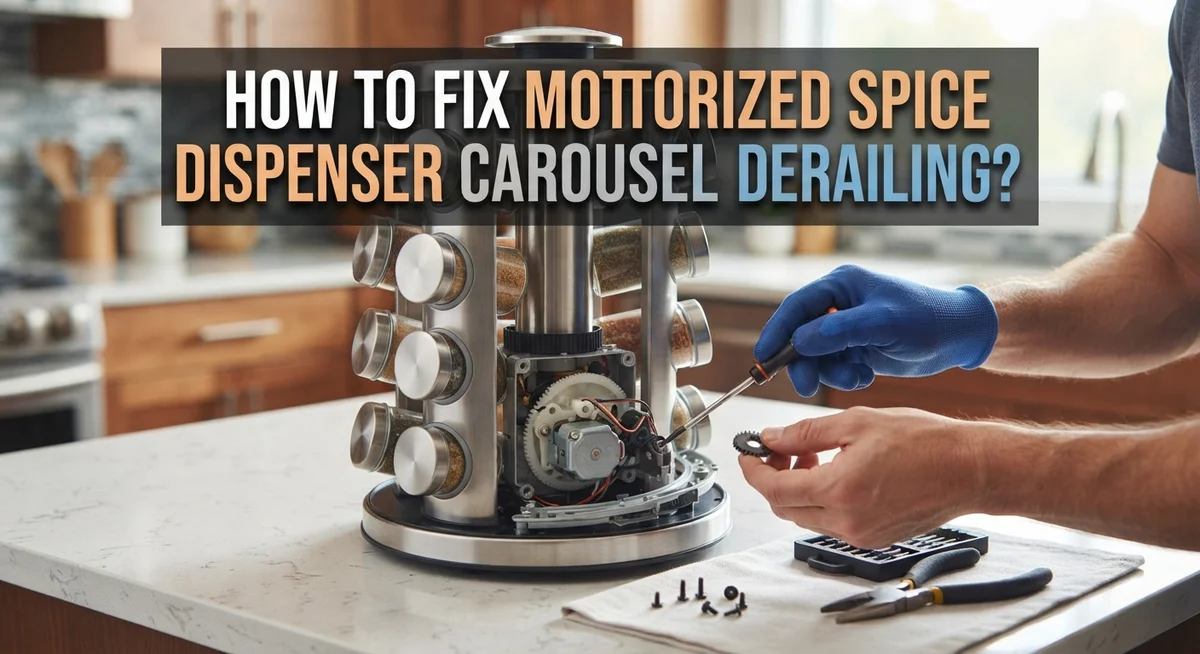
How To Fix Motorized Spice Dispenser Carousel Derailing?
Does your motorized spice carousel keep sliding off track? You are not alone. This is one of the most common problems with automatic spice dispensers.
A derailing carousel can turn a fun kitchen gadget into a frustrating mess. Spices spill. Bottles jam. The motor struggles to spin smoothly.
The good news is that this problem is usually easy to fix. Most derailing issues come from loose hardware or sizing mismatches with your cabinet space.
In a Nutshell
- Tighten every screw first. Loose base screws and mounting hardware are the top reason carousels slide. Grab a screwdriver and check each connection point.
- Add a rubber spacer. Place a rubber circle or grip pad between the carousel base and the surface. This simple trick stops sliding almost instantly.
- Drill a stabilizing screw if needed. When spacers and tightening do not work, add one screw below the carousel. This locks it firmly in place.
- Check your cabinet size. Wrong dimensions cause many derailing problems. Measure your space before you mount anything.
- Balance the spice bottles evenly. Uneven weight makes the carousel wobble and jump off track. Spread bottles evenly around all compartments.
- Test rotation slowly after fixes. Spin the carousel by hand first. This confirms the repair actually worked before loading it up again.
Understanding Why Carousels Derail
Your motorized spice carousel derails for specific reasons. Understanding these causes helps you fix the problem fast.
Loose mechanical components are the biggest culprit. The base screws, mounting brackets, and rotating shaft can loosen over time. Vibration from the motor causes fasteners to slip gradually. When screws become loose, the carousel loses stability and slides off its track during rotation.
Sizing mismatches create another major issue. Your carousel might be too wide for the cabinet opening. It could also be too deep or too narrow. When the dimensions do not match your space, the carousel rocks side to side. This rocking motion eventually causes derailing.
Uneven weight distribution destabilizes the entire system. Heavy spice bottles on one side create an imbalance. The carousel becomes top heavy on that side. During rotation, centrifugal force pulls the heavier side outward. This uneven pull forces the carousel off its track.
Surface friction problems also play a role. The carousel base slides on smooth countertops or cabinet surfaces. Without proper grip, the rotating motion causes the entire unit to shift. The carousel then misaligns with its track guides.
Motor vibration compounds these issues. A spinning motor creates constant vibration. This vibration travels through loose hardware and loose connections. Over time, vibration shakes components further out of alignment.
Worn track guides can develop after extended use. The plastic or metal guides that keep the carousel centered wear down. Worn guides no longer hold the carousel in proper position.
Most derailing problems stem from one or more of these causes working together. A loose screw plus uneven weight plus a slight size mismatch creates the perfect storm for derailing. Identifying which factors apply to your situation helps you choose the right fix. Start by checking each cause systematically. This approach saves time and frustration.
Identifying Sizing Mismatches Before You Fix Anything
Before you start tightening screws or adding spacers, you need to understand if your carousel fits properly in its space. Sizing mismatches are one of the most common reasons carousels derail, yet many people skip this step entirely.
Start by measuring your cabinet opening or countertop space where the carousel sits. Use a measuring tape and write down the width, depth, and height. Then check the carousel dimensions from the original packaging or manual. Compare these numbers carefully. The carousel should fit with at least half an inch of clearance on all sides. Too tight and it binds during rotation. Too loose and it slides around.
Pay special attention to the depth measurement. Many carousels are deeper than people expect. A carousel that sticks out too far from under cabinet mounting can shift forward during operation. This causes derailing on one side.
Width matters equally. If your carousel is wider than the space, it will tilt or bind when you try to rotate it. Check whether the carousel base is square or circular. Square bases need more clearance than round ones in tight spaces.
Next, examine the mounting surface itself. Is it level? Place a small level on the spot where your carousel will sit. An unlevel surface causes uneven weight distribution, which leads to derailing. Even a slight tilt of one quarter inch can make the carousel wobble.
Also measure the weight capacity of your carousel. Check how many spice bottles you plan to load. Standard models hold around 12 compartments, but capacity varies. Overloading beyond the design limit stresses the mechanical system and causes derailing.
Once you confirm the sizing matches your space and the surface is level, you can move forward with other fixes. This foundation step prevents wasted effort on solutions that won’t work for your specific situation.
Step-by-Step Guide to Stabilizing the Carousel
Start by gathering the right tools. You will need a screwdriver set, a level tool, and rubber spacer pads. These items help you identify and fix the core problems causing your carousel to derail.
Check every screw on the base first. Loose fasteners are the most common reason carousels slip during rotation. Go around the entire bottom of your carousel and tighten each screw firmly. Do not overtighten, as this can strip the threads or crack plastic components.
Next, examine the mounting surface itself. Place your level on the countertop or cabinet shelf where the carousel sits. If the surface tilts even slightly, your carousel will naturally slide toward the lower side. Uneven surfaces create friction problems that motors cannot overcome.
Insert rubber spacer pads under the carousel base. These small circles or grip pads increase friction between the carousel and the surface below. They prevent sliding during rotation and reduce vibration. Position spacers evenly around the base for best results.
Slowly rotate the carousel by hand after adding spacers. This test reveals whether the basic fixes work before you activate the motor. Listen for grinding sounds or feel for resistance that signals remaining issues.
If the carousel still derails, check the weight distribution. Remove all spice bottles and reload them evenly around the carousel. Heavy bottles on one side create wobbling that throws the system off track. Spread your spice collection so each section carries similar weight.
For stubborn derailing problems, you may need to drill a small stabilizing screw below the carousel base. This screw anchors the carousel to the surface and prevents any movement whatsoever. Mark the drill location carefully to avoid hitting internal components.
Test the motor again after each adjustment. Small changes often solve derailing issues completely.
Tightening and Securing Mounting Hardware
Tightening mounting hardware is your first line of defense against a derailing carousel. This simple step often solves the problem completely.
Start by locating all screws on the carousel base. You’ll typically find them around the perimeter where the base connects to the mounting surface. Use the correct screwdriver or wrench size for each fastener. Loose screws are the most common reason carousels slip during rotation.
Check each screw systematically. Turn them clockwise to tighten, but don’t over tighten. You want them snug and secure without stripping the threads. If a screw spins without tightening, the hole may be stripped. In that case, move the screw to a nearby location or use a slightly larger diameter fastener.
Pay special attention to the corner screws. These bear the most stress during carousel rotation. Make sure corner fasteners are especially tight.
Next, inspect any mounting brackets or hardware that connects the carousel to your cabinet or countertop. These brackets should also be firmly secured. Tighten all bolts and screws on these components as well.
After tightening everything, manually rotate the carousel slowly by hand. Feel for any wobbling or grinding sensations. These indicate remaining problems that need attention.
If tightening alone doesn’t fix the derailing, you’ve identified that another issue exists. The problem might be uneven weight distribution, an unlevel surface, or sizing mismatches. But securing all hardware is always the essential starting point.
Perform this tightening check every few months during regular use. Vibrations from the motor can gradually loosen fasteners over time. A quick maintenance routine prevents future derailing problems before they start.
Balancing Weight Distribution to Prevent Slippage
Weight distribution directly affects whether your carousel stays on track or slides during rotation. When spice bottles sit unevenly around the carousel, they create unbalanced forces. The motor struggles to maintain smooth rotation. Heavier bottles on one side pull the entire unit toward that direction.
Start by removing all spice bottles from your carousel. This gives you a clear view of the base and lets you test rotation without extra weight. Spin the carousel slowly by hand. Notice if it pulls in any particular direction. If it moves smoothly when empty, weight distribution is your problem.
Now reload your bottles strategically. Place heavier containers opposite each other. For example, put a full salt container across from a full pepper container. Distribute medium weight bottles between them. Light bottles fill any remaining spaces. This creates a balanced wheel effect, like tire balancing on a car.
Check the weight capacity label on your carousel base. Most units hold between 2 to 4 pounds total. Exceeding this limit causes derailing even with perfect distribution. Weigh your bottles before loading if you’re uncertain.
Test the carousel again after reloading. Rotate it slowly by hand first. Then run the motor at low speed if available. Watch for any wobbling or sliding. The carousel should spin smoothly without pulling to one side.
Uneven weight also stresses the motor over time. A balanced carousel runs quieter and lasts longer. If your bottles are too heavy individually, consider using smaller containers. Transfer spices into lighter bottles designed for your carousel.
Monitor weight distribution monthly during regular use. Bottles shift over time as you remove spices. Rebalance when you notice the carousel pulling during rotation. This simple maintenance prevents most derailing problems before they start.
Common Mistakes That Cause Repeat Derailing
Many people repeat the same mistakes when fixing a derailing carousel. Understanding these errors helps you avoid them.
Buying the wrong size is the biggest mistake. You measure your cabinet opening once, then purchase a carousel that seems close enough. A carousel that is too wide will catch on cabinet edges during rotation. One that is too deep won’t fit properly on the shelf. Even a narrow carousel can derail if it shifts side to side in an oversized space. Always measure your opening twice before buying anything.
Neglecting mounting hardware is equally common. You install the carousel, tighten a few screws, and assume it’s secure. Weeks later, it starts sliding. The truth is that vibration from the motor gradually loosens fasteners over time. You must check every single screw on the base, not just the obvious ones. Corner screws especially need attention because they stabilize rotation.
Skipping the level check causes repeated problems. A carousel on an uneven surface will naturally roll toward the lower side. You might tighten everything perfectly, but gravity still wins. Place a level on your shelf or countertop before installation. If it’s not level, shim the surface with spacers underneath.
Overloading unevenly is another frequent error. You fill one side of the carousel with heavy spice bottles while leaving the other side light. This creates imbalance that forces the motor to work harder. The carousel then derails because weight distribution is lopsided. Load bottles evenly around the entire carousel base.
Ignoring the motor’s rotation direction matters too. Some carousels rotate clockwise, others counterclockwise. If bottles are positioned incorrectly for the motor’s direction, they can shift during use. Check your manual for proper bottle placement.
These mistakes repeat because people rush installation. Take your time, measure carefully, and verify each step before moving forward.
Troubleshooting Persistent Carousel Problems
When your motorized spice dispenser keeps derailing despite your efforts, you need to dig deeper into the mechanical issues. The problem often stems from components that have loosened over time or weren’t properly secured during initial setup.
Start by checking the carousel’s base plate. Look for any visible gaps or movement between the base and the surface it sits on. If you notice even slight separation, this is your culprit. The carousel needs full contact with the surface beneath it to rotate smoothly without sliding sideways.
Insert a rubber spacer or circular rubber pad between the carousel base and your mounting surface. This simple addition prevents the carousel from sliding during rotation. The rubber grips the surface and holds the carousel steady while the motor turns. Make sure the spacer is flat and covers the area evenly.
Next, inspect the carousel’s internal rotation mechanism. Spin the carousel slowly by hand and listen for grinding or clicking sounds. These noises indicate misaligned components inside. If you hear them, the carousel may need professional servicing or replacement of internal parts.
For persistent derailing, consider installing a stabilizing screw. Drill a small hole just below the carousel’s edge, then insert a screw that touches the cabinet or countertop surface below. This acts as an anchor point, preventing any upward or sideways movement during rotation.
Check that your cabinet opening matches the carousel dimensions exactly. A carousel that’s too wide or too narrow for the space will constantly shift and derail. Measure twice to confirm proper fit.
Finally, verify your motor is functioning correctly. A failing motor may not rotate with consistent speed, causing the carousel to jerk and slip off its track. If the motor struggles to turn even when empty, replacement may be necessary.
These troubleshooting steps address the mechanical failures that cause repeated derailing problems.
Final Thoughts
Fixing a derailing carousel does not need to feel overwhelming. Most problems come from three simple causes. These are loose hardware, wrong sizing, or uneven weight.
You can solve most of these issues at home. A screwdriver and a rubber spacer often fix the problem. You rarely need professional help.
Start with the basics every time. Check your screws first. Then look at weight distribution. Finally, confirm your cabinet fits the carousel properly.
Sizing mistakes cause the most frustration. Always measure your cabinet space before buying a new unit. This simple step saves you time and money later.
Regular maintenance keeps your carousel running smoothly. Check screws every few months. Redistribute spice bottles when you notice uneven weight.
Small habits prevent big problems. Rotating the carousel slowly by hand helps you catch issues early. You can fix small wobbles before they become major derailing problems.
Rubber spacers work wonders for most units. They add friction between the carousel and your mounting surface. This friction stops sliding during rotation.
Stabilizing screws offer a permanent fix for stubborn units. Drilling one screw below your carousel adds extra support. This works when other methods fail.
Your motor also needs attention sometimes. Listen for grinding or straining sounds. These noises signal deeper mechanical issues that need fixing.
Patience matters during this process. Test your carousel after each fix. This helps you identify what actually solves your problem.
Most carousel issues have simple solutions. You do not need special tools or expensive parts. A few basic steps restore smooth rotation in most cases.
Keep these fixes in mind for future problems. Your carousel will serve you well with proper care and attention. Regular checks prevent most derailing issues before they start.
Frequently Asked Questions
Why does my carousel keep sliding during rotation?
Your carousel slides because the base lacks grip on the mounting surface. Friction is missing between the carousel and the cabinet or countertop. Smooth surfaces like laminate or polished wood allow the carousel to move freely.
Add a rubber spacer or circular rubber pad underneath the carousel base. This creates friction and prevents sliding. The rubber grips the surface while the carousel spins.
What if tightening screws doesn’t stop the derailing?
Loose screws are just one cause. Your carousel might derail because the mounting hardware itself is worn or damaged. Check each screw connection point for cracks or stripped threads.
If screws are tight but derailing continues, the internal rotation mechanism may need inspection. Look inside the carousel base for bent components or misaligned gears. A stabilizing screw drilled below the carousel offers a permanent solution for stubborn units.
Can an uneven surface cause derailing problems?
Yes. An unlevel surface is a silent killer for carousel performance. If your cabinet or countertop slopes even slightly, gravity pulls the carousel toward the low side. This causes it to derail during rotation.
Use a level tool to check your mounting area. Adjust your surface or add shims underneath the carousel base to create a flat, even platform.
How do I know if my motor is the problem?
Listen for unusual sounds during rotation. A grinding noise suggests motor strain. The carousel might move slowly or stop partway through a spin cycle.
Test the motor by rotating the carousel by hand. It should spin smoothly without resistance. If the motor hums but nothing moves, the motor likely needs replacement.

Hello, i’m Ivoria i am the face behind Tech Tracker Blog. I am passionate about my work and love to explore gadgets and share about my experience.