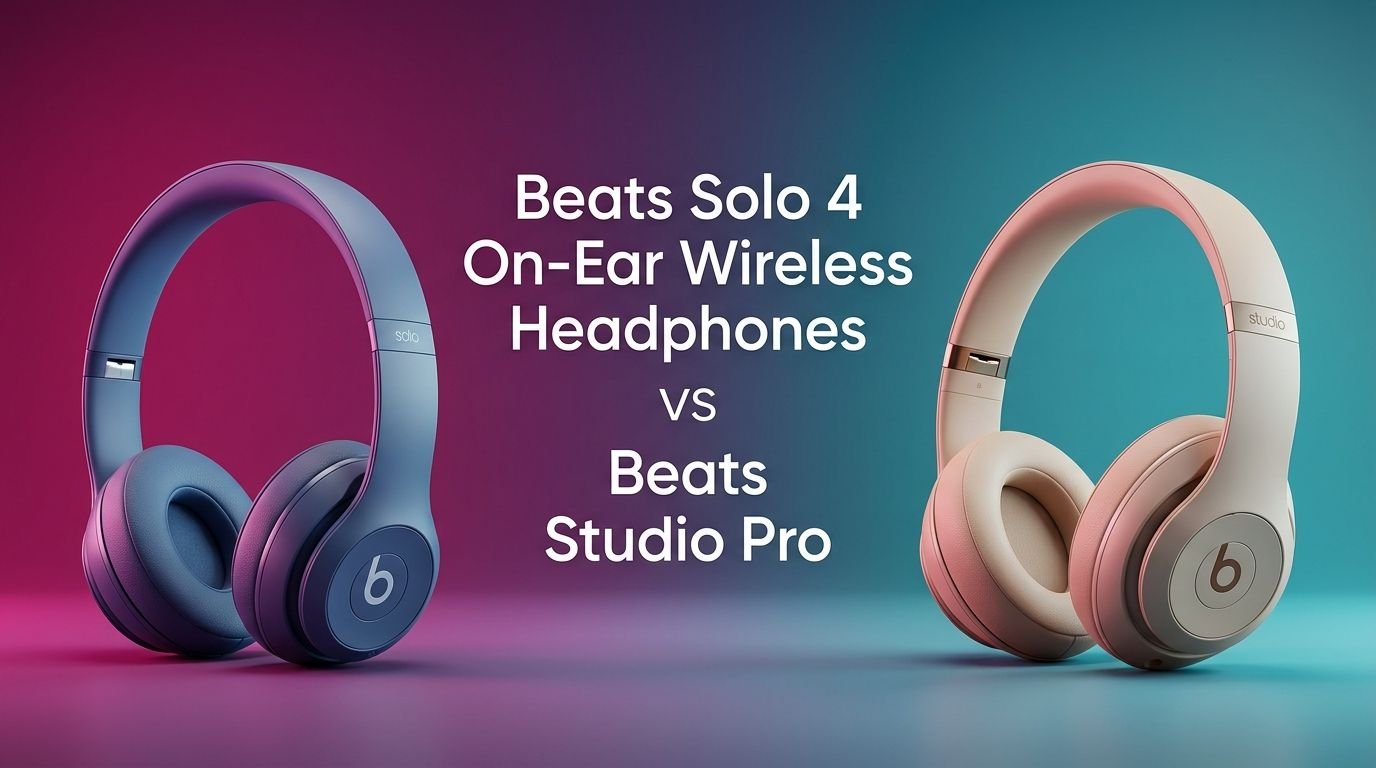
Beats Solo 4 On-Ear Wireless Headphones vs Beats Studio Pro
Choosing between two premium Beats headphones can feel like picking a favorite child. Both the Beats Solo 4 and the Beats Studio Pro offer excellent sound, modern design, and seamless Apple integration. But they serve very different listeners.
The Solo 4 is a lightweight on-ear option built for people who want portability and comfort. The Studio Pro is a full-size over-ear headphone that packs active noise cancellation and audiophile-grade features. The price gap between them is significant, and so are the features.
In this detailed comparison, I will break down every spec, feature, and real-world difference between these two headphones. By the end, you will know exactly which pair matches your lifestyle, budget, and listening habits. Let’s dive straight into the details.
Key Takeaways:
- The Beats Solo 4 costs significantly less than the Beats Studio Pro, making it the better budget-friendly option. If you want solid Beats sound without spending over $300, the Solo 4 is your pick.
- The Beats Studio Pro includes Active Noise Cancellation (ANC) and Transparency Mode, which the Solo 4 completely lacks. This is the single biggest feature difference between the two headphones and a dealbreaker for many buyers.
- Battery life favors the Solo 4 at up to 50 hours of wireless playback. The Studio Pro offers up to 40 hours, which is still excellent. Both headphones support fast charging for quick top-ups.
- The Studio Pro supports lossless audio over USB-C, giving audiophiles a reason to choose it. The Solo 4 also supports lossless USB-C audio, but the Studio Pro’s custom acoustic platform delivers a richer, more detailed sound profile.
- Both headphones work with Apple and Android devices thanks to their integration with both Apple’s ecosystem and the Beats app for Android. Neither headphone locks you into one platform.
- Comfort differs based on design type. The Solo 4 sits on your ears (on-ear), while the Studio Pro wraps around your ears (over-ear). Over-ear designs generally feel more comfortable during long listening sessions, but the Solo 4 is lighter and more compact for travel.
Beats Solo 4 On-Ear Wireless Headphones: Overview

Last update on 2026-08-31 / Affiliate links / Images from Amazon Product Advertising API Some of the links on this website are affiliate links, which means that at no additional cost to you, I earn a commission if you click through and make a purchase. I only recommend products and services that I believe will add value to my readers. Thank you for your support!
The Beats Solo 4 launched in 2024 as a major upgrade over the Solo 3. Apple designed these headphones for listeners who want a portable, stylish, and reliable pair of on-ear headphones. They use a custom 40mm transducer that delivers clear and balanced sound.
One standout feature is UltraPlush ear cushions that improve comfort over previous Solo models. The flexible headband adjusts to fit most head sizes without creating pressure points. At just 217 grams, the Solo 4 is easy to wear for hours.
These headphones support Bluetooth 5.3 for a stable wireless connection. They also include a 3.5mm audio jack and USB-C audio for wired listening. The Solo 4 works with Apple’s Find My network, so you can locate them if they go missing.
Pros:
- 50-hour battery life is exceptional for wireless headphones
- Lightweight at 217 grams for all-day comfort
- Supports lossless audio through USB-C connection
- Universal compatibility with Apple, Android, and other Bluetooth devices
- Foldable design makes them easy to carry
- Fast Fuel charging gives 5 hours of playback from a 10-minute charge
Cons:
- No active noise cancellation at all
- No Transparency Mode
- On-ear design can cause discomfort during very long sessions
- Sound quality is good but does not match Studio Pro’s depth
- No spatial audio with dynamic head tracking
Beats Studio Pro: Overview


Last update on 2026-08-31 / Affiliate links / Images from Amazon Product Advertising API Some of the links on this website are affiliate links, which means that at no additional cost to you, I earn a commission if you click through and make a purchase. I only recommend products and services that I believe will add value to my readers. Thank you for your support!
The Beats Studio Pro represents the flagship headphone in the Beats lineup. These over-ear headphones deliver premium sound with advanced noise cancellation. Apple positioned them as the top choice for serious music listeners and professionals.
The Studio Pro uses a proprietary dual-driver system with a custom acoustic platform. This setup produces sound with clear highs, rich mids, and deep bass. The headphones also support Personalized Spatial Audio with dynamic head tracking for an immersive experience.
Build quality is excellent. The Studio Pro features premium materials including a soft-touch exterior and UltraPlush leather cushions. They fold flat for easy storage and come with a carrying case.
Pros:
- Active Noise Cancellation blocks outside noise effectively
- Transparency Mode lets you hear your surroundings when needed
- Personalized Spatial Audio with dynamic head tracking
- Lossless audio support over USB-C
- Rich, detailed sound from the custom acoustic platform
- Compatible with both Apple and Android ecosystems
Cons:
- Higher price point than the Solo 4
- Heavier and bulkier than the Solo 4
- 40-hour battery life is shorter than Solo 4’s 50 hours
- Over-ear design can feel warm in hot weather
- ANC performance is good but not class-leading compared to Sony or Bose
Sound Quality Comparison
Sound quality is where these two headphones show their biggest differences. The Beats Studio Pro uses a custom acoustic platform with a dual-driver system. This setup creates a wide soundstage with detailed separation between instruments. Bass hits hard without drowning out mids and highs.
The Beats Solo 4 uses a single custom 40mm transducer. It delivers clear, balanced sound that is impressive for its price range. Bass response is punchy and controlled. Vocals sound natural and present.
However, the Studio Pro pulls ahead in overall audio detail and richness. If you listen to complex genres like classical, jazz, or layered electronic music, you will notice the difference. The Solo 4 sounds great for pop, hip-hop, and casual listening.
The Studio Pro also supports Personalized Spatial Audio, which creates a 3D sound experience. The Solo 4 does not offer this feature.
Active Noise Cancellation: The Big Difference
This is the most important feature gap between these two headphones. The Beats Studio Pro includes Active Noise Cancellation (ANC) that reduces background noise from planes, trains, offices, and busy streets. The Solo 4 has zero noise cancellation.
The Studio Pro’s ANC uses external microphones to detect ambient sound. It then generates opposing sound waves to cancel that noise. You can switch between ANC mode and Transparency Mode with a button press.
Transparency Mode on the Studio Pro lets outside sound pass through your headphones. This is useful for conversations, announcements, or staying aware of your environment. The Solo 4 offers neither of these features.
If you commute, travel by air, or work in noisy environments, the Studio Pro is the clear winner here. The Solo 4 works best in quieter settings where noise cancellation is not a priority.
Battery Life and Charging
The Beats Solo 4 wins the battery battle with an impressive 50 hours of wireless playback. That is over a week of use for most people before needing a charge. The Studio Pro offers 40 hours, which drops to about 24 hours with ANC turned on.
Both headphones support Fast Fuel quick charging. The Solo 4 gives you 5 hours of playback from just 10 minutes of charging. The Studio Pro provides 4 hours of playback from a 10-minute charge.
Both headphones charge through USB-C, which is convenient and universal. You do not need any special cables or adapters.
For travelers and people who forget to charge their devices, the Solo 4’s 50-hour battery life is a major advantage. You can go several days without worrying about finding an outlet.
Comfort and Fit
Comfort depends on your preference for on-ear vs over-ear designs. The Beats Solo 4 sits directly on your ears. It weighs only 217 grams, making it one of the lightest Beats headphones ever. The ear cushions are soft, but extended use can create pressure on your ears.
The Beats Studio Pro wraps around your ears completely. This over-ear design distributes pressure more evenly across the side of your head. The UltraPlush leather cushions feel soft and breathable. However, the Studio Pro weighs more at approximately 260 grams.
For short to medium listening sessions, both headphones feel comfortable. For marathon listening sessions of 3+ hours, the Studio Pro’s over-ear design generally causes less fatigue.
The Solo 4 is better for active use and on-the-go wear because of its lighter weight and compact size.
Design and Build Quality
Both headphones carry the signature Beats aesthetic with clean lines and premium materials. The Solo 4 comes in several color options including Matte Black, Slate Blue, Cloud Pink, and Sandstone. Its foldable design makes it pocket-friendly.
The Studio Pro also offers multiple colors including Black, Navy, Sandstone, and Deep Brown. It features a more premium soft-touch finish on the exterior. The ear cups fold flat for compact storage.
The Solo 4 feels durable and modern for its price. The Studio Pro feels more premium with higher-quality materials throughout. Both headphones include carrying cases in the box.
Build quality on both models is solid. The hinges, headband adjustments, and button mechanisms all feel reliable and well-made.
Connectivity and Compatibility
Both headphones excel in cross-platform compatibility. The Solo 4 and Studio Pro support Bluetooth 5.3 for stable wireless connections. They pair easily with iPhones, Android phones, Macs, and Windows PCs.
For Apple users, both offer one-touch pairing, automatic switching between Apple devices, and Find My support. For Android users, the Beats app provides similar setup and customization features.
Both headphones include a USB-C port for wired listening and lossless audio. The Solo 4 also includes a 3.5mm headphone jack, which is handy for older devices and airplane entertainment systems.
The Studio Pro supports Class 1 Bluetooth for an extended wireless range of up to 100 meters. This means fewer dropouts when your phone is in another room.
Microphone and Call Quality
Both headphones include built-in microphones for phone calls and video meetings. The Studio Pro uses multiple microphones with advanced beamforming technology. This setup isolates your voice and reduces background noise during calls.
The Solo 4 also handles calls well with its built-in mic. Call quality is clear in quiet environments. However, the Solo 4 struggles more in noisy settings because it lacks the advanced noise reduction of the Studio Pro.
If you take many work calls or video meetings, the Studio Pro offers a better calling experience. The ANC also helps you hear callers more clearly by blocking surrounding noise.
For casual calls and occasional use, the Solo 4 performs adequately.
Price and Value
The Beats Solo 4 retails at around $129 to $199, making it one of the most affordable premium wireless headphones available. For this price, you get excellent sound, 50-hour battery life, and cross-platform support.
The Beats Studio Pro retails at around $249 to $349, depending on sales and color options. You pay more but get ANC, Transparency Mode, Personalized Spatial Audio, and superior sound quality.
The Solo 4 offers incredible value for budget-conscious buyers. The Studio Pro justifies its higher price if you need noise cancellation and want the best sound Beats offers.
Watch for sales on both models, especially during Amazon Prime Day and Black Friday events. Both headphones frequently see significant discounts.
Who Should Buy the Beats Solo 4?
The Solo 4 is perfect for students, commuters who don’t need ANC, and casual listeners. If you want great-sounding Beats headphones without spending over $200, this is your best option.
People who value portability and lightweight design will love the Solo 4. It folds up small, weighs almost nothing, and lasts 50 hours on a single charge. It’s ideal for gym bags, backpacks, and daily carry.
The Solo 4 also suits Android users who want a premium headphone experience outside the Apple ecosystem. The Beats app gives them full access to settings and features.
Skip the Solo 4 if you absolutely need noise cancellation or plan to use headphones in very loud environments.
Who Should Buy the Beats Studio Pro?
The Studio Pro is built for music enthusiasts, frequent travelers, and remote workers. If sound quality and noise cancellation are your top priorities, this headphone delivers on both.
Frequent flyers will appreciate the ANC performance that makes long flights more enjoyable. Remote workers benefit from the excellent call quality and ability to block home distractions.
Audiophiles will love the lossless audio support and Personalized Spatial Audio. The Studio Pro’s sound profile rewards careful listening with detail and depth that the Solo 4 cannot match.
Choose the Studio Pro if you want the best overall headphone experience that Beats currently offers.
Frequently Asked Questions
Does the Beats Solo 4 have noise cancellation?
No, the Beats Solo 4 does not include Active Noise Cancellation or Transparency Mode. Only the Beats Studio Pro offers these features. The Solo 4 provides some passive noise isolation through its ear cushion design, but it cannot actively block external sounds.
Is the Beats Studio Pro worth the extra money over the Solo 4?
Yes, if you need ANC, Transparency Mode, and superior sound quality. The Studio Pro delivers features that the Solo 4 simply cannot match. However, if you don’t need noise cancellation and want to save money, the Solo 4 offers excellent value at a lower price.
Can I use both headphones with Android devices?
Absolutely. Both the Beats Solo 4 and Beats Studio Pro work with Android phones through the Beats app for Android. You get access to firmware updates, device settings, and pairing features regardless of your phone’s operating system.
Which headphone has better battery life?
The Beats Solo 4 wins with 50 hours of wireless playback compared to the Studio Pro’s 40 hours (24 hours with ANC on). Both support fast charging that delivers several hours of playback from just 10 minutes of charging.
Are the Beats Solo 4 good for working out?
The Solo 4’s lightweight design and secure on-ear fit make them decent for light workouts. However, they are not sweat-resistant or water-resistant. For intense exercise, consider Beats Fit Pro or Powerbeats Pro earbuds instead.
Do both headphones support lossless audio?
Yes. Both the Beats Solo 4 and Beats Studio Pro support lossless audio playback through a wired USB-C connection. This gives you the highest possible audio quality when connected to a compatible source device.

Hello, i’m Ivoria i am the face behind Tech Tracker Blog. I am passionate about my work and love to explore gadgets and share about my experience.