How To Fix Smart Range Hood Baffle Filter Latch Breaking?
Your smart range hood works hard every day. It clears smoke, grease, and steam from your kitchen air.
But one small part often causes big headaches. The baffle filter latch can snap or crack over time.
This tiny clip does a huge job. It holds your baffle filter firmly in place during cooking.
When it breaks, your filter may hang loose or fall. This can affect how well your hood removes grease and smoke.
In a Nutshell
- Remove filters the right way. Slide the filter back first. Then lower the front edge gently. This keeps stress off the latch.
- Avoid glue on broken latches. Stove heat melts most adhesives fast. This makes the problem worse, not better.
- Clean filters every 3 to 6 months. Use warm water and mild degreasing soap. A soft brush works best for stubborn grease.
- Fix stuck latches with degreasing spray. Apply it around the knob or clip. Wait 10 minutes, then try removing the filter.
- Skip harsh tools during cleaning. Metal scrubbers and sharp objects scratch and weaken the filter frame. This speeds up latch failure over time.
- Dry filters completely before reinstalling. Moisture left behind can cause rust. Rust makes latches brittle and prone to snapping.
Understanding Baffle Filter Latches and Why They Break
Your smart range hood’s baffle filter latch is a small but critical component. This clip holds your filter securely in place while allowing you to remove it for cleaning. Understanding how it works helps you avoid damage.
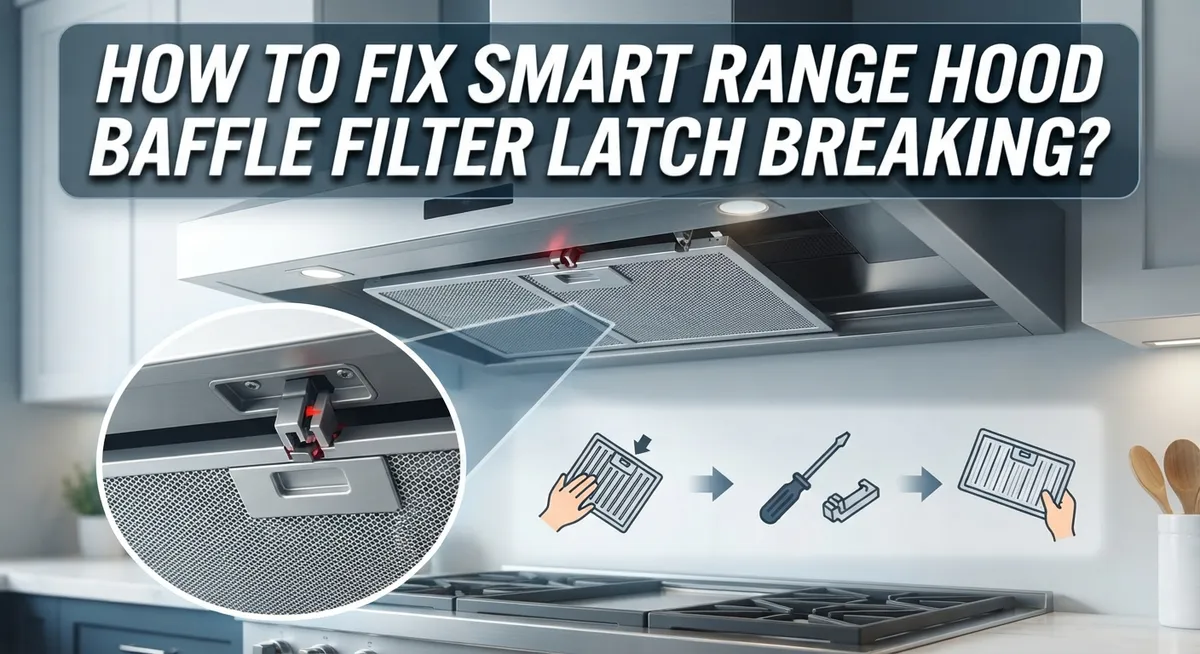
The latch mechanism operates through a simple push and release system. You push the latch inward, then tilt the filter to disengage it completely. This design works well when used correctly, but improper technique causes stress on the clip.
Why do these latches break? Heat damage is a major culprit. Your range hood gets hot during cooking, and the plastic or metal latch expands and contracts repeatedly. Over time, this cycle weakens the material.
Improper removal is another common cause. Yanking the filter forward without pushing the latch first puts pressure on the clip. The latch bends or snaps under this force.
Grease buildup also plays a role. When degreaser and grease accumulate around the latch mechanism, the clip becomes stiff. Forcing a stuck latch causes it to break.
Some people try to fix broken latches with glue or adhesive. This backfires because heat from your stove melts the glue. The latch fails again within days.
The key takeaway? Your baffle filter latch breaks due to heat cycling, rough handling, grease buildup, or improper removal techniques. Each of these factors weakens the clip over time.
Understanding these causes helps you prevent future breakage. You will learn the correct removal method and maintenance habits that keep your latch strong. Proper care extends the life of your filter and prevents costly repairs down the road.
Proper Filter Removal Technique to Prevent Latch Damage
Removing your baffle filter correctly is the single best way to prevent latch damage. Many people force or yank their filters, which puts stress on the latch mechanism. This rough handling is one of the top reasons latches crack or break.
Start by turning off your range hood and letting it cool completely. Heat makes the metal brittle and more prone to snapping. Wait at least 15 minutes after cooking before touching the filter.
Lift the stainless steel baffle filter straight up first. Do not pull at an angle or twist it side to side. A gentle, steady upward motion works best.
Next, slide the filter toward the back of the hood. This motion releases tension on the front latch. Move slowly and let the filter guide itself rather than forcing it.
Push the latch inward gently while tilting the filter’s front edge downward. This two step action disengages the filter without stressing the clip. You should feel a slight click when it releases properly.
Never use hard tools like screwdrivers or pliers near the latch area. These damage the metal and plastic components. Soft hands work far better than metal tools.
If your latch feels stuck, apply degreasing spray around the clip area. Let it soak for 10 minutes to loosen grease buildup. Then try your removal technique again.
Reinstalling follows the reverse process. Slide the filter forward first, then lower it into place. Push down until you hear the latch click and lock. This proper technique keeps your latch strong and functional for years.
Step-by-Step Guide to Fixing a Broken Baffle Filter Latch
When your baffle filter latch breaks, the repair process depends on the damage severity. Start by assessing the damage carefully. Look at whether the latch is cracked, bent, or completely separated from the filter frame.
For a bent latch, you can sometimes gently straighten it using your hands or a soft tool. Apply steady pressure in the opposite direction of the bend. Test the latch by pushing it inward to see if it engages properly again.
If the latch is cracked or broken into pieces, you have two main options. First, try temporarily securing the filter using an alternative method while you arrange a replacement. You can use a soft cloth or elastic strap to hold the filter in place during operation.
Second, order a replacement baffle filter assembly that includes a new latch mechanism. Most smart range hoods use standard filter sizes, making replacements easy to find.
Never use adhesive or glue on a broken latch. Heat from your stove will melt any adhesive, causing it to fail again within days or weeks.
When reinstalling a repaired or new filter, use the correct removal technique in reverse. Align the latch with its slot, then push the filter forward and down gently. This prevents stress on the newly repaired or replacement latch.
Test the latch several times before regular cooking use. It should click or snap into place smoothly without resistance. If the latch still feels loose or doesn’t engage, stop using the filter and investigate further.
Regular maintenance prevents future latch problems. Keep your filter clean and dry. Handle it carefully during every removal and installation cycle.
How to Loosen a Stuck Latch Without Causing Breakage
A stuck latch requires patience and the right approach. Forcing it will cause the same breakage you want to avoid.
Start with a cooling period. Turn off your range hood and wait at least 30 minutes. Heat causes metal to expand, and a stuck latch often means the filter assembly has tightened from cooking temperatures. Cooling allows the metal to contract naturally and loosens the mechanism.
Next, apply degreasing spray around the latch knob and clip area. Spray generously but avoid soaking the filter itself. Let the spray penetrate for about 10 minutes. This breaks down grease buildup that locks the latch in place. Grease accumulation is one of the most common reasons latches feel immovable.
Now attempt gentle movement. Push the latch inward slowly and steadily. Do not jerk or force it suddenly. If resistance continues, wait another 5 minutes and reapply spray. Patience matters more than pressure here.
Once the latch begins moving, tilt the filter’s front edge downward while keeping gentle inward pressure on the latch. This combination of movements disengages the mechanism without stressing the plastic or metal components.
If the latch still refuses to budge after two applications of spray, stop immediately. Continuing risks breaking what you are trying to save. Instead, let the hood cool overnight and try again the next day with fresh spray application.
Never use hard tools like screwdrivers or pliers. These damage the latch permanently. Your hands and degreasing spray are your best tools for unsticking a stuck latch safely.
Routine Maintenance Schedule for Baffle and Charcoal Filters
Keeping your baffle and charcoal filters on a consistent schedule prevents latch damage before it starts. Most manufacturers recommend cleaning aluminum or baffle filters every 3 to 6 months, depending on your cooking frequency.
Charcoal filters need replacement every 6 months because they absorb odors and lose effectiveness over time. These filters cannot be cleaned and reused like baffle filters can.
When cleaning time arrives, remove your baffle filter using the correct technique. Turn off the hood and let it cool completely first. Lift straight up, slide toward the back, and gently push the latch inward while tilting the front edge down. This careful removal prevents stress on the latch mechanism.
For cleaning, soak your baffle filter in hot water with degreasing soap for about 15 minutes. You can also run aluminum filters through the dishwasher on a gentle cycle. Use only soft brushes or sponges to remove grease and buildup. Never scrub aggressively or use hard tools that scratch the filter material.
After washing, air dry your filter completely before reinstalling. Moisture can cause corrosion and make the latch harder to operate.
Mark your calendar with maintenance dates to stay on track. Regular cleaning keeps filters working efficiently and reduces strain on latches. A well maintained filter lasts longer and operates more smoothly.
If you notice the latch becoming sticky during routine cleaning, apply degreasing spray around the clip area and let it sit for 10 minutes. This simple step keeps your latch functioning smoothly and extends its lifespan significantly.
Common Mistakes That Lead to Latch Failure
People often break their range hood baffle filter latches through simple mistakes. Understanding these errors helps you protect your appliance.
The most common mistake is using the wrong removal technique. Many people pull straight down on the filter instead of following the correct steps. You should lift the filter gently, slide it toward the back of the hood, then remove the front edge first. Only after these steps should you push the latch inward and tilt the filter downward. Forcing the filter in any other direction puts stress on the latch mechanism and causes cracks.
Another frequent error involves using harsh tools during cleaning or removal. Metal brushes, scrapers, or screwdrivers damage the filter material and latch components. Stick to soft brushes and sponges only. Hard tools can scratch, dent, or break the latch permanently.
Heat damage represents a serious but preventable problem. Some people apply glue or adhesive to broken latches, thinking this solves the issue. The heat from your stove melts these adhesives during cooking. The latch then fails again, often worse than before. Never use glue on any part of your filter system.
Skipping regular maintenance also leads to latch failure. When grease builds up on the latch mechanism, it becomes sticky and harder to operate. People then force the latch, causing breakage. Clean your baffle filter every 3 to 6 months to keep the latch moving smoothly.
Finally, waiting too long before removing a stuck latch causes unnecessary damage. If your latch feels tight, apply degreasing spray immediately and wait 10 minutes. Gentle patience prevents breakage better than forcing the mechanism.
Cleaning Methods That Protect Latch Integrity
Cleaning your baffle filter properly keeps the latch strong and functional. The way you remove and wash your filter directly affects how long the latch lasts.
Start with the right removal technique every time. Lift the stainless steel baffle filter straight up and slide it toward the back of your hood. Remove the front edge first. Push the latch inward gently while tilting the filter’s front downward. This motion disengages the latch without forcing it.
Never yank or pull the filter sideways. Rough removal puts stress on the latch mechanism and causes cracks or breaks. Take your time with each step.
When washing, use only soft tools. A soft brush or sponge works perfectly for cleaning baffle filters. Avoid steel wool, wire brushes, or hard scrubbers that scratch and weaken the filter material. Hard tools can also damage the latch area.
Soak your filter in hot water with degreasing soap for 15 minutes. This loosens grease buildup without requiring aggressive scrubbing. After soaking, rinse thoroughly with warm water.
Air drying is essential before reinstalling. Moisture trapped inside can corrode the latch and cause it to stick or break. Let your filter dry completely in a well ventilated area, typically 2 to 4 hours.
Clean your baffle filter every 3 to 6 months depending on cooking frequency. Regular cleaning prevents grease buildup that makes the latch sticky and prone to damage.
Store your filter flat during drying. Never lean it against walls or store it vertically, as this puts weight on the latch and can bend or crack it over time.
Troubleshooting Persistent Latch Issues
When your range hood baffle filter latch won’t stay engaged or feels loose, you have a fixable problem. Persistent latch issues usually stem from grease buildup, misalignment, or stress from incorrect removal.
Start by checking if grease is blocking the latch mechanism. Apply degreasing spray around the clip and knob area. Wait 10 minutes for the spray to penetrate the buildup. Gently work the latch back and forth with your finger to loosen any stuck residue. Wipe away excess spray with a clean cloth.
Next, inspect the latch for visible damage. Look for cracks, bends, or warping in the plastic or metal clip. If the latch appears intact but still won’t hold, the filter itself may be sitting at the wrong angle. Remove the filter completely using the proper technique: lift straight up, then slide toward the back of the hood before tilting the front edge downward.
Reinstall the filter slowly and deliberately. Line up the rear edge first, then lower the front edge while pushing the latch inward. You should hear or feel a click when it engages properly. If the latch still won’t catch, the filter frame may be slightly bent from previous rough handling.
Never apply glue or adhesive to a broken latch. Heat from your stove will melt any adhesive, creating a worse problem. Instead, focus on gentle handling going forward.
If the latch is truly cracked or broken beyond function, replacement may be necessary. Until then, remove and reinstall your filter carefully during each cleaning cycle. Consistent proper technique prevents additional stress on the mechanism.
Final Thoughts
Fixing a broken latch on your smart range hood baffle filter does not need to feel overwhelming. Most problems come from simple habits like rushing the removal process or skipping regular cleaning. Once you understand the correct technique, you can protect your filter for years.
Prevention truly is the best fix. A few minutes of proper handling each time you clean your filter saves you from bigger headaches later. Treat the latch gently, and it will keep working smoothly.
Remember that your filter is a mechanical part, not just a piece of metal. It has moving components that respond to how you treat them. Rough handling or quick fixes like glue only create new problems down the road.
If your latch does break beyond repair, do not panic. Replacement parts exist for most range hood models. A quick check with your manufacturer or a local appliance store can point you toward the right fit.
Staying consistent with your maintenance routine makes the biggest difference. Set reminders on your phone or calendar so you never forget a cleaning session. Small, steady habits protect your investment far better than emergency repairs ever could.
Your kitchen depends on proper ventilation to stay comfortable and safe. A working baffle filter keeps grease and smoke where they belong, away from your air and your walls. Taking care of the latch is a small task with a big payoff.
In the end, fixing or preventing latch damage comes down to patience and the right approach. Follow the steps outlined here, stay consistent with cleaning, and your range hood will serve you well for a long time.
Frequently Asked Questions
Why does my baffle filter latch keep breaking?
Latch breakage usually happens from two main causes. First, improper removal technique puts stress on the mechanism. Second, heat damage weakens the latch over time. When you yank or pull the filter sideways instead of lifting straight up, you force the latch beyond its design limits. Grease buildup also makes latches stick, which causes people to pull harder and damage the mechanism.
Can I use glue to fix a broken latch?
No, do not use adhesive on your latch. Heat from your stove will melt any glue you apply, making the problem worse. The adhesive fails quickly and leaves residue that blocks the latch from working properly. A broken latch needs either proper repair or replacement, not a temporary glue fix.
How do I remove a stuck latch safely?
Apply degreasing spray around the latch knob or clip area. Let it sit for 10 minutes to penetrate the grease buildup. Then gently work the latch back and forth with slow movements. Never force it suddenly. If it still feels tight, wait another 5 minutes before trying again. Patience prevents damage.
What’s the correct way to remove my baffle filter?
Lift the stainless steel filter straight up first. Slide it toward the back of the hood. Push the latch inward gently. Tilt the front edge downward to fully disengage it. This technique protects the latch from stress and breakage every single time.
How often should I clean my filter to prevent latch problems?
Clean your baffle filter every 3 to 6 months depending on how often you cook. Regular cleaning prevents grease from jamming the latch mechanism. Use soft brushes or sponges only. Soak in hot water with degreasing soap for 15 minutes. Air dry completely before reinstalling.

Hello, i’m Ivoria i am the face behind Tech Tracker Blog. I am passionate about my work and love to explore gadgets and share about my experience.