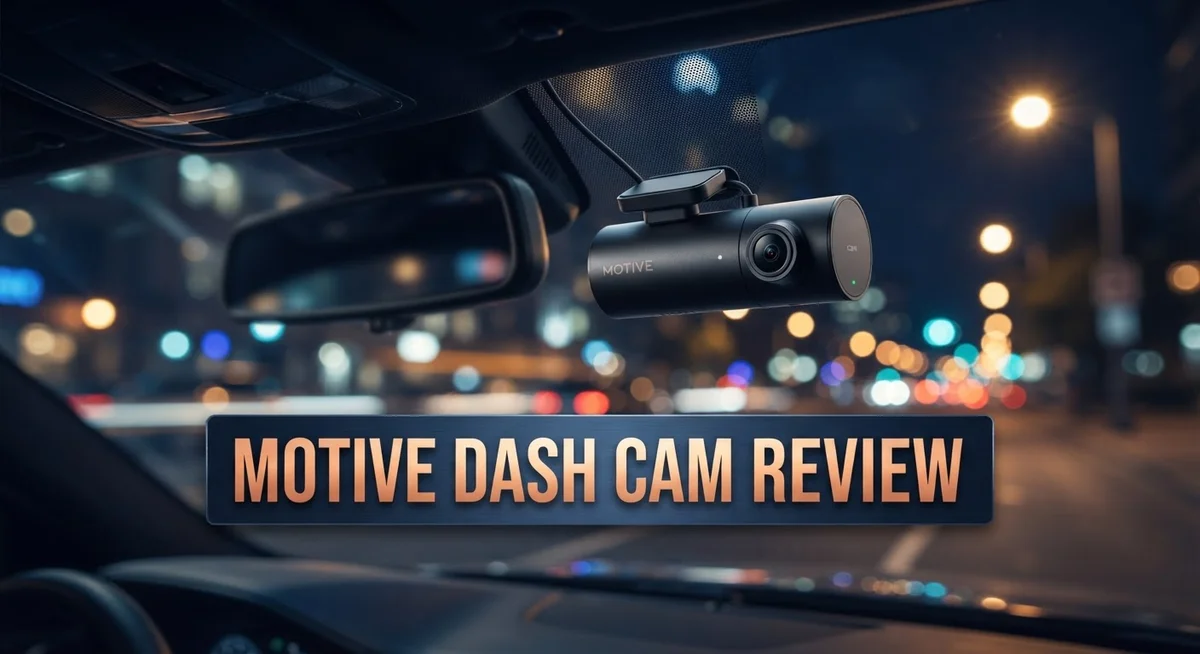
Motive AI Dashcam Review 2026: A Comprehensive Guide
Are you looking for a smarter way to protect your fleet? The Motive dash cam might be the answer you need. This AI powered device watches the road and your drivers at the same time.
Motive uses a dual facing camera system. It catches unsafe habits like phone use and hard braking before they turn into real problems.
The camera also zooms in on license plates and vehicle details from far away. Even in poor weather, it still captures clear footage.
In a Nutshell
- Top rated on G2 with a 99% satisfaction score from real users. This shows strong trust across the fleet industry.
- The AI system spots 15+ unsafe driving behaviors. It uses a smart processor that works faster than typical dash cams.
- Video quality stays clear even in bad weather. The 1440p zoom lens captures plates and details other cameras often miss.
- Fleets report fewer accidents and lower related costs after switching to this camera. Safety outcomes improve across teams.
- Some drivers say alerts do not always trigger. Reports mention missed warnings for phone use and seatbelt issues.
- Trustpilot reviews show mixed feelings. Some users love it while others feel let down by performance gaps.
- This camera works best for fleet operations. Personal vehicle owners may find fewer features built for their needs.
- Competitors like Lytx, Netradyne, and Samsara offer similar tools. Compare features before you decide what fits your fleet.
Key Features and AI Capabilities
The Motive dash cam combines dual facing cameras with advanced AI to catch what standard cameras miss. This system delivers real time monitoring from both the road ahead and the driver’s cabin. You get complete visibility into your fleet’s operations.
The camera’s 1440p zoom lens captures fine details from up to 40 feet away. License plates stay readable even when vehicles are far off or weather turns poor. This clarity matters when you need evidence for insurance claims or accident investigations.
Motive’s AI engine detects 15+ unsafe driving behaviors. The system identifies speeding, harsh braking, distracted driving, and lane departures. It also spots tailgating, rolling stops, and phone use while driving. This broad detection range means fewer risky moments slip through unnoticed.
What sets Motive apart is its speed and accuracy. The computer vision processor works 3 to 4 times faster and more accurately than standard dash cams. Real drivers experience quicker alerts and sharper video analysis.
The 360 degree coverage option extends protection across your entire fleet vehicle. This feature eliminates blind spots and captures incidents from every angle. Side swipes and parking lot collisions become fully documented.
Integration with fleet management systems makes Motive practical for operations of any size. Drivers get immediate feedback on risky behavior. Fleet managers access centralized dashboards to track safety trends across their entire operation.
However, some users report that alerts miss certain violations. Phone use detection and seatbelt monitoring occasionally fail to trigger. This inconsistency frustrates drivers who expect comprehensive safety monitoring.
The camera performs best in fleet environments where multiple vehicles need coordinated oversight. Personal vehicle users may find the system overly complex for their needs.
Motive’s ranking as the number one dash cam on G2 reflects strong overall performance. The 99% satisfaction score shows most users find real value in the system. Yet mixed Trustpilot reviews indicate the alert reliability issues affect user experience.
The technology genuinely improves driver safety outcomes. Fleets consistently report fewer accidents after deployment. The combination of dual cameras, AI detection, and fast processing creates a strong safety tool for organizations serious about reducing risk on the road.

Last update on 2026-10-04 / Affiliate links / Images from Amazon Product Advertising API Some of the links on this website are affiliate links, which means that at no additional cost to you, I earn a commission if you click through and make a purchase. I only recommend products and services that I believe will add value to my readers. Thank you for your support!
Video Quality and License Plate Capture
The Motive dash cam shines when it comes to capturing clear video footage and recording license plate details. This is where the camera truly makes a difference for fleet managers who need solid evidence.
The 1440p zoom lens works hard to capture vehicle information from significant distances. You can read license plates from up to 40 feet away, even when lighting conditions are poor. This capability matters most during accident investigations or when you need to identify another vehicle involved in an incident.
Video quality remains sharp in challenging weather. Rain, fog, and glare do not blur the footage like they do with standard dash cams. Fleets operating in diverse climates report consistent clarity across different driving conditions. This reliability reduces disputes about what actually happened on the road.
The dual facing camera system adds another layer of protection. The forward facing lens captures road hazards and other vehicles. The inward facing lens records driver behavior and cabin activity. Together, they create a complete picture of each incident.
One important note: the 360 degree coverage option is available for fleets wanting maximum visibility. This expands the camera’s view beyond the standard front and interior angles. It helps catch details that traditional two camera setups might miss.
However, video quality performance comes with a catch. Some users report that the camera’s alert system fails to flag certain violations clearly visible in the footage. You might capture perfect video evidence of a seatbelt violation or phone use, yet receive no notification. This gap between recording capability and alert accuracy frustrates some fleet operators.
The camera’s AI processes video faster and more accurately than competitors. It identifies 15+ unsafe driving behaviors with 3 to 4 times greater accuracy than standard systems. This speed means incidents get flagged quicker, allowing faster response from safety teams.
For license plate capture specifically, Motive outperforms many alternatives. The combination of high resolution zoom and weather resistant processing makes it reliable for identification purposes. This strength makes it particularly valuable for fleets dealing with frequent incidents or complex accident scenarios.
Safety Detection and Accident Prevention
The Motive dash cam uses advanced AI technology to spot dangerous driving patterns before they cause accidents. This system continuously monitors your fleet and identifies risky behaviors in real time.
The camera detects over 15 unsafe driving actions. These include speeding, hard braking, distracted driving, and improper lane changes. The AI processes video 3 to 4 times faster than standard dash cams, which means alerts reach drivers almost instantly.
One major advantage is the dual facing camera setup. The interior camera watches driver behavior while the exterior lens captures road conditions. This combination gives you a complete picture of what happens during incidents or near misses.
The 1440p zoom lens plays a critical role in accident prevention. It captures license plate numbers and vehicle details from up to 40 feet away. During investigations, this clarity helps determine fault quickly and accurately.
Real world results show that fleets using Motive experience fewer accidents overall. Drivers become more aware of their habits when they know the camera is watching. This behavioral shift alone reduces collision rates and lowers accident related expenses.
However, there is a notable limitation. Some users report that the alert system misses certain violations. Phone use and seatbelt infractions sometimes slip through without triggering notifications. This gap means you cannot rely solely on automated alerts for complete safety oversight.
The 360 degree coverage option extends protection across your entire vehicle. This is especially useful for fleets with larger vehicles or those making frequent deliveries. Maximum visibility helps catch incidents from angles that standard cameras would miss.
Weather performance remains strong during rain, fog, and bright sunlight. The video stays sharp and readable when other cameras struggle. This reliability matters when you need clear footage for insurance claims or accident reconstruction.
For fleet operations, the combination of AI detection, video quality, and multi angle coverage creates a powerful safety system. Drivers improve their habits, accidents decrease, and your insurance costs drop. The investment in accident prevention pays dividends through reduced incidents and lower claim frequencies.
Top 3 Alternatives
Viofo A119 Mini


Last update on 2026-10-06 / Affiliate links / Images from Amazon Product Advertising API Some of the links on this website are affiliate links, which means that at no additional cost to you, I earn a commission if you click through and make a purchase. I only recommend products and services that I believe will add value to my readers. Thank you for your support!
The Viofo A119 Mini delivers excellent video quality in a compact package. This camera records in 1440p resolution and captures clear footage during day and night driving. The lens has a 170-degree field of view, so you see more of the road ahead.
Build quality stands out with this model. It uses a Sony sensor that performs well in various lighting conditions. The device stays discreet on your windshield because of its small size. Installation takes just minutes, and the interface is straightforward to use.
Blackvue DR900X

Last update on 2026-10-06 / Affiliate links / Images from Amazon Product Advertising API Some of the links on this website are affiliate links, which means that at no additional cost to you, I earn a commission if you click through and make a purchase. I only recommend products and services that I believe will add value to my readers. Thank you for your support!
The Blackvue DR900X offers dual-channel recording for front and rear coverage. You get 4K resolution on the front camera and 1080p on the rear. This setup protects you from accidents happening in any direction.
Cloud connectivity sets this model apart from competitors. You can view footage remotely through the mobile app. The camera includes parking mode, which records when your car sits idle. Battery backup ensures it captures incidents even when you’re away from your vehicle.
70mai Dash Cam Pro

Last update on 2026-10-05 / Affiliate links / Images from Amazon Product Advertising API Some of the links on this website are affiliate links, which means that at no additional cost to you, I earn a commission if you click through and make a purchase. I only recommend products and services that I believe will add value to my readers. Thank you for your support!
The 70mai Dash Cam Pro balances performance with affordability. It records in 1440p and features a 140-degree wide-angle lens. Night vision technology helps you see details in low-light situations.
User-friendly setup makes this camera appealing to beginners. The touchscreen display lets you review footage instantly. GPS integration logs your location and speed data automatically. The device handles heat well and operates smoothly in extreme temperatures. Loop recording saves storage space by overwriting old files when memory fills up.
Alert System Reliability and Accuracy
The Motive dash cam’s alert system is where real world performance meets user expectations. The camera detects 15+ unsafe driving behaviors in real time. This includes speeding, harsh braking, distracted driving, and lane departures.
However, reliability concerns emerge from actual user reports. Some fleet managers notice that the alert system misses phone use violations. Seatbelt infractions also slip through undetected in certain scenarios. These gaps suggest the AI engine, while generally strong, has blind spots.
The system’s accuracy shines when conditions are ideal. Clear daylight footage and well lit environments trigger alerts consistently. The 1440p zoom lens captures details that help confirm violations. This visual confirmation backs up the AI’s detection capabilities.
Weather introduces complications. Rain and fog can confuse the camera’s sensors. The alert system may delay notifications or fail to trigger during heavy precipitation. Users report fewer false alarms in poor conditions, but this comes at the cost of missed detections.
The dual facing camera design helps improve overall reliability. The interior camera catches driver behavior that exterior cameras miss. This creates a more complete picture of unsafe actions. However, the interior sensor also experiences accuracy issues with phone detection.
Response time remains a strength. When the system does trigger alerts, notifications reach fleet managers quickly. This speed allows for immediate intervention with drivers. Real world fleet data shows faster alert delivery than standard dash cams.
Integration with fleet management platforms affects alert usefulness. Alerts sync automatically with driver coaching systems. Managers can review footage and context simultaneously. This workflow reduces false alarm fatigue.
The 360 degree coverage option improves detection rates across the vehicle. More camera angles mean fewer blind spots. However, this expanded coverage doesn’t solve the core reliability issues some users encounter.
Bottom line: The alert system performs well in controlled environments but struggles with specific violation types. Phone use and seatbelt detection need improvement. Weather conditions create unpredictable gaps in coverage. Fleet operators should test the system extensively before full deployment to understand its limitations in their specific operations.
Fleet Integration and Compatibility
The Motive dash cam integrates smoothly into existing fleet management systems. Your team can connect the camera to Motive’s platform without major technical hurdles.
Compatibility with fleet software matters greatly. The system works alongside telematics data, GPS tracking, and driver scoring. This means you get a complete picture of vehicle performance in one dashboard. Dispatchers and safety managers access footage and alerts from a single interface.
The camera supports multiple vehicle types. Sedans, trucks, vans, and commercial vehicles all work with Motive’s setup. Installation varies by vehicle model, but the process remains straightforward for most fleets.
Real world integration success depends on your existing tech stack. Motive connects with popular fleet management platforms, though some integrations work better than others. If you use Samsara, Lytx, or Netradyne already, check compatibility before switching. The transition process takes time but rarely causes operational disruption.
The 360 degree coverage option adds flexibility for different fleet needs. Small delivery fleets may only need front and cabin views. Larger operations with complex logistics might benefit from complete vehicle visibility. You choose the configuration that fits your operations.
Alert integration into your workflow makes a real difference. Motive sends notifications to supervisors when the AI detects unsafe driving. However, as users report, the system sometimes misses violations like phone use or seatbelt infractions. This limitation affects how well alerts fit into your safety program.
Cloud storage compatibility keeps your footage accessible. Drivers, managers, and compliance teams retrieve video clips through the Motive app or web portal. This removes the need for external hard drives or complicated file transfers.
The dual facing camera design supports flexible mounting. Front windshield placement captures road conditions and driver behavior simultaneously. This arrangement works across different vehicle configurations without requiring extensive rewiring.
Scaling the system across your fleet remains manageable. Whether you manage 5 vehicles or 500, Motive’s platform handles growth without major reconfiguration. Adding new vehicles typically takes hours rather than days. Your existing safety protocols and training transfer to new equipment with minimal adjustment needed.
Pros and Cons
Pros
- Ranks #1 on G2 with a 99% satisfaction score from fleet operators and safety managers
- Detects 15+ unsafe driving behaviors with 3 to 4 times greater accuracy than standard dash cams
- Captures license plate details and vehicle information up to 40 feet away, even in rain and fog
- Reduces accident rates and accident related costs for fleets using the system
- Dual facing cameras provide 360 degree coverage options for complete vehicle protection
Cons
- Alert system fails to notify drivers about specific violations like phone use and seatbelt infractions, according to user reports
- Mixed reviews on Trustpilot show some users feel disappointed with real world performance
- Designed primarily for fleet operations, making it less practical for personal vehicle owners
Who Should Buy It
The Motive AI dashcam works best for fleet managers and safety supervisors who need real-time visibility into driver behavior. If you operate multiple vehicles and want to reduce accidents, this system delivers results. The #1 G2 ranking with 99% satisfaction shows fleet operators trust it.
Small business owners with 5 to 50 vehicles will see the most benefit. You get automatic detection of 15+ unsafe driving behaviors without manual review. The system catches speeding, harsh braking, distracted driving, and more. Your team saves hours on safety audits each week.
Individual drivers and personal vehicle owners should reconsider. Motive focuses on fleet management integration. The alert system struggles with specific violations like phone use and seatbelt detection. If you drive alone and want reliable notifications, you may face disappointment. User reports show the alerts don’t always trigger when they should.
Companies in high-risk industries benefit most. Delivery services, rideshare fleets, and logistics companies see dramatic accident reductions. The 1440p zoom lens captures license plates up to 40 feet away, even in rain and fog. This detail matters when you need evidence for insurance claims or accident investigations.
Organizations with existing telematics platforms gain extra value. Motive connects smoothly with your current fleet software, GPS tracking, and driver data. The integration makes alerts useful instead of just notifications. Supervisors see violations in their workflow automatically.
Companies frustrated with standard dashcams will notice the difference immediately. Motive’s computer vision runs 3 to 4 times faster and more accurately than basic models. You spend less time investigating incidents because the AI does the heavy lifting.
Skip this purchase if you need perfect alert reliability. Some users report mixed Trustpilot experiences. The alert system works well in controlled environments but struggles with certain violation types. Test the system thoroughly before committing your whole fleet.
Large enterprises with 100+ vehicles should absolutely evaluate Motive. The 360-degree coverage option and dual-facing cameras provide complete vehicle protection. Your accident reduction and cost savings will be substantial.
Final Verdict
The Motive AI dashcam stands out as a strong choice for fleet safety. It brings smart detection and clear video quality together in one system.
Fleet managers get real value from this tool. The AI catches unsafe habits before they turn into costly accidents.
Video clarity remains a major strength. Even in tough weather, the camera captures sharp details that matter during claims or disputes.
That said, no system is perfect. Alert reliability issues mean drivers might miss real time coaching moments they need most.
This gap matters for teams that depend on instant feedback. A missed seatbelt alert could mean a missed chance to correct behavior early.
Compared to Lytx and Netradyne, Motive holds its own on detection accuracy. Its G2 ranking reflects strong user trust across many fleet types.
Samsara offers similar fleet focused features too. Choosing between these options often comes down to which platform fits your existing workflow best.
We recommend this dashcam for businesses ready to commit to full fleet monitoring. Safety supervisors who value data driven insights will likely find strong returns here.
Small and mid sized fleets stand to gain the most. The system scales well without overwhelming teams new to AI powered monitoring.
Solo drivers or personal vehicle owners should look elsewhere. This tool shines brightest within a managed fleet setting, not as a standalone gadget.
Trustpilot feedback shows mixed experiences. Some users love the safety gains. Others feel let down by inconsistent alerts.
Weigh these points against your own priorities. If consistent driver alerts matter most, test the system carefully before full rollout.
Overall, the Motive AI dashcam delivers strong core technology. Its detection power and video quality earn its high ranking among fleet safety tools.
Fix the alert gaps, and this product could easily lead its category without competition. For now, it remains a smart pick for growing fleets that want measurable safety improvements.
Frequently Asked Questions
Does Motive work for personal vehicles or just fleets?
Motive focuses on fleet management first. The system works best when you manage multiple vehicles across a company. Personal vehicle owners may find the features overkill. If you drive one car, a standard dash cam often meets your needs. Motive shines when you oversee 5 to 50 vehicles or more.
What makes Motive’s camera better at capturing license plates?
The 1440p zoom lens captures vehicle details up to 40 feet away. This works even in rain, fog, and poor lighting. Standard dash cams struggle in these conditions. Motive’s computer vision processor handles the heavy lifting. You get sharp, readable plates when accidents happen. This clarity matters during insurance claims and investigations.
Why do some users complain about the alert system?
The alert system misses certain violations. Users report no notifications for phone use while driving. Seatbelt infractions also slip through undetected. This gap frustrates teams that depend on instant feedback. Motive excels at video recording and detection accuracy. Real-time alerts, however, remain inconsistent. If your company needs perfect alert reliability, this is a concern worth considering.
How does Motive compare to Lytx and Netradyne?
All three are fleet focused and detection focused. Motive holds its own on accuracy metrics. Netradyne and Lytx offer similar features. Samsara also competes in this space. The choice depends on your existing tech stack. If you use telematics already, Motive integrates smoothly. Compare trial periods to see which fits your workflow best.

Hello, i’m Ivoria i am the face behind Tech Tracker Blog. I am passionate about my work and love to explore gadgets and share about my experience.