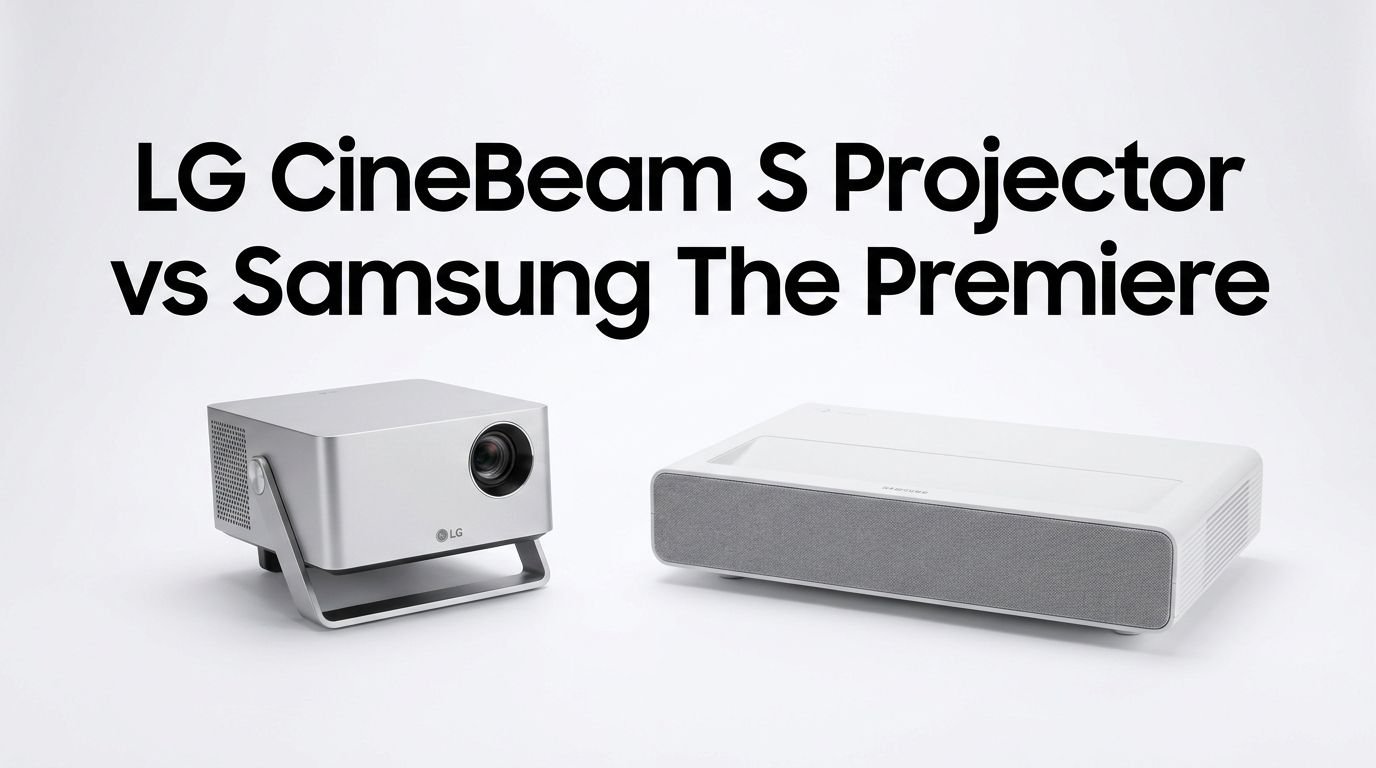
LG CineBeam S Projector vs Samsung The Premiere
Are you stuck between the LG CineBeam S and the Samsung The Premiere projector? You are not alone. These two ultra short throw (UST) projectors have created a massive buzz among home theater fans. Both brands promise a big screen experience without a bulky setup.
The LG CineBeam S (PU615U) arrived in 2025 as a compact 4K laser projector that fits almost anywhere. Samsung fires back with The Premiere lineup, including the Premiere 7 and Premiere 9, both packed with triple laser technology and large screen coverage.
Choosing the right projector can feel overwhelming. Price, brightness, image quality, portability, and smart features all matter. One wrong pick could mean buyer’s regret and a lighter wallet.
Key Takeaways
- The LG CineBeam S (PU615U) is a 4K UHD ultra short throw projector with 500 ANSI lumens, a triple laser light source, and a contrast ratio of 450,000:1. It projects up to 100 inches from just a few inches away and weighs only about 3.3 lbs, making it one of the most portable UST projectors on the market.
- Samsung The Premiere 7 (LPU7D) delivers 2,500 ISO lumens of brightness and supports a 120 inch projected image. It features 4K AI upscaling, Tizen OS, and a 30W 2.2 channel speaker system. This makes it a strong pick for bright living rooms and dedicated home theaters.
- Samsung The Premiere 9 (LPU9D) sits at the premium end with 3,200 ANSI lumens and a 130 inch display. It supports HDR10+ and has a more powerful sound system, but it costs around $5,999.
- LG wins on portability and contrast, while Samsung wins on brightness and audio output. If you want a projector you can carry from room to room, the CineBeam S is unmatched. If you want a permanent cinema setup, Samsung’s Premiere line delivers more raw power.
- Smart TV features are strong on both sides. LG runs webOS with AirPlay and Dolby Atmos support. Samsung runs Tizen OS with Gaming Hub and voice assistant integration.
- Price is a big factor. The LG CineBeam S retails around $1,299 to $1,499. The Samsung Premiere 7 starts around $2,799 and the Premiere 9 jumps to $5,999. Your budget will likely drive the final decision.
LG CineBeam S PU615U: Overview and First Impressions

Last update on 2026-08-31 / Affiliate links / Images from Amazon Product Advertising API Some of the links on this website are affiliate links, which means that at no additional cost to you, I earn a commission if you click through and make a purchase. I only recommend products and services that I believe will add value to my readers. Thank you for your support!
The LG CineBeam S (PU615U) made headlines after winning a “Best of CES 2025” award from AVSForum. LG designed this projector for people who want 4K quality in a small package. It measures just a few inches tall and weighs roughly 3.3 pounds.
The projector uses triple RGB laser technology. This gives it wide color coverage at 154% of the DCI-P3 color space. Colors look rich and accurate right out of the box. The 4K UHD resolution (3840 x 2160) makes every detail crisp.
Setup is fast. The CineBeam S includes auto screen adjustment, which handles focus, keystone correction, and screen alignment automatically. You place it near a wall, power it on, and it does the rest. LG also included motorized focus and zoom, so you can fine tune the image from the remote.
The contrast ratio is an impressive 450,000:1. Dark scenes in movies look deep and detailed. This is a huge advantage over many competitors in this price range.
Pros:
- Ultra compact and lightweight at 3.3 lbs
- True 4K UHD resolution with triple laser
- 154% DCI-P3 color gamut for vivid colors
- Auto screen adjustment saves setup time
- 450,000:1 contrast ratio for deep blacks
- Dolby Atmos support through built-in speakers
- AirPlay and webOS smart platform
Cons:
- 500 ANSI lumens is low for bright rooms
- Maximum 100 inch projection may not satisfy large room users
- Built-in speakers are only 2 x 4W
- Only 1 HDMI port limits connectivity
- Premium price for the brightness level offered
Samsung The Premiere 7 (LPU7D): Overview and First Impressions


Last update on 2026-08-31 / Affiliate links / Images from Amazon Product Advertising API Some of the links on this website are affiliate links, which means that at no additional cost to you, I earn a commission if you click through and make a purchase. I only recommend products and services that I believe will add value to my readers. Thank you for your support!
Samsung’s Premiere 7 (LPU7D) targets a different audience. This is a larger, permanent fixture UST projector that sits below your wall and fills it with a 120 inch 4K image. It uses a single laser light source with 2,500 ISO lumens of brightness.
The design is sleek with a fabric-covered body that blends into modern living rooms. Samsung built a 30W 2.2 channel speaker system directly into the unit. You get clear dialogue and decent bass without external speakers.
Samsung’s Tizen OS powers the smart features. You get direct access to Netflix, Disney+, Amazon Prime Video, and other streaming apps. The Gaming Hub lets you stream cloud games from Xbox and other services. Voice control through Bixby and Alexa makes hands-free operation simple.
The Premiere 7 also supports 4K AI upscaling. Lower resolution content gets a noticeable quality boost. Vision Boost technology automatically adjusts brightness based on your room’s ambient light conditions.
Pros:
- 2,500 ISO lumens works well in bright rooms
- 120 inch screen size for a true cinema experience
- 30W 2.2 channel built-in speakers sound full
- Tizen OS with Gaming Hub and streaming apps
- 4K AI upscaling improves lower resolution content
- Vision Boost adapts to ambient light conditions
- 3 HDMI ports for multiple devices
Cons:
- Large and heavy compared to the LG CineBeam S
- No portability; this is a fixed installation product
- No AirPlay support
- Higher price tag at around $2,799
- Lower contrast ratio compared to the LG CineBeam S
Samsung The Premiere 9 (LPU9D): The Flagship Option

Last update on 2026-08-31 / Affiliate links / Images from Amazon Product Advertising API Some of the links on this website are affiliate links, which means that at no additional cost to you, I earn a commission if you click through and make a purchase. I only recommend products and services that I believe will add value to my readers. Thank you for your support!
The Samsung Premiere 9 (LPU9D) is Samsung’s top tier UST projector. It pushes the screen size to 130 inches and bumps brightness to 3,200 ANSI lumens. This is the first projector certified for HDR10+, which gives it a notable edge in high dynamic range content.
Samsung uses triple laser technology in the Premiere 9. This delivers over a billion colors and a wider color spectrum. The image looks punchy and lifelike, especially in well-lit rooms where many projectors struggle.
The speaker system gets an upgrade here with a 40W 4.2 channel setup. It includes a simulated Dolby Atmos experience. Most users will not need a separate soundbar for casual viewing.
This projector is built for dedicated home cinema rooms. The $5,999 price tag reflects that. It also includes all the Tizen OS smart features, Gaming Hub, and voice assistant support found in the Premiere 7.
Pros:
- 3,200 ANSI lumens for excellent bright room performance
- 130 inch screen size is massive
- HDR10+ certification for superior dynamic range
- Triple laser with billion+ color reproduction
- 40W 4.2 channel speaker system
- Tizen OS with full smart TV features
- Gaming Hub for cloud gaming
Cons:
- $5,999 price tag is very steep
- Very large and not portable at all
- No AirPlay support
- Lower static contrast ratio than the LG CineBeam S
- Requires a dedicated space for proper installation
Picture Quality: LG CineBeam S vs Samsung The Premiere
Picture quality is the most important factor for any projector buyer. The LG CineBeam S offers 4K UHD resolution with 500 ANSI lumens. The Samsung Premiere 7 delivers 2,500 ISO lumens, and the Premiere 9 hits 3,200 ANSI lumens.
In a dark or dimly lit room, the LG CineBeam S shines. Its 450,000:1 contrast ratio produces deep blacks and fine shadow detail. Colors are accurate thanks to the 154% DCI-P3 coverage. Movie lovers who watch in the evening will appreciate this performance.
In a bright living room, Samsung has a clear advantage. The Premiere 7 and Premiere 9 produce enough light to fight ambient conditions. The Vision Boost feature on Samsung models adjusts the brightness in real time. This keeps the image visible even with windows open.
Color accuracy is excellent on both sides. LG uses RGB triple laser. Samsung uses triple laser on the Premiere 9 and single laser on the Premiere 7. The Premiere 9’s HDR10+ support gives it an edge for HDR content specifically.
The resolution is 4K across all three models. The Samsung models add AI upscaling, which helps lower quality sources look sharper. LG relies on its native resolution and does not include a similar AI upscaling feature.
Design and Portability Comparison
The LG CineBeam S wins the design and portability category by a wide margin. This projector is small enough to fit in a backpack. At roughly 3.3 pounds, you can carry it from your bedroom to your living room or even take it to a friend’s house.
The cylindrical design looks modern and minimal. LG used premium materials that give it a high end feel despite its tiny size. It does not need a special stand or shelf. Place it near any flat wall and you are ready.
Samsung’s Premiere projectors take the opposite approach. The Premiere 7 weighs significantly more and sits like a traditional media console below your projection surface. The fabric-wrapped exterior is attractive, but this unit stays in one spot.
The Premiere 9 is even larger and heavier. It is a serious piece of home theater equipment. You need dedicated space, proper cable management, and likely a professional installation for the best results.
If portability matters to you, the LG CineBeam S is the obvious choice. If you want a permanent, furniture-like projector that looks elegant in a living room, Samsung’s design has its own appeal.
Smart Features and Operating System
Both brands include full smart TV operating systems. The LG CineBeam S runs webOS, which is the same platform found on LG’s OLED and LED televisions. This means you get a familiar interface with access to all major streaming apps.
LG supports AirPlay and screen mirroring from Apple devices. This is a significant advantage for iPhone and Mac users. The app store on webOS also lets you download additional apps and services.
Samsung runs Tizen OS across its Premiere lineup. Tizen is smooth and responsive with a clean layout. Samsung adds the Gaming Hub, which is a unique feature. You can stream games from Xbox Cloud Gaming and other platforms directly through the projector.
Samsung also integrates Bixby and Alexa for voice commands. You can ask the projector to change channels, adjust volume, or search for content without picking up the remote.
LG includes Dolby Atmos decoding through its built-in speakers. Samsung counters with Dolby Digital support and its own audio processing. Both projectors support Bluetooth for connecting wireless speakers or headphones.
The LG CineBeam S also has a dedicated smartphone app for control and content sharing. Samsung relies on its SmartThings ecosystem for similar functionality.
Audio Performance Face to Face
Audio is often an afterthought with projectors, but both brands made real efforts here. The LG CineBeam S includes 2 x 4W speakers with Dolby Atmos support. The sound is clear for such a tiny device. You hear dialogue well, and the Atmos processing adds some spatial depth.
However, 8W total power has limits. Bass is thin. Action movies and music lack punch. For serious viewing, you will want to pair the CineBeam S with an external Bluetooth speaker or soundbar.
The Samsung Premiere 7 packs a 30W 2.2 channel system. This is a big step up. You get dedicated woofers that add noticeable bass. Dialogue is crisp. The overall volume fills a medium-sized room without strain.
The Premiere 9 goes further with 40W and 4.2 channels. It delivers an audio experience close to a standalone soundbar. For casual movie nights, many users skip external audio completely.
If you value built-in audio quality and do not want extra equipment, Samsung is the better choice. If you already own a good sound system or plan to buy one, the LG’s smaller speakers become less of an issue.
Connectivity and Ports
Connectivity can make or break a projector setup. The LG CineBeam S offers 1 HDMI port and 2 USB ports. One HDMI port can be limiting if you want to connect a gaming console and a streaming device at the same time. You would need an HDMI switch.
The Samsung Premiere 7 and Premiere 9 each include 3 HDMI ports. This lets you connect a Blu-ray player, a gaming console, and a cable box simultaneously. Samsung also includes 1 RJ-45 Ethernet port for a wired internet connection, which is more stable than Wi-Fi.
Both projectors support Wi-Fi and Bluetooth. LG supports AirPlay, which is missing on Samsung’s side. Samsung supports Chromecast integration through compatible devices but does not have it built in.
The LG CineBeam S lacks a 3.5mm audio jack. Samsung includes one on its Premiere models. This matters if you use wired headphones for late-night viewing sessions.
For users with multiple external devices, Samsung’s extra HDMI ports and Ethernet connection provide more flexibility. For wireless-first users who rely on streaming apps and AirPlay, LG covers the essentials well.
Throw Distance and Screen Size
Both the LG CineBeam S and Samsung Premiere models are ultra short throw projectors. They sit just inches from the wall and project large images. This removes the need for ceiling mounts or long-distance placement.
The LG CineBeam S projects 40 to 100 inches. At its maximum, you get a solid large-screen experience. The short throw distance means you can place the projector on a low table or shelf directly below the projection area.
The Samsung Premiere 7 projects up to 120 inches. The Premiere 9 stretches to 130 inches. These larger sizes create a more immersive theater experience, especially for sports and action movies.
If your room can support a screen larger than 100 inches, Samsung gives you that extra size. If 100 inches is enough for your space, the LG CineBeam S handles it perfectly well.
The auto screen adjustment on the LG handles keystone correction and alignment without manual input. Samsung’s models also include automatic adjustment features. Both brands make setup quick and painless.
Gaming Performance
Gamers should pay close attention to this section. The Samsung Premiere lineup includes the Gaming Hub. This built-in feature provides access to cloud gaming services. You can play Xbox titles directly without owning a console.
Samsung’s projectors also support ALLM (Auto Low Latency Mode). This reduces input lag when a gaming console is detected. The result is a smoother and more responsive gaming session.
The LG CineBeam S does not include a dedicated gaming hub. However, it does support game mode through its webOS interface. This mode reduces input lag and optimizes the display for gaming.
The LG’s 4K resolution and high contrast ratio benefit gaming visuals. Dark games like horror titles look fantastic thanks to the 450,000:1 contrast. Shadow details are visible, and colors pop.
Samsung’s higher brightness gives it an advantage for daytime gaming. If you game in a bright room, the Premiere 7 or 9 will maintain a clearer image. The LG CineBeam S works best for gaming in low light.
Both projectors support HDMI for direct console connections. Samsung’s 3 HDMI ports make it easier to keep multiple consoles plugged in. LG’s single HDMI port requires swapping cables or using a switch.
Price and Value for Money
Price plays a huge role in this comparison. The LG CineBeam S (PU615U) retails around $1,299 to $1,499. For a 4K ultra short throw projector with triple laser technology, this price is competitive. You get exceptional contrast, true 4K, and a portable form factor.
The Samsung Premiere 7 (LPU7D) costs approximately $2,799. It delivers much more brightness and a larger screen size. The built-in 30W speaker system adds value. This projector targets people willing to invest more for a brighter, permanent home theater setup.
The Samsung Premiere 9 (LPU9D) sits at $5,999. This is a premium product for premium budgets. The HDR10+ support, 3,200 lumens, and 130-inch projection justify the cost for serious home cinema fans.
The LG CineBeam S offers the best value per dollar for people who want 4K quality, portability, and easy setup. Samsung’s Premiere models offer the best value for people who prioritize brightness, screen size, and built-in audio.
Your room size, lighting conditions, and viewing habits should guide your budget decision. A dark bedroom setup favors the LG. A bright, open living room favors Samsung.
Which Projector Should You Buy?
The answer depends on your priorities. Choose the LG CineBeam S if you want a portable, compact, and affordable 4K UST projector. It is ideal for apartments, bedrooms, and anyone who moves their projector between rooms.
Choose the Samsung Premiere 7 if you want a bright, permanent home theater with strong built-in audio. It works well in living rooms with ambient light and delivers a 120-inch cinema experience.
Choose the Samsung Premiere 9 if money is no object and you want the absolute best UST projector Samsung makes. The 130-inch image, HDR10+, and powerful audio system make it a flagship product.
Both brands deliver quality. LG excels at portability, contrast, and color accuracy. Samsung excels at brightness, screen size, and audio. Neither choice is wrong. It is about matching the projector to your specific needs.
Frequently Asked Questions
Is the LG CineBeam S bright enough for daytime use?
The LG CineBeam S outputs 500 ANSI lumens. This works best in dimly lit or dark rooms. During the day with open curtains, the image will look washed out. You can use blackout curtains to improve daytime performance. Samsung’s Premiere models handle bright rooms much better with 2,500 to 3,200 lumens.
Does the Samsung Premiere support AirPlay?
No. Samsung’s Premiere projectors do not support AirPlay. They run Tizen OS, which integrates with Samsung’s SmartThings ecosystem. Apple users who want wireless casting should consider the LG CineBeam S, which includes AirPlay support built in.
Can I use the LG CineBeam S for gaming?
Yes. The LG CineBeam S supports a game mode through webOS. It reduces input lag and optimizes the display. The 4K resolution and high contrast ratio produce excellent visuals. However, it has only one HDMI port, so connecting multiple consoles requires an HDMI switch.
How far from the wall does each projector need to sit?
Both are ultra short throw projectors. The LG CineBeam S can project a 100-inch image from just a few inches away. Samsung’s Premiere models also sit very close to the wall. You do not need several feet of distance like traditional projectors.
Is the Samsung Premiere 9 worth the extra money over the Premiere 7?
The Premiere 9 adds HDR10+, triple laser technology, a 130-inch screen, and 3,200 lumens compared to the Premiere 7’s 2,500 lumens and 120-inch screen. If you have a large room and want the best HDR performance, the upgrade is worth it. If you are budget conscious, the Premiere 7 covers most needs very well.
Which projector has better built-in speakers?
Samsung wins on audio. The Premiere 7 has a 30W 2.2 channel system, and the Premiere 9 has a 40W 4.2 channel system. The LG CineBeam S has only 2 x 4W speakers. Samsung’s projectors can serve as standalone audio sources for casual viewing. LG’s speakers work for light use but benefit from an external speaker.

Hello, i’m Ivoria i am the face behind Tech Tracker Blog. I am passionate about my work and love to explore gadgets and share about my experience.