Why Is My Portable Power Bank Swelling and What Is the Immediate Solution?
Have you noticed your power bank looking a bit puffy lately? Maybe the case feels tight, the seams are splitting, or the once flat surface now bulges like a tiny pillow. That swelling is not a small issue. It is a clear warning sign that the lithium ion cells inside your device are failing.
A swollen power bank is one step away from leaking, smoking, or even catching fire. The good news is that you can handle this situation safely if you act fast.
This guide explains why power banks swell, what causes the chemical reactions inside, and what you must do right now to protect yourself, your family, and your home from danger.
Key Takeaways
- Stop using it immediately. A swollen power bank is unsafe. Do not charge it, do not plug devices into it, and do not press on the bulge to flatten it.
- Move it to a safe spot. Place the device on a non flammable surface such as concrete, ceramic, or metal. Keep it away from paper, fabric, and other batteries.
- Never puncture the swollen pack. Piercing the casing releases flammable gases and can trigger a fire or a violent thermal runaway event.
- Do not soak it in water. Old advice about salt water buckets is outdated and risky. Lithium reacts with water and can short circuit, causing more harm.
- Recycle through proper channels. Take the unit to a certified e waste center, a battery drop off bin, or a hazardous waste facility. Never throw it in your household trash.
- Replace with a quality unit. Choose a new power bank from a trusted brand with proper safety certifications such as UL, CE, or FCC marks.
What Does a Swollen Power Bank Actually Mean?
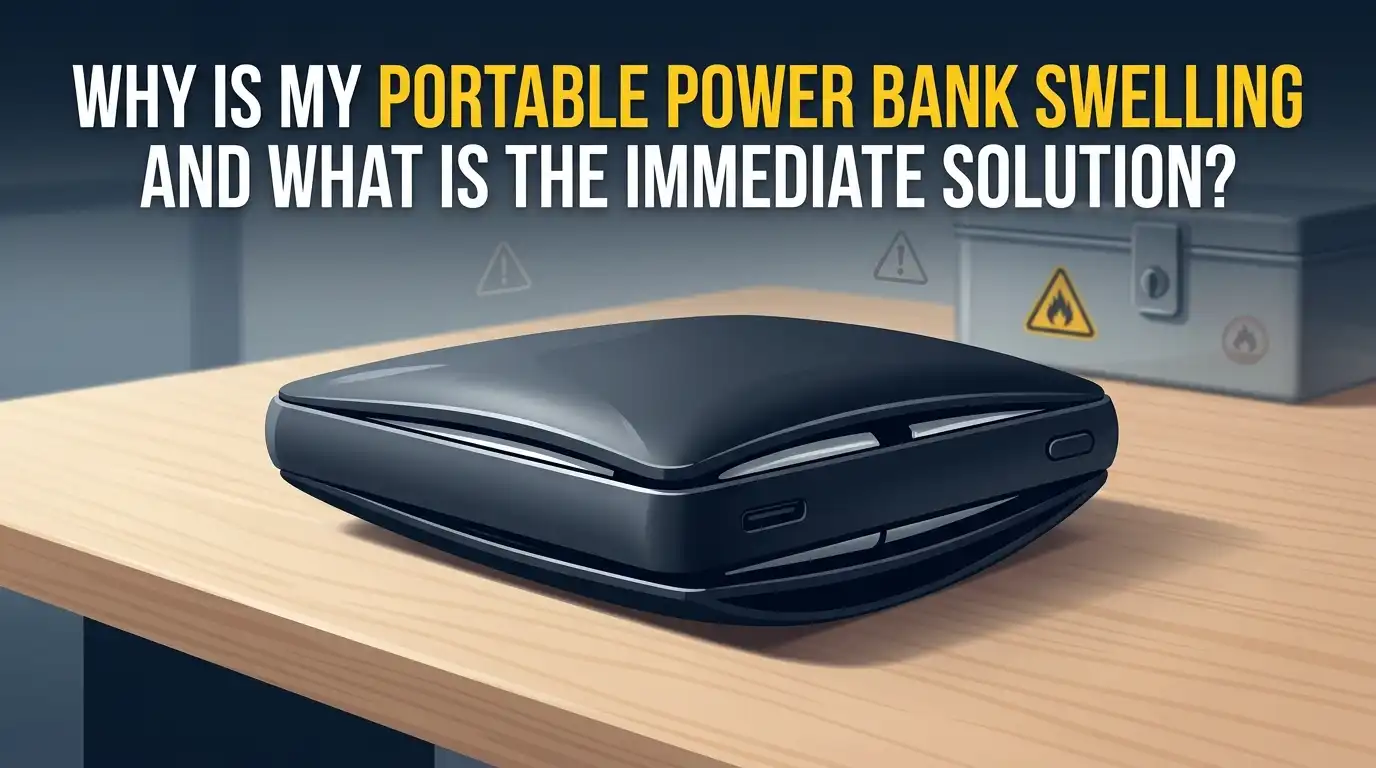
A swollen power bank means the lithium ion cells inside have built up gas pressure. The flat pouch cells or cylindrical cells inside are designed to hold a sealed mix of chemicals. When something goes wrong, those chemicals break down and release gases such as carbon dioxide, hydrogen, and hydrocarbons.
The gas has nowhere to escape, so it pushes outward on the soft pouch or metal can. That pressure causes the plastic shell of your power bank to bulge, crack, or split open. You may see the seams separating or feel the device wobble on a flat surface.
This is called a pillow battery or spicy pillow in repair communities. It is a serious failure mode and it means the battery is no longer safe for any use.
Why Do Lithium Ion Power Banks Swell in the First Place?
Lithium ion cells contain a liquid electrolyte and two electrodes separated by a thin film. When the battery is healthy, ions move back and forth across this separator during charging and discharging. No gas should form.
Swelling happens when that controlled chemistry breaks down. Heat, age, damage, or a manufacturing defect can cause the electrolyte to decompose. The breakdown produces gas as a byproduct, and the gas slowly inflates the cell.
Other common triggers include overcharging, deep discharging, and physical impact. Even leaving a power bank in a hot car for hours can start the chain reaction. Once the swelling starts, it cannot be reversed. The damage to the internal chemistry is permanent.
Top Causes of Power Bank Swelling You Should Know
Several specific causes lead to a puffy power bank. Knowing them helps you avoid the same mistake with your next device.
Overcharging is the most common cause. Cheap power banks without proper circuit protection keep pulling current even after the cells are full. This pushes the cell voltage past safe limits and damages the electrolyte.
High temperatures speed up chemical reactions inside the battery. Leaving your power bank on a sunny windowsill, in a parked car, or near a heater can cook the cells. Heat above 60 degrees Celsius is especially dangerous.
Physical damage from drops, dents, or punctures breaks the internal separator. Old age is another factor because lithium cells naturally degrade after two to three years of regular use. Finally, poor quality manufacturing with weak materials or no safety circuit is a major problem in cheap units.
Early Warning Signs Before Your Power Bank Swells
A power bank rarely puffs up overnight. There are usually warning signs you can spot if you pay attention. Catching these early signals helps you replace the device before it becomes dangerous.
Watch for these clues during normal use. The unit feels warmer than usual while charging. The charging time gets longer even though the capacity has not changed. Your phone or tablet charges more slowly than before, or the power bank drains faster when sitting unused.
Look at the physical shape too. A flat power bank that suddenly rocks on a table is a red flag. The USB ports may sit unevenly. The plastic case might creak when you squeeze it. Any of these signs deserve immediate attention and inspection.
Step by Step Immediate Solution When You Spot Swelling
Here is exactly what to do the moment you notice your power bank is puffy. Follow these steps in order without skipping any.
First, unplug everything. Disconnect the charging cable and remove any device drawing power. Do not press the power button or test if it still works.
Second, move the swollen unit to a safe location. A garage floor, a concrete patio, or a metal cookie tin works well. Keep it away from beds, sofas, curtains, and other batteries. Third, let it cool down if it feels warm. Do not put it in the fridge or freezer because condensation can cause short circuits. Fourth, plan your disposal route by calling a local recycling center or checking your city waste website.
What You Should Never Do With a Swollen Power Bank
Some advice floating around the internet is dangerous. Avoid these common mistakes that can turn a manageable problem into a fire or chemical burn.
Never try to puncture or cut open the bulging cell. The gases inside are flammable and the electrolyte is corrosive. A pinhole leak can ignite from a single spark.
Do not put a swollen lithium battery in water or salt water. Old YouTube videos suggest this, but modern safety experts warn against it. Lithium reacts with water and the cell may short and ignite. Do not press, squeeze, or stack heavy objects on the swollen unit to flatten it. Finally, never throw a swollen power bank in your household trash or recycling bin. It can crush in a garbage truck and start a fire.
Pros of strict avoidance: zero risk of fire, chemical burns, or property damage. Cons: you must wait and find proper recycling, which takes a little extra effort.
How to Store a Swollen Power Bank Safely Until Disposal
You may not be able to drop the unit at a recycling center the same day. Safe temporary storage is critical during this waiting period.
Place the swollen power bank inside a metal container with a lid. An empty paint can, a cookie tin, or a small metal toolbox works well. You can also use a fireproof LiPo safety bag sold for hobby drone batteries.
Add a layer of dry sand or non flammable cat litter around the device if possible. This absorbs heat and contains any leaks. Store the container outdoors in a shaded spot, in a garage, or on a covered porch away from your living space. Keep it far from gasoline, paint thinner, and other flammable items. Check on it once a day until disposal.
Pros: a metal container blocks oxygen and slows any fire. Cons: it adds a small extra step and requires a sheltered storage area.
Safe Disposal Methods for Swollen Power Banks
You have a few legitimate ways to get rid of a damaged power bank. Choose the option that fits your local rules and convenience.
The first method is certified e waste recycling centers. Most cities run free drop off events or permanent facilities. Workers there are trained to handle damaged lithium cells.
The second method is retail battery drop off bins. Big box electronics stores, home improvement chains, and office supply stores often have collection boxes near the entrance. Call ahead and confirm they accept swollen units. The third method is hazardous household waste programs run by your county. These accept any damaged battery for free. Some manufacturers also run mail back programs for their own products.
Pros of certified disposal: full safety, environmental protection, and legal compliance. Cons: it may require a short drive and a phone call to confirm acceptance.
Can You Repair or Replace the Cells Inside a Swollen Power Bank?
Some hobbyists wonder if they can open a swollen pack and swap in new cells. The honest answer is no for almost everyone. The risks far outweigh any savings.
Opening a swollen battery exposes you to flammable gas and corrosive electrolyte. A small spark from the soldering iron or a slip of the screwdriver can cause a fire. Even trained technicians treat this as hazardous work.
Replacement cells from unknown sources often have their own quality issues. You also need spot welding equipment, not regular solder, to attach new cells safely. For the average person, buying a new power bank is cheaper, faster, and far safer. Save your time and energy for choosing a better replacement.
Pros of repair: potential cost savings for skilled hobbyists with proper gear. Cons: high fire risk, voided warranty, questionable cell quality, and likely failure again.
How to Prevent Your New Power Bank From Swelling
Once you replace the damaged unit, take steps to keep the new one healthy. Good habits double or triple the lifespan of a lithium ion device.
Charge your power bank in a cool, dry place. Avoid direct sunlight, hot cars, and humid bathrooms. Unplug the unit once it reaches full charge rather than leaving it on the wall all night.
Use the original cable and a quality wall adapter that matches the voltage and amperage specs. Cheap chargers can deliver dirty power that stresses the cells. Try to keep the charge level between 20 and 80 percent for daily use. Avoid letting it sit at zero percent for weeks. Finally, replace the unit every two to three years even if it still works.
Pros of good habits: longer life, lower fire risk, and better performance. Cons: requires mindful charging behavior instead of plug and forget convenience.
Choosing a Safer Replacement Power Bank
Not all power banks are built the same. A good replacement protects you from the same swelling problem in the future.
Look for safety certifications on the box and product page. Marks such as UL, CE, FCC, RoHS, and PSE show the unit passed independent testing. Avoid no name brands without any certification.
Check that the power bank includes built in protection circuits against overcharge, over discharge, short circuit, and overheating. Read recent reviews to spot patterns of swelling complaints. Stick with established brands that offer at least an eighteen month warranty. Choose a capacity that matches your real needs because larger packs use more cells and generate more heat.
Pros of certified brands: tested safety, reliable performance, and customer support. Cons: higher upfront price compared to generic units, but well worth the peace of mind.
When to Call Emergency Services About a Swollen Power Bank
Most swollen power banks can be handled at home with care. A few situations call for immediate help from fire services.
Call the fire department right away if the unit is hissing, smoking, or producing visible vapor. These are signs of an active thermal runaway event that can ignite within seconds.
Also call for help if the power bank is hot to the touch, leaking liquid, or showing flames. Move people and pets away, close interior doors to slow fire spread, and exit the building. Do not try to carry a smoking battery outside with your bare hands. Use a metal shovel or fireplace tongs from a safe distance. Lithium fires need special suppression and trained responders.
Pros of calling early: lives and property saved, expert handling. Cons: a possible service call fee in some areas, which is minor compared to the risk.
Frequently Asked Questions
Is a slightly swollen power bank still safe to use for a short time?
No. Even mild swelling means the internal chemistry has failed. The cell will not heal itself and may worsen quickly. Stop using it immediately and start the safe disposal process described above. The small inconvenience of replacement is far better than a house fire.
Can I put my swollen power bank in the freezer to shrink it?
No, this is a myth. Freezing does not reverse the gas buildup and can cause condensation that shorts the internal circuit. The cold may temporarily slow reactions, but the danger returns as soon as the unit warms up. Stick with safe storage in a metal container instead.
How long does it take for a power bank to swell after damage starts?
The timeline varies. Some power banks swell within days of a heat exposure or impact event. Others slowly puff up over several months as the cells age. Once you see any bulge, treat the device as failed and remove it from service right away.
Does swelling mean my power bank brand is bad?
Not always. Even premium brands occasionally produce a faulty unit because lithium chemistry is sensitive. However, repeated swelling problems across many reviews suggest a quality issue with that model. Check current customer feedback before choosing a replacement.
Can I claim a warranty for a swollen power bank?
Often yes. Most reputable manufacturers honor warranties for swollen units because it indicates a defect. Contact the seller or brand with your purchase receipt and clear photos. Do not ship a swollen battery through the mail without first asking for safe return instructions, since damaged lithium cells are restricted in air freight.
What is the lifespan of a typical power bank?
A quality power bank lasts around 300 to 500 full charge cycles, which works out to two or three years of regular use. After that point, capacity drops and the risk of swelling rises. Replace older units proactively even if they still seem to work, especially if they are used daily.

Hello, i’m Ivoria i am the face behind Tech Tracker Blog. I am passionate about my work and love to explore gadgets and share about my experience.