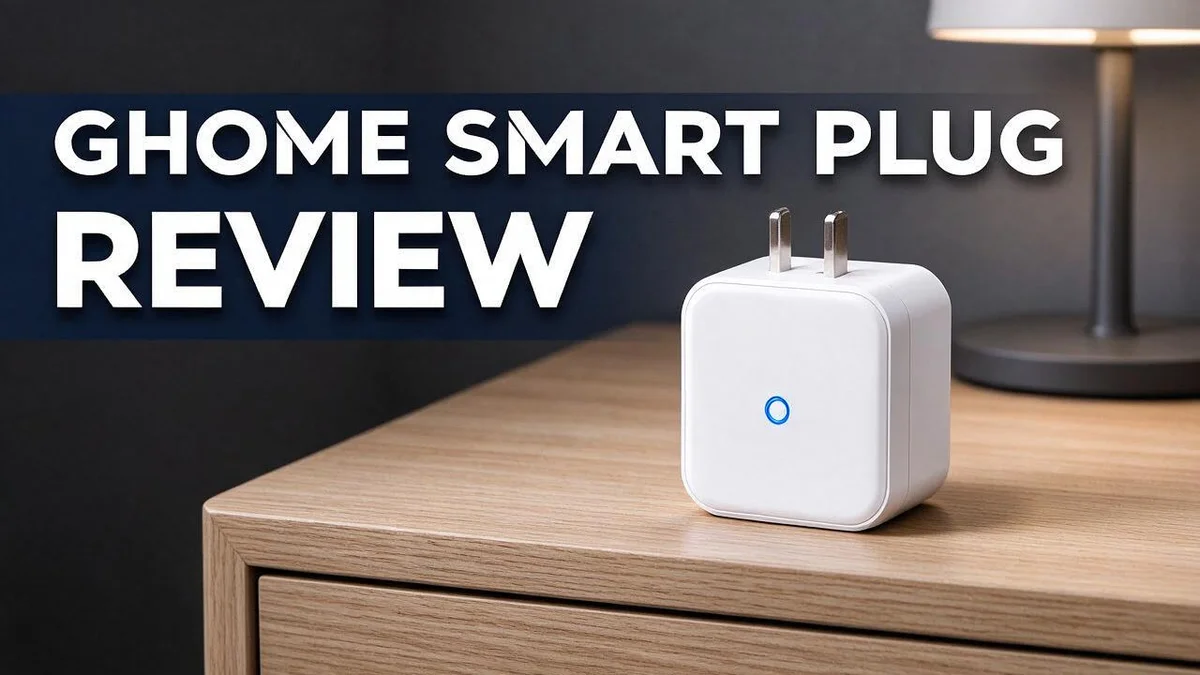
GHome Smart Plug Review 2026: A Comprehensive Guide
Tired of getting up just to turn off a lamp? A smart plug can solve that problem in seconds. The GHome Smart Plug makes everyday tasks easier with simple voice control.
You can speak to Google Assistant or Alexa to power your devices on or off. You can also use the remote control or set a timer for automatic schedules.
The main WP3-A model lists support for 15 amps and a 5GHz wireless connection. Some versions, however, only support 2.4GHz. Check your home network before you choose a model.
A user also reported trouble with the Gosund app after nearly two years of smooth use. That detail is worth knowing as you read on.
In a Nutshell
-
Check the model before you buy. Some listings describe a plug that runs only on the 2.4GHz band. Other versions may support a faster band, so read the product page closely first.
-
Use it with your smart home setup. The plug works with Alexa and Google Home. This makes it a good fit for most voice-controlled homes.
-
Compare other popular brands. Eve Energy suits people who use Apple HomeKit. Wyze Plug and Meross are popular for general use. TP-Link Kasa Outdoor and Meross Outdoor are common picks for patio or garden lights.
-
Look for more independent data. Verified ratings, full reviews, and power monitoring details are hard to find for this plug. Plan some extra research before you commit.
-
Test the plug right after setup. Early testing helps you spot connection problems while a return is still possible. Check that your phone stays connected during the first few days.
-
Set schedules for daily routines. Timers can switch lights or fans on and off while you are away. This keeps your home looking lived in without manual switching.
Setup and App Experience

Last update on 2026-11-06 / Affiliate links / Images from Amazon Product Advertising API Some of the links on this website are affiliate links, which means that at no additional cost to you, I earn a commission if you click through and make a purchase. I only recommend products and services that I believe will add value to my readers. Thank you for your support!
Setting up the plug takes only a few minutes. Plug the device into a wall outlet near your router. Wait for the indicator light to show that the plug is ready.
Next, open the companion app on your phone. Create an account or sign in with an existing one. Then tap the option to add a new device.
Stay near your router while the plug connects. Keep your phone close during the pairing step. This helps the connection go smoothly.
Give each plug a clear name. Names like Living Room Lamp or Coffee Maker make things easier to find. You can also assign each plug to a room in the app.
Room sorting keeps the home screen tidy. When you add more plugs, grouping them by room saves time. You can also create a group to switch several devices at once.
The app also shows connection status at a glance. A status label tells you whether the plug is online or offline. An offline label often points to a Wi-Fi or power issue.
Sharing access is another useful feature. Family members can often join the same home in the app. This way, everyone can control the plug from their own phone.
Many people also turn on notifications for their plugs. Alerts can tell you when a device goes offline. This helps you respond quickly when something stops working.
Firmware updates matter too. Check the app for updates after setup. Updates can improve stability and fix bugs over time.
If setup fails, try a few simple fixes. Unplug the plug for about thirty seconds, then plug it back in. Restart your phone and router, then try again.
Review the app permissions as well. Allow location and nearby device access only when the setup screen asks. This step can help the app find the plug on your network.
Overall, the setup process feels easy for most people. Clear steps and a short wait time make the first run simple. A little patience goes a long way.
Voice Assistant Compatibility
Voice control works well with this plug. It pairs with both Google Assistant and Alexa. Your smart speaker can become the switch for lamps, fans, and holiday lights.
Naming matters more than most people expect. Voice assistants find each device by its name. Choose simple labels like Desk Lamp or Fan Plug so commands work the first time.
Avoid similar names for different plugs. If two plugs share the name Lamp, the assistant may pick the wrong one. Give each plug a unique label that you can say clearly.
Build routines for bedtime and morning. A single phrase like Good night can switch off several devices at once. Routines can also link the plug to other smart gadgets in your home.
Keep your internet connection steady. Voice commands travel through the cloud before the plug responds. If the internet drops, the assistant may not respond, though manual control still works.
Expect a short pause after each command. Most people notice a delay of a second or two. This pause feels normal and does not mean the plug is broken.
Speak in plain, short phrases. Commands like turn on the lamp work better than long sentences. Clear wording helps the assistant understand you on the first try, and it reduces mix-ups with similar words.
Link your account in every assistant app. Households with both Google Assistant and Alexa need both apps connected. Check that each assistant shows the same device list.
Think about where you speak most often. Smart speakers in the kitchen or bedroom hear commands best when they sit near the device. A speaker in the same room gives the fastest response.
Ask about status before you act. You can ask, Is the fan on? Many assistants answer with the current state, which saves a trip across the house.
Electrical Safety and Load Rating
Electrical safety starts with the load rating. The WP3-A model is listed at 15A, which shows the maximum current the plug can handle. Check the label on your own unit before you plug anything in.
A rating shows the limit, not the safe target. Many electricians suggest keeping the total draw well below the maximum to prevent heat buildup.
Start by checking each device. Look at the wattage on its label, then add up the watts for everything on the same plug.
A common guideline limits continuous loads to about 80 percent of the rating. For a 15A plug, that means about 12A, or roughly 1,440 watts on a standard 120V outlet.
Some appliances need extra care. Space heaters, window air conditioners, and hair dryers draw large amounts of power. Read the manual before using a smart plug with any of these loads.
Heat is a clear warning sign. A warm plug, a buzzing sound, or a burning smell means you should unplug it right away.
Replace any plug that feels hot, cracked, or loose. Safety depends on good hardware, so a worn unit should not stay in use.
Never daisy chain power strips or extension cords to the plug. Stacking loads this way raises the risk of overheating.
Inspect the wall outlet too. A loose socket or a frayed cord can cause trouble even when the plug has a strong rating.
We could not verify power monitoring details for this model. A separate energy meter helps you measure real usage before you rely on the plug.
Keep the plug in a dry, ventilated spot. Stay away from sinks, bathtubs, and direct sunlight. Plug the smart plug directly into the wall. Do not hide it behind furniture or rugs, since heat needs room to escape.
Finally, remember that remote control is a convenience, not a safety device. Unplug the device during storms or long trips.
Top 3 Alternatives
Kasa Smart Plug


Last update on 2026-11-10 / Affiliate links / Images from Amazon Product Advertising API Some of the links on this website are affiliate links, which means that at no additional cost to you, I earn a commission if you click through and make a purchase. I only recommend products and services that I believe will add value to my readers. Thank you for your support!
The Kasa Smart Plug works with Alexa and Google Assistant. It connects to your home Wi-Fi with no hub needed.
You can turn lamps, fans, and holiday lights on or off from anywhere. Many people use it for living room lamps. Setup takes only a few minutes in the Kasa app.
Some models also track energy use. This shows which devices draw the most power.
Amazon Smart Plug

Last update on 2026-11-10 / Affiliate links / Images from Amazon Product Advertising API Some of the links on this website are affiliate links, which means that at no additional cost to you, I earn a commission if you click through and make a purchase. I only recommend products and services that I believe will add value to my readers. Thank you for your support!
The Amazon Smart Plug suits people who already use Alexa at home. It pairs quickly with Echo devices and needs no extra hub. It also works well in small apartments.
You can say, “Alexa, turn on the desk lamp,” and it responds right away. Routines make daily life easier. You can set a plug to turn on at sunrise or off at bedtime.
This feature helps your home look occupied while you travel.
Meross Smart Plug

Last update on 2026-11-06 / Affiliate links / Images from Amazon Product Advertising API Some of the links on this website are affiliate links, which means that at no additional cost to you, I earn a commission if you click through and make a purchase. I only recommend products and services that I believe will add value to my readers. Thank you for your support!
The Meross Smart Plug supports Apple HomeKit, Alexa, and Google Assistant. That range fits homes with mixed devices. It is a helpful pick for people who want more choice.
Each plug has a physical button. You can switch it by hand when you do not want to use an app.
Scheduling is simple in the app. Many users like the extra control over timers and energy data.
Timer and Remote Control Features
The timer is the feature many people use most with this plug. It switches power on or off without any help from you.
Countdown timers run just once. You set a time, and the plug cuts power when it ends. This works well for a fan, a radio, or a desk lamp.
Some people use a countdown to turn off a device after a short break. It helps when you forget to switch things off on your way out.
Scheduled timers repeat on the days you choose. Pick a start time, a stop time, and the days of the week. Many people use this for a reading lamp or a holiday light.
Timers can also make a home look lived in. Set a lamp to switch on during the evening while you travel. Lights on a set schedule help a home look occupied.
Remote control reaches the plug from far away. Your phone can switch it from another city, as long as the plug stays online.
A quick check in the app shows whether a plug is on or off. You do not need to walk back home to find out.
Check the time zone first. Timers follow the time zone saved in the app. A wrong setting can shift every schedule by several hours.
Test each timer once before you rely on it. Watch the plug switch at the set time. A short test catches mistakes early.
Schedules may not run during a power cut. If the plug loses power, the timer can miss its start time. Keep this in mind for important tasks.
Pick timers for steady, simple jobs. Good choices include lights, fans, and small desk gadgets. Skip timers for anything that needs close watching.
Timers and remote control make daily routines easier. Set them with care, and they will serve you well. Start small, then add more as you feel comfortable.
Model Variants and Value
The GHome Smart Plug comes in more than one model. Listings mention the WP3-A and a Mini version. Each model suits a different home setup, so compare them before you choose.
The WP3-A lists Wi-Fi 5G and a 15A rating. This model fits rooms with heavier devices. Check the label on the box to confirm the model you hold.
The Mini model supports 2.4GHz Wi-Fi only. That matters if your router uses two bands. Many homes keep 5GHz for phones and laptops, while older devices use 2.4GHz.
Match the plug to the right band. Connect the plug to the 2.4GHz network during setup. This small step prevents connection trouble later.
If your router combines both bands under one network name, you may not see which band the plug joins. Split the bands in your router settings if your model allows it. Then the setup steps become much clearer.
Both versions work with Alexa and Google Home. You can give voice commands with either assistant. The model number matters more than the product name printed on the box.
The GHomeSmart P2 outlet extender is a separate product. Shoppers often mix up these names. Read the full model number before you choose a device.
Our research has gaps. We could not verify official ratings or full user reviews for each variant. Treat every spec as a starting point, not a final answer.
Test the app with your own phone. One user reported that the Gosund app turned off Wi-Fi on a Samsung Galaxy S21 FE. The problem appeared after nearly two years without issues. Watch your phone settings during setup.
Start with your router. Look at which Wi-Fi bands your network uses. Then pick the variant that matches your setup and your daily needs.
Pros and Cons
Pros
– Voice commands let you switch the plug with Google Assistant or Alexa.
– Plain plugs turn lamps and fans into smart devices.
– Setup needs no rewiring or electrician visit.
– You can control the plug from your phone while away.
– Multiple models let you match the plug to your needs.
Cons
– Model names look alike, so buyers may pick the wrong version.
– Setup depends on a phone app, so you need a compatible phone.
– Research found no verified ratings or full long term reviews.
– Some listings skip key details, so check the specs before you buy.
Who Should Buy It
The GHome Smart Plug suits people who want a gentle start with smart home gear. It asks for little technical skill and fits neatly into daily routines. Many shoppers start with one plug before they add more devices. That small first step can teach the basics of scheduling and app control.
Renters often find this type of plug a practical choice. They can take it to the next home, so the setup never goes to waste. It also avoids complex installs that may cause problems with a lease.
Older adults may also appreciate voice control. A simple spoken command to Alexa or Google Assistant can replace fumbling with small switches.
Shift workers who sleep during the day may want lamps on at unusual hours. A timer can handle that schedule without manual effort.
Students in shared rooms often want simple control over desk lamps and fans. A plug like this handles both with one easy setup.
Pet owners may want a light or fan on at set times for comfort. Scheduled routines can keep a pet’s space calm during long days.
However, some buyers should look elsewhere. People who want energy tracking will not find power monitoring data here, because research found none for this plug.
HomeKit users may prefer the Eve Energy, which research lists as the best choice for that system.
Outdoor shoppers should look at Kasa Outdoor or Meross Outdoor models instead.
Cautious buyers who want a long track record may prefer to wait for more owner feedback. Waiting gives time for more everyday reports to appear.
Before you decide, list the devices you plan to connect and where the outlets sit in your home. In short, this plug suits beginners, renters, and anyone who wants simple voice control. It fits less well for energy tracking, HomeKit setups, or outdoor spaces.
Final Verdict
The GHome Smart Plug suits simple, everyday tasks. It does its core job well. Turning a device on or off becomes quick and easy.
The timer is its strongest feature. Set a schedule once, and the plug runs it without fuss.
This helps when you want a room to look lived in while you travel. A morning coffee maker or evening reading lamp also benefits from a set routine.
Energy tracking is the main missing piece. Research found no reliable power monitoring data for this plug. If you want to watch electricity use, consider a model that reports it clearly.
Always compare your appliance label with the plug rating before you connect anything. Heaters and high draw devices need extra care. Skip the plug if the label demands more power than the plug allows.
Keep the return window in mind during your first week. Run the schedules, check voice commands, and confirm the phone app stays connected. If something fails, you can send it back calmly.
Overall, this plug feels like a sensible pick for lamps and fans. It offers voice control, remote access, and timers at a simple level. Most buyers will find the basics dependable.
The verdict rests on limited data, so read recent buyer comments before you commit. Fresh feedback can reveal new app issues or firmware changes. Your own daily routine should guide the final choice.
Think about who you buy for, too. A gift for a relative who wants simple lamp control can work well. Pack a short setup guide so they feel confident from day one.
Also plan for future growth. Start with one plug in your main room. Add more only after you see how well the first one performs.
In short, choose this plug for straightforward control of lights and fans. Look elsewhere if you need detailed energy reports or a deeper smart home ecosystem.
Frequently Asked Questions
Will the plug still work if my internet goes down?
Most smart plugs need a live connection to respond to app and voice commands. Schedules may not run until your connection returns. Check the manual for offline behavior before you rely on it.
Does this plug work on a 5GHz network?
Research shows conflicting details. Some listings describe 2.4GHz only, so check your router settings first. If the plug needs 2.4GHz, connect it to that band during setup.
What if the app disconnects my phone from Wi-Fi?
One user reported this problem on a Samsung Galaxy S21 FE after nearly two years of smooth use. Restart your phone and review the app permissions. If the issue continues, test the app on a spare phone before you change your main device.
Can I use it with heavy appliances?
Use caution with space heaters and air conditioners. These devices draw large amounts of power and can strain both the plug and the outlet. Stick with lamps, fans, and small electronics for the safest results.
Can other people in my home control the plug?
Many smart plug apps allow account sharing. Check whether this app offers that option. Shared access lets roommates or family members control lamps and fans from their own phones.

Hello, i’m Ivoria i am the face behind Tech Tracker Blog. I am passionate about my work and love to explore gadgets and share about my experience.