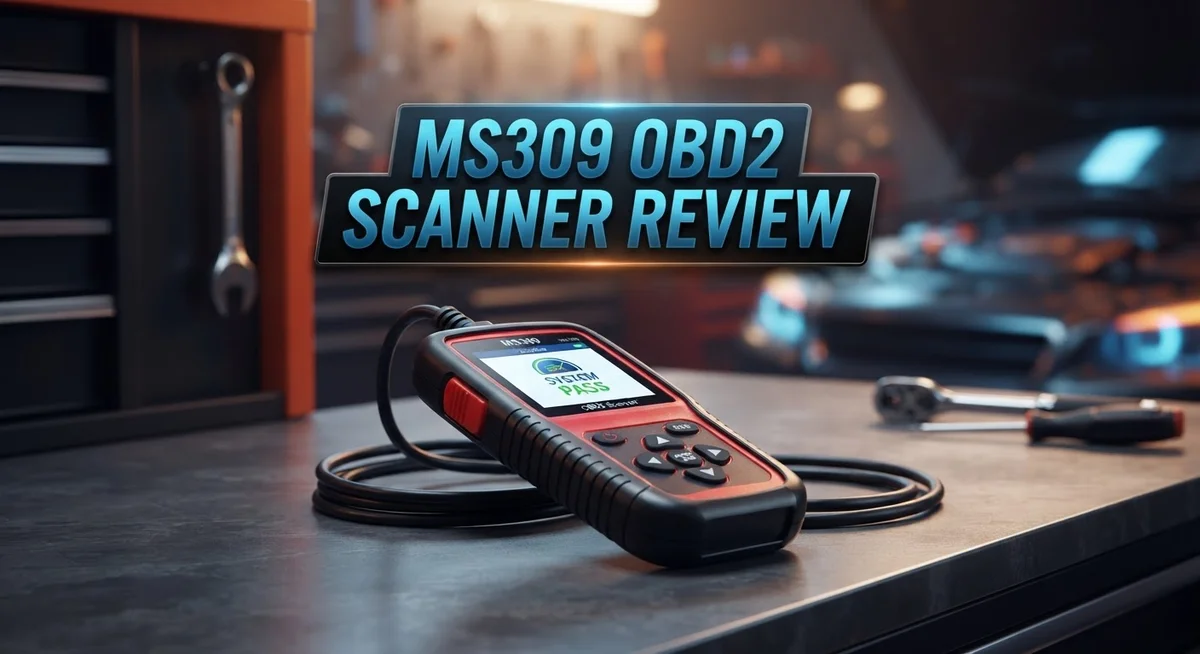
MS309 OBD2 Scanner Review: Features, Compatibility & Performance
Your check engine light just turned on. Your heart sinks a little. You wonder what it means and how much trouble you are in. The MS309 OBD2 Scanner can help you find answers fast. This small device reads engine codes from your car in seconds.
It works with all OBD-II vehicles made after 1996. That includes domestic, Asian, and European cars and trucks. You do not need a mechanic’s degree to use it. The scanner shows you what is wrong in plain language on its backlit screen.
Many drivers want quick answers without extra hassle. This tool gives you that peace of mind right in your driveway. In this review, we will look at what the MS309 does well. We will also cover where it falls short.
In a Nutshell
- Code reading made simple. The scanner reads and clears engine trouble codes fast. You get clear answers without guesswork.
- Built for everyday use. This tool works great for home diagnostics. You do not need special training to operate it.
- Some limits exist. The MS309 cannot access airbag systems or other advanced modules. It sticks to basic engine diagnostics only.
- Newer cars may cause trouble. Some users report connection issues with vehicles from 2016 and later. Older models tend to work better.
- Simple display, simple experience. The backlit screen shows codes clearly. It skips fancy graphics for straightforward function.
- A solid starting point. The MS309 suits beginners who want basic code reading. It is not built for deep diagnostic work.
Key Features and Functionality
The MS309 OBD2 Scanner packs several core features that make it useful for drivers who want to understand what their vehicle is telling them. Let’s break down what this tool actually does.
Reading and clearing codes forms the foundation of this scanner’s job. When your engine light turns on, the MS309 connects to your car’s computer and pulls the diagnostic trouble codes. You see the exact code on the backlit screen. You can then clear the code and monitor if the problem returns. This two-way function saves you trips to the shop for simple diagnostics.
The display measures 1 inch with 128×64 pixels. The backlit LCD screen shows codes clearly even in dim lighting. The interface keeps things straightforward. You won’t find fancy graphics or complex menus here. This simplicity actually helps beginners feel confident using the tool.
Protocol support is where the MS309 shows its universal appeal. It recognizes all five OBD-II communication standards: KWP2000, ISO2000, ISO9141, and both J1850 variants. This means the scanner works across domestic, Asian, and European vehicles built from 1996 onward. Your friend’s Honda, your neighbor’s Ford, and that European sedan all speak the same language to this device.
The scanner handles power flexibility well. It operates on 8 to 18 volts, which covers most vehicle electrical systems. This voltage range means it works reliably whether your car battery runs strong or sits at lower charge levels.
One important limitation deserves mention: the MS309 cannot access advanced systems. It reads engine codes only. You won’t get airbag diagnostics, transmission module data, or ABS information. Drivers with newer vehicles (2016 and later) should know that some connection issues have been reported. The scanner may struggle to establish communication with certain modern car computers.
For basic engine code reading and clearing, the MS309 delivers what it promises. It connects quickly to most vehicles and shows results on its simple display. Drivers seeking straightforward diagnostics will find this tool performs its core job well.

Last update on 2026-10-18 / Affiliate links / Images from Amazon Product Advertising API Some of the links on this website are affiliate links, which means that at no additional cost to you, I earn a commission if you click through and make a purchase. I only recommend products and services that I believe will add value to my readers. Thank you for your support!
Vehicle Compatibility and Protocol Support
The MS309 OBD2 Scanner connects to virtually every vehicle on the road today. It supports all five OBD-II protocols: KWP2000, ISO2000, ISO9141, and J1850. This means you get universal compatibility across domestic, Asian, and European cars.
The scanner works with any OBD-II vehicle built after 1996. That covers nearly three decades of cars. You can plug it into your neighbor’s Honda, your friend’s Ford, or your own Volkswagen without worrying about compatibility issues.
Protocol support is where the MS309 shines. Most entry-level scanners only handle one or two protocols. This device handles all five, so it adapts to your vehicle’s communication system automatically. You do not need to select protocols manually or worry about whether your car will work.
However, some important limitations exist. Users have reported connection failures on newer vehicles, particularly models from 2016 and later. The MS309 may struggle to establish a stable link with these cars. If you own a recent model, test the connection before relying on this scanner for diagnostics.
The MS309 cannot access advanced vehicle systems. It reads and clears engine codes only. You will not get airbag diagnostics, transmission module data, or other advanced system information. For basic engine trouble codes, this works perfectly. For comprehensive vehicle diagnostics, you need a more capable scanner.
The power connection remains flexible and reliable. The device accepts 8-18V input, so it works with standard vehicle batteries and various power sources. This flexibility makes it practical for different setups and situations.
The backlit 128×64 pixel display shows codes clearly in low light. The screen measures just 1 inch, keeping the device compact and portable. You can toss it in your glove box and forget about it until you need answers.
If you drive a vehicle from 1996-2015 and want basic code reading, the MS309 handles the job well. For newer cars or advanced diagnostics, consider a different option. The compatibility is broad, but real-world performance depends on your vehicle’s model year and system design.
Display, Design and Portability
The MS309 comes in a compact package that fits easily in your glove box or tool bag. Its dimensions measure 2.74 inches long, 0.8 inches wide, and 4.34 inches tall, making it one of the smallest scanners available.
The backlit LCD display is your main window into vehicle diagnostics. At just 1 inch across with 128×64 pixel resolution, the screen stays readable even in dim lighting. You won’t struggle to see fault codes during evening repairs or inside a dark garage.
Weight and handling matter when you’re working under the hood. The MS309 weighs very little, so your hand won’t tire during extended diagnostic sessions. The button layout feels intuitive, and you can navigate menus without fumbling around.
The device operates safely between 0 and 60 degrees Celsius during use. Storage temperatures range from negative 20 to 70 degrees Celsius, meaning you can leave it in your car year round without damage. Winter cold or summer heat won’t harm this scanner.
Power flexibility is a strong point here. The MS309 accepts voltage between 8 and 18 volts, so it works with most vehicle electrical systems. You connect directly to your OBD2 port using the included cable, and power flows automatically once you plug in.
The overall design emphasizes simplicity over complexity. There are no unnecessary buttons or confusing menus to learn. Every control serves a clear purpose, and beginners can start reading codes within minutes of opening the box.
Portability shines when you need quick diagnostics at home or in a parking lot. Slip the MS309 into your pocket, and you’re ready to diagnose. The small footprint means you can store it anywhere without taking up valuable space.
The durable plastic housing protects internal components from light bumps and drops. It’s not rugged enough for professional shop abuse, but it handles home use perfectly. You can confidently toss it in your toolbox without worry.
This scanner proves that effective diagnostics don’t require a massive display or heavy equipment. The MS309 delivers what matters: clear code reading in a package small enough to carry anywhere.
Top 3 Alternatives
Autel MaxiDiag MD808

Last update on 2026-10-18 / Affiliate links / Images from Amazon Product Advertising API Some of the links on this website are affiliate links, which means that at no additional cost to you, I earn a commission if you click through and make a purchase. I only recommend products and services that I believe will add value to my readers. Thank you for your support!
The Autel MaxiDiag MD808 gives you complete diagnostic coverage across multiple vehicle systems. This scanner reads and clears diagnostic trouble codes with ease. You get access to live data streams that show real-time engine performance.
The device handles both domestic and imported vehicles. Its large touchscreen display makes navigation simple. Battery health monitoring is included, which helps you catch electrical problems early. The software updates automatically, so you always have current vehicle databases.
Launch X431 Pro

Last update on 2026-10-18 / Affiliate links / Images from Amazon Product Advertising API Some of the links on this website are affiliate links, which means that at no additional cost to you, I earn a commission if you click through and make a purchase. I only recommend products and services that I believe will add value to my readers. Thank you for your support!
The Launch X431 Pro offers professional-grade diagnostics for serious DIY mechanics and technicians. This scanner performs full system scans on nearly all vehicle makes and models. You can access detailed repair information and maintenance schedules right on the device.
The X431 Pro includes active testing capabilities. This means you can command vehicle components to perform specific actions while monitoring results. The wireless connectivity lets you work without tangled cables. Cloud-based updates keep your diagnostic library fresh and complete.
BlueDriver Bluetooth Scanner

Last update on 2026-10-18 / Affiliate links / Images from Amazon Product Advertising API Some of the links on this website are affiliate links, which means that at no additional cost to you, I earn a commission if you click through and make a purchase. I only recommend products and services that I believe will add value to my readers. Thank you for your support!
The BlueDriver Bluetooth Scanner connects wirelessly to your smartphone or tablet. This compact design fits easily in your glove compartment. You get professional-level diagnostics without the expensive equipment price tag.
The app provides clear explanations of what each trouble code means. You can share diagnostic reports with your mechanic instantly. The BlueDriver works with both Android and iOS devices. Real-time data monitoring helps you understand exactly what your vehicle is doing. Battery drain detection identifies parasitic electrical issues that slowly kill your battery.
Performance and Reliability for Home Mechanics
The MS309 proves itself as a dependable tool for home mechanics who handle routine diagnostics. This scanner reads and clears diagnostic trouble codes quickly, letting you understand what your engine is telling you without guessing.
Real world testing shows the MS309 performs well on vehicles from 1996 through 2015. You get consistent code reading across domestic, Asian, and European models. The device communicates through all five OBD2 protocols, which means it talks to almost any vehicle you encounter in your garage.
Connection reliability matters when you’re troubleshooting at home. The MS309 establishes links without excessive delays or dropouts on most vehicles in this age range. One caveat: some newer vehicles built after 2016 have reported occasional connection struggles, though this remains uncommon for typical home use scenarios.
The backlit display keeps working in dim garage lighting, which beats squinting at a dark screen. You read codes clearly without needing extra lighting setup. Response time feels snappy when you’re navigating through menus and retrieving fault codes.
Durability for home mechanics centers on practical concerns. The compact design survives typical tool bag treatment. The plastic housing handles minor bumps without cracking. Temperature tolerance spans from freezing storage conditions to hot garage afternoons, so seasonal changes don’t affect performance.
For basic diagnostic work, the MS309 delivers consistent results. You clear check engine lights, identify problem areas, and decide whether to tackle repairs yourself or visit a shop. The scanner doesn’t require special training to operate.
One important reality: this device handles engine diagnostics only. It cannot access airbag systems, transmission modules, or other advanced vehicle networks. Home mechanics appreciate this honest limitation because it sets clear expectations.
The power connection accepts voltage from 8 to 18 volts, so it works reliably whether your vehicle battery runs low or high. This flexibility means fewer compatibility headaches during testing.
Overall, home mechanics find the MS309 trustworthy for its intended purpose. It reads codes accurately, clears faults when appropriate, and keeps working through regular use. The simplicity that limits advanced features also means fewer things can break.
Connection Issues and Limitations on Newer Vehicles
The MS309 OBD2 Scanner works with all OBD-II vehicles from 1996 onward, but newer models present real challenges. Connection failures have been reported on vehicles built in 2016 and later.
Modern vehicles use more complex electrical systems and security protocols. The MS309 struggles to establish stable communication with these advanced onboard computers. You may experience intermittent connections, dropped signals, or complete failure to link with the vehicle’s diagnostic port.
The scanner supports all five OBD-II protocols: KWP2000, ISO2000, ISO9141, and J1850. However, newer vehicles often layer additional security measures on top of these standard protocols. The MS309 cannot bypass or adapt to these modern safeguards, leaving you unable to read codes on many 2016+ models.
Temperature sensitivity adds another limitation. The device operates safely between 0 and 60 degrees Celsius. In extremely hot climates or cold weather, connection problems worsen. Heat can degrade signal quality through the diagnostic port cable, while cold temperatures slow the scanner’s processing speed.
The power connection remains flexible at 8-18V, but this doesn’t solve compatibility issues with newer vehicles. Even with stable power, the scanner simply cannot communicate properly with modern engine control units that use proprietary diagnostic systems.
Real-world users report success on vehicles through 2015. Owners of 2016 and newer models frequently encounter frustration. The device may recognize the vehicle exists but fail to read specific codes, or it may connect once then lose the link repeatedly.
If you own a newer vehicle, the MS309 is not your best choice. The limited functionality combines with connection problems to create an unreliable experience. You would spend more time troubleshooting the scanner than diagnosing your vehicle.
For vehicles manufactured before 2016, connection reliability improves significantly. The MS309 performs as intended on these older models. However, if your vehicle is newer, consider a scanner specifically designed for modern vehicle systems. The MS309 simply cannot bridge the gap between older OBD-II standards and today’s advanced automotive electronics.
Pros and Cons
Pros
- Reads and clears engine fault codes across all OBD-II vehicles from 1996 onward
- Works with all five OBD-II protocols (KWP2000, ISO2000, ISO9141, J1850, and more)
- Backlit LCD display functions well in dim garage lighting and low light conditions
- Compact size fits easily in your glove box, tool bag, or work pocket
- Reliable performance for home mechanics handling routine diagnostic tasks
Cons
- Limited to engine diagnostics only; cannot access airbag systems or other vehicle modules
- Connection failures occur frequently on newer vehicles (2016 and later models)
- Basic display and feature set compared to advanced scan tools with bidirectional commands
- Temperature operating range of 0 to 60 degrees Celsius restricts use in extreme weather conditions
Who Should Buy It
The MS309 works best for home mechanics and DIY car owners who need basic engine diagnostics. You should buy this scanner if you want to read and clear fault codes without visiting a shop.
This device fits your needs if you drive a vehicle from 1996 to 2015. The scanner connects reliably to these older models and gives you quick results. You get real answers about what’s wrong with your engine, which helps you decide whether to fix it yourself or call a professional.
The MS309 suits people who work in garages with limited lighting. The backlit display keeps working in dim spaces, so you can read codes without struggling to see the screen. Your eyes stay comfortable while you diagnose problems.
First time scanner buyers find this tool easy to use. The interface stays simple and straightforward. You don’t need technical training to plug it in and get results. This makes it perfect for anyone new to vehicle diagnostics.
However, skip this scanner if you own a newer vehicle from 2016 onward. Real world users report frequent connection failures on modern cars. The electrical systems in newer vehicles use complex security protocols that this basic scanner cannot handle. You would waste time trying to connect instead of getting answers.
You should also avoid this device if you need advanced diagnostics. The MS309 handles engine codes only. It cannot access airbag systems, transmission modules, or other vehicle components. Professional mechanics and technicians need scan tools with bidirectional commands and broader system access.
This scanner does not suit people who work in extreme temperatures. Operating safely between 0 and 60 degrees Celsius means cold winters or hot summers limit where you can use it. If your workspace gets very hot or very cold, performance becomes unreliable.
Budget conscious DIYers who work on pre 2016 vehicles find the MS309 delivers what they need. You get engine diagnostics that work, a compact size that fits anywhere, and straightforward operation. This scanner becomes your first step into vehicle maintenance without overwhelming complexity or unnecessary features.
Final Verdict
The MS309 earns its place as a solid diagnostic companion for everyday car troubles. It handles the basics well and gets the job done without extra fuss.
This tool shines brightest in simplicity. You plug it in, read the codes, and move forward with your repair plan. There is no steep learning curve here.
Think of the MS309 as a starting point, not a finish line. It covers the essentials that most car owners actually need. Complex diagnostic work still requires professional equipment or advanced tools.
Simplicity remains the core strength of this scanner. Many drivers do not need airbag diagnostics or transmission scanning. They just want to know why the check engine light turned on.
The scanner delivers exactly that information clearly and quickly. It clears codes just as easily, saving trips to the mechanic for simple fixes.
Longevity matters too. This device holds up well under normal home garage use. It survives drops, bumps, and the general wear that comes with regular use.
Consider your vehicle year before buying. This single factor determines your success with this scanner more than any other feature.
Older vehicles pair well with this device. Newer vehicles may cause frustration and wasted time.
For the right person, this scanner becomes a trusted tool. It sits in the glove box, ready whenever a warning light appears.
Think about your actual diagnostic needs. If you want deep system access, look elsewhere. If you want quick engine code answers, this tool fits well.
The verdict stays simple. This scanner serves its intended purpose without overcomplicating things. It targets a specific audience and serves that audience effectively.
Car owners who value straightforward tools will appreciate this device. Those seeking advanced features should explore other options. Match the tool to your actual needs, and this scanner will serve you well for years.
Frequently Asked Questions
Does the MS309 work on my 2018 vehicle?
The MS309 supports all OBD-II vehicles from 1996 onward. However, users report connection failures on newer vehicles from 2016 and later. Your 2018 car falls into this problematic range. The scanner may struggle to establish a stable link with your vehicle’s diagnostic port. If you own a 2018 model, consider this a significant limitation before purchasing.
Can this scanner read airbag codes?
No. The MS309 focuses only on engine diagnostics. It cannot access airbag systems, transmission modules, or other vehicle subsystems. If you need comprehensive diagnostics beyond engine trouble codes, this scanner won’t meet your needs. Advanced scan tools with bidirectional commands handle those specialized functions, but the MS309 stays basic.
What protocols does the MS309 support?
This scanner reads all five OBD-II protocols. These include KWP2000, ISO2000, ISO9141, J1850 VPW, and J1850 PWM. This universal support means it works across domestic, Asian, and European vehicles. The broad protocol coverage makes it a true universal scanner for basic engine diagnostics.
Is the display easy to read in my garage?
Yes. The backlit LCD display works well in dim lighting conditions. Your garage lighting won’t cause readability problems. The 1 inch screen shows information clearly, though it’s small. First time scanner buyers appreciate how straightforward the display presents fault codes without overwhelming detail.
What temperature range does this scanner handle?
The MS309 operates between 0 and 60°C (32 to 140°F). Storage temperatures range from negative 20 to 70°C. Normal home garage conditions fall comfortably within these limits. Extreme heat or cold environments may affect performance.

Hello, i’m Ivoria i am the face behind Tech Tracker Blog. I am passionate about my work and love to explore gadgets and share about my experience.